Category Archives: Science & Technology

Jews in the World of Science and Technology

Jew of the Week: Uzi Gal

The Machine Gun that Saved President Reagan
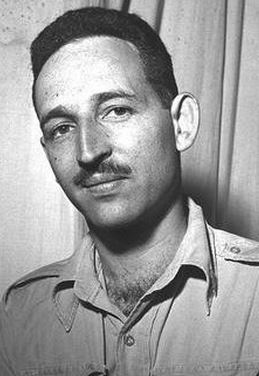
Uzi Gal

Uzi Gal

Uziel Guthardt Glass (1923-2002) was born in Weimar, Germany. His family fled from the Nazis to England in 1933, and from there made their way to Israel in 1936. They joined a kibbutz and changed their last name to Gal. From his youth, Gal was interested in weapons engineering, and designed his first automatic gun (which shot arrows) at age 15. At 20, now a member of the Jewish Haganah defense force, he was arrested by British troops for carrying a gun (forbidden to Jews in Israel at the time) and spent three years in prison. It was during his service in Israel’s War of Independence that he began designing a new, smaller, safer, and more effective submachine gun. In 1951, the IDF adopted his design, giving birth to the famous “Uzi” (although Gal requested that the weapon not be named after him). The weapon was also adopted by over 90 different countries, and became the most popular submachine gun in history, with over $2 billion in sales. It has been used primarily as a personal defense weapon by officers, tank infantry, and special forces units. Most famously, it was the weapon of choice for the US Secret Service – typically hidden in a small briefcase – and was used to save President Ronald Reagan from an assassination attempt in 1981. Along with other military decorations, Gal was the first person to be granted the Israel Security Award. With the high rank of Colonel, Gal retired from the IDF in 1975 in order to take care of his daughter, and moved to Philadelphia for her medical treatment. He continued designing weapons in the US until his passing due to cancer in 2002. In 2003, the Uzi was officially retired by the IDF, praised for its instrumental role in Israel’s many military victories.

Words of the Week

The truth is, we are all living in Israel. It’s just that some of us haven’t realized it yet.
– Sam Harris
Jew of the Week: Henry Heimlich

The Heimlich Maneuver

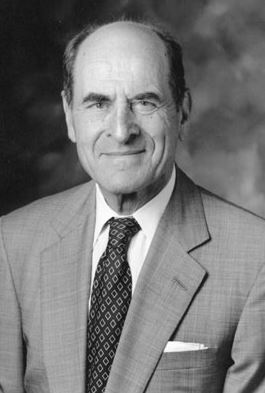
Henry Heimlich (Courtesy: tytekmedical.com)

Henry Heimlich (Courtesy: tytekmedical.com)

Henry Judah Heimlich (b. 1920) was born in Delaware and studied at Cornell University. In 1943, he earned his M.D. and was soon shipped off to the Pacific as a US Navy surgeon at the height of World War II. In China, he found a quick and effective way to treat trachoma. In the early 50s, he developed a method for replacing the esophagus, which is recognized by some as history’s first complete organ transplant. His experiences in treating injured soldiers helped him invent the flutter valve (also known as the Heimlich valve) which quickly drains blood and air out of a punctured chest cavity. Over 150,000 of these life-savers are used each year in critical situations. Heimlich also invented an efficient oxygen delivery system for injured patients, called the Micro Trach. He is most famous, however, for developing the technique of abdominal thrusts to save people who are choking. Following an eye-opening 1972 New York Times report that showed 3,000 Americans died yearly in choking accidents, Heimlich researched the ideal way to open an obstruction in the throat. He experimented with dogs and large chunks of meat, finding that an upward thrust into the diaphragm successfully opened a blocked airway. Heimlich published his findings in the Journal of the American Medical Association. At the same time, he knew that this information was far too important to be practiced only by health professionals, and described the technique in the more common Emergency Medicine. From there, the procedure’s success and fame spread quickly, and was soon known as the “Heimlich maneuver”. Heimlich also developed a technique to help stroke victims re-learn how to swallow, researched maneuvers for asthma and cystic fibrosis, and suggested a controversial treatment for AIDS (since debunked and rejected). He has made a number of other controversial suggestions, leading some to label him a charlatan of sorts. Nonetheless, it is estimated that the Heimlich maneuver has saved at least 50,000 people (including former President Ronald Reagan). Many credit Heimlich with “saving more lives than any other living American”, and he has been awarded the prestigious Lasker Award for Public Service. Last year, Heimlich published an autobiography, and a film about his life is currently in the works.

UPDATE: Sadly, Henry Heimlich passed away in December of 2016.

Words of the Week

Do not pass up a single day without doing a mitzvah.
Rabbi Israel Baal Shem Tov

Jew of the Week: Jack Goldman

Jacob Goldman (Photo Credit: Joyce Dopkeen, The New York Times)

Jacob Goldman (Photo Credit: Joyce Dopkeen, The New York Times)

Jacob E. Goldman (1921-2011) was born in Brooklyn to Jewish-Russian immigrants. He studied at both Yeshiva University and the University of Pennsylvania, where he got his Ph.D in physics. After brief stints working for Westinghouse and as a teacher for Carnegie Tech, he joined the Ford Motor Company’s Scientific Research Laboratory, where he helped to develop the sodium-sulfur battery for electric cars and large-scale energy storage, among many other things. Rising through the ranks, he soon became head of the department, and the first Jew to be an executive at the formerly anti-Semitic Ford Company. In the 1960s, Goldman was brought to Xerox to head its new computing division, and serve as chief scientist and technical officer. At the time, the computer industry was just getting underway, and Goldman convinced the authorities at Xerox to start a new research facility on the West Coast, near Stanford University, where they would be able to recruit young talent. For a while, the New-York based Xerox was reluctant to open up a new lab so far away, but eventually gave Goldman a chance. Teaming up with fellow physicist George Pake, the two opened up the Palo Alto Research Center, better known as PARC, in 1970. This lab would go on to completely revolutionize the digital world and the computer industry. PARC scientists, under the visionary leadership of Goldman and Pake, developed the laser printer, Ethernet, and most importantly, the first personal computer, as well as the first computer to have a graphical user interface (GUI) with an easy to use “desktop”. The concept of windows, folders, and icons that are operated by a computer mouse was also developed at PARC, as were the basics for LCD screens and optical discs. Interestingly, one of the few people who got a tour of PARC was a young Steve Jobs, who was so inspired by what he so that he went on to found Apple, drawing on most of PARC’s technologies for his own designs. Ultimately, it was Apple and Microsoft that took advantage of PARC’s advancements, as Xerox failed to support Goldman in commercializing those technologies. Nonetheless, Goldman is considered a key figure in transforming computers from massive industrial calculators to personal interactive tools used by the public.

Words of the Week

Jews have tended to prefer the power of ideas to the idea of power.
– Rabbi Lord Jonathan Sacks