Category Archives: Science & Technology

Jews in the World of Science and Technology

Jews of the Week: Waksman and Schatz

Selman Waksman

Selman Waksman

Selman Abraham Waksman (1888-1973) was born near Kiev to Jewish-Russian parents. At 22, he immigrated to the U.S. and began his studies at Rutgers University, where he got a Masters in Science before getting his Ph.D. in biology at UC Berkeley. He then headed back to Rutgers to take over the soil microbiology lab, focusing on the study of soil organisms and decomposition. Building on the work of previous scientists, Waksman soon found that bacterial substances could be used to fight bacterial infections. He shifted his lab’s focus towards finding “antibiotics” – a term which he coined. Over the next couple of decades, his lab discovered a dozen antibiotic compounds.
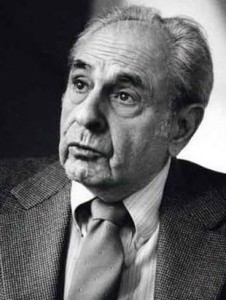
Albert Schatz

Most important of these was streptomycin, discovered by Waksman’s student Albert Israel Schatz (1920-2005). Schatz also came from Jewish-Russian lineage and originally wanted to be a farmer. He studied soil microbiology, and after serving in a military hospital during World War II, decided to research treatments for tuberculosis. Working in Waksman’s lab, Schatz discovered and named “streptomycin”, which would become one of the most important antibiotics in history, and is still found on the World Health Organization’s List of Essential Medicines. Schatz made no profit from his discovery, giving up his rights to the drug so that it could be distributed as widely and cheaply to as many people as possible. Unfortunately, he was never given the credit he deserved, with the Nobel prize going only to Waksman in 1952. Both biologists continued their contributions to science, and were decorated with many awards. Waksman also developed microbe-resistant paint for ships, enzyme-enhanced detergents, and a compound to prevent fungal infections of vineyards. He wrote over 400 papers and published 28 books. Meanwhile, Schatz campaigned against the fluoridation of water, proposed new theories for tooth decay and the extinction of dinosaurs, and published over 700 papers and 3 textbooks. Both were ultimately credited for streptomycin, which The New York Times ranked among the Top 10 discoveries of the 20th century.

Words of the Week

“Let there be light” means that all the world – even darkness – should become a source of light and wisdom. It is our job to reveal the hidden light – especially the light that you yourself hold.
Rabbi Menachem Mendel Schneerson, the Lubavitcher Rebbe
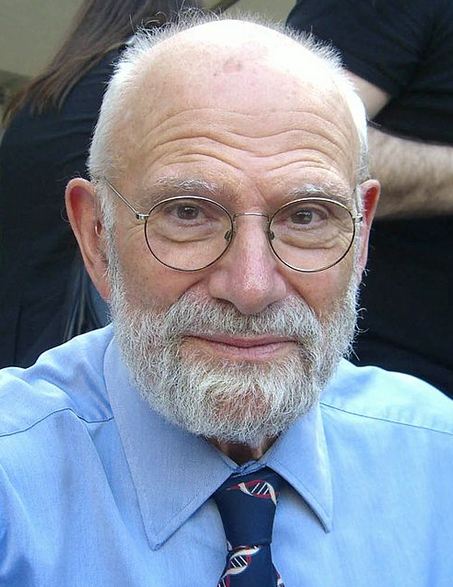
Jew of the Week: Oliver Sacks

Oliver Sacks

Oliver Sacks

Oliver Wolf Sacks (1933-2015) was born in London to Jewish parents who were both doctors. His mother came from an Orthodox family and was among the first female surgeons in the UK. Following in his parents’ footsteps, Sacks became a doctor in 1960. He completed his residencies in neurology in San Francisco and at UCLA, then worked as a neurologist in New York. Based on his work at the Beth Abraham Hospital in the Bronx, Sacks wrote the autobiographical book Awakenings, which became a bestseller and was adapted to the Oscar-nominated film starring Robert De Niro and Robin Williams. In addition to his neurology practice, for nearly fifty years Sacks was a neurology and psychiatry professor at a number of schools, including Columbia and NYU. He has written over a dozen books and countless articles and publications – all by hand or on a typewriter. His writings, translated into over 25 languages, have won numerous awards. The New York Times described him as a “poet laureate of contemporary medicine”. He contributed immensely to the field of neurology, and is credited with inspiring many of the today’s top neuroscientists. Interestingly, Sacks himself suffered from a neurological disorder called prosopagnosia, an inability to recognize faces. Despite being well-known for his great love and compassion for others, Sacks never married, and was celibate for 35 years. He spent time as a bodybuilder (at one point setting a state weightlifting record by squatting 600 pounds), nearly died while mountain climbing solo, held 12 honorary doctorates, and had a planet named after him. Sadly, Sacks passed away last week after a battle with cancer.

Words of the Week

I love to discover potential in people who aren’t thought to have any.
– Oliver Sacks

Jew of the Week: Ernst Gräfenberg

Ernst Grafenberg (courtesy of muvs.org)

Ernst Grafenberg

Ernst Gräfenberg (1881-1957) was born in Adelebsen, Germany, where his father was a successful businessman and head of the Jewish community. Gräfenberg studied medicine and earned a Ph.D by the time he was just 23. He first worked as an ophthalmologist, then shifted his focus to gynecology. At the same time, he did important research on cancer, presenting a theory on metastasis. Following his World War I service as a medical officer, for which he was decorated with an Iron Cross, Gräfenberg became the chief of gynecology at a Berlin hospital. He did simultaneously did research on reproduction at Berlin University. In 1929, he invented the first modern contraceptive intrauterine device (IUD), then called the “Gräfenberg ring”. Today, IUDs are the most widely used form of female contraception, with nearly 200 million users around the world. Unfortunately, the Nazis forced Gräfenberg to give up his posts in 1933. Despite pressure to leave Germany, he continued his gynecology practice, thinking that he would be safe since many of his patients were the wives of Nazi officials. Nonetheless, Gräfenberg was arrested and spent three years in prison. It wasn’t until 1940 that he was finally able to flee to the US (through Siberia and Japan). There, Gräfenberg continued his studies on female physiology. Among other things, he described a little-known erogenous zone that was later named after him: the “Gräfenberg spot”, better known as the “G-spot”. He also did important work on egg implantation and pathology. The effects of Parkinson’s Disease forced Gräfenberg to retire in 1953, and he passed away several years later in New York City.

Words of the Week

Humility is not a question of thinking less of yourself, it’s a question of thinking of yourself less.
– Larry Bossidy