 Moshe Kai Cavalin (b. 1998) was born in Los Angeles, the son of a Taiwanese mother and an Israeli-Brazilian father. He started speaking at 4 months of age, and was reading and doing math by 3. At 6, he was rejected from elementary school because he “knew more than the teacher”, and had to be home-schooled. At 8, he became the youngest person in American history to take college classes. He got his first degree three years later, with a perfect 4.0 GPA. He then enrolled at UCLA – with a full scholarship – and earned a BS in mathematics. Meanwhile, Kai wrote two bestselling books (an inspirational autobiography, and a manual to deal with bullying). For fun, he scuba dives, plays piano, and chess, and avoids video games which, he says, are “not helping humanity in any way.” He is also an avid martial artist – thanks to his father, a former IDF special forces commando – and has won 26 gold medals. Incredibly, Kai got a pilot’s license, too. This led to a phone call from NASA in 2015. NASA needed a pilot who also knew math, physics, and computer programming to develop surveillance and anti-collision technology for drones and airplanes. Kai has been at NASA ever since, working hard to keep the skies safe. He is concurrently doing his Master’s in cybersecurity, and intends to later get a Master’s in business from MIT before opening his own cybersecurity company. Kai describes himself as a religious person and often credits God with giving him the insight to solve problems. One of his professors once said: “I think most people just think he’s a genius, they believe it just comes naturally… He actually worked harder than, I think, any other student I’ve ever had.”
Words of the Week
Science without religion is lame, religion without science is blind.
– Albert Einstein

Kai at age 10 with his menorah; and more recently with his martial arts trophies

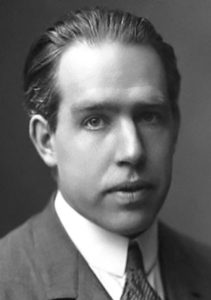 Niels Henrik David Bohr (1885-1962) was born in Copenhagen. His mother was from a prominent Jewish-Danish family, and he was partly named after his grandfather, David Baruch Adler, an influential banker and parliamentarian. Bohr’s father was a famous physiology professor, who rejected his Lutheran roots in favour of atheism. (Bohr himself would later renounce any association with the Church of Denmark.) At 20, Bohr won a gold medal from the Royal Danish Academy of Sciences for his work on water viscosity and surface tension. He went on to earn a Master’s in mathematics and a Ph.D in physics. Bohr combined Rutherford’s ideas on the atom with Planck’s quantum theories to produce a revolutionary new atomic model, known as the Bohr model. This model finally made sense of the mysterious properties of atoms, and solved a major hurdle that baffled scientists for over 30 years. The discovery would earn Bohr a Nobel Prize in Physics. By 1917, Bohr was the Chair of Theoretical Physics at the University of Copenhagen, and sought to establish a new centre for physics research. Bohr got the government on board, and after receiving large donations from wealthy Danish Jews (together with the Carlsberg brewery), founded the Institute of Theoretical Physics – now known as the Niels Bohr Institute. There, his students discovered the 72nd element of the Periodic Table – whose existence Bohr had proposed – and named it Hafnium, the Latin name for Copenhagen. When the Nazis came to power, Bohr opened the doors of his institute to fleeing Jewish scientists. Denmark itself would soon be under Nazi control. In 1943, Bohr was informed that he would be arrested since, despite his mixed ancestry, he was considered a Jew according to the Nuremberg Laws. Bohr fled to Sweden, where he met with Swedish King Gustaf V to convince him to open Sweden’s doors to Jewish refugees. Bohr succeeded, and over 7000 Danish Jews were rescued and given asylum in Sweden. He then headed to England, where he assisted the war effort through the British “Tube Alloys” weapons project, before heading to the US to advise the Manhattan Project. Although he claimed his help was not needed to make the first nuclear bomb, others have admitted that he solved an important puzzle that made it happen. Bohr campaigned against the use of nuclear weapons for the rest of his life. It was his vision that resulted in the creation of the International Atomic Energy Agency, which monitors the use of nuclear power. Bohr went on to become the President of the Royal Danish Academy of Arts and Sciences. He chaired the Nordic Institute for Theoretical Physics, and played a central role in the founding of the world-famous CERN research organization. In addition to his monumental work in quantum physics, Bohr was a noted philosopher. Along with countless other awards, Bohr was bestowed the Order of the Elephant, the highest honour in Denmark (usually reserved only for royalty and heads of state), and is on the Danish 500-krone bill. He is one of just a handful of people who has an element on the Periodic Table named after him (bohrium).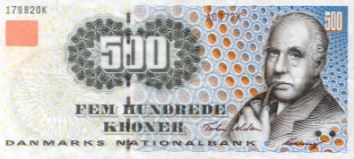
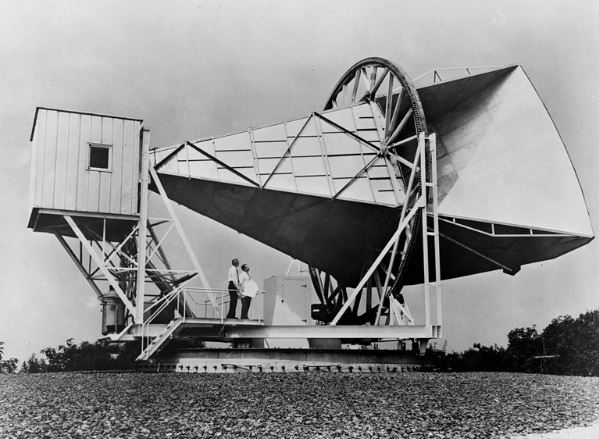
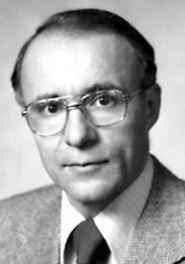 Arno Allan Penzias (b. 1933) was born in Munich. As a six year old, he was evacuated from Nazi Germany through the British Kindertransport rescue operation which saved 10,000 Jewish children. He was later reunited with his parents, who brought the family to New York. Penzias grew up in Brooklyn and went on to study physics. He graduated among the top of his class, then served two years in the US Army as a radar officer. From there, he got a research position at Columbia University’s Radiation Lab, where he helped to develop the maser (a “microwave laser”). After earning a Ph.D in physics from Columbia, Penzias got a job at Bell Labs to do astronomy research with microwave receivers. He was soon joined by Robert Wilson. The two noticed their antenna picking up an inexplicable signal. After ruling out all forms of interference, and carefully cleaning the antenna, the weak signal persisted. The two collaborated with another physicist, Robert Dicke, to show that this signal was the cosmic microwave background (CMB) radiation, the remnants of the universe’s birth, as predicted by the Big Bang Theory. The existence of CMB confirmed that the universe had a beginning, with a burst of radiation, and simultaneously confirmed ancient Jewish teachings about the universe’s origins. The Zohar, a famous mystical commentary on the Torah that was first published some 700 years ago, explains that the universe began with a nikuda hada d’zohar, a singular point of radiance, from which all things were formed. The Zohar explains that this ever-expanding radiance continues to fill the universe, based on the words in the Biblical Book of Daniel (12:3) which describes the “radiance of the firmament”. In fact, this is how the book got its name, Zohar meaning “radiance”. Penzias’ and Wilson’s monumental discovery brought about a beautiful harmony between Torah and science, at once confirming both the modern Big Bang Theory and the holy words of the ancient Jewish Sages. The two physicists won the 1978 Nobel Prize in Physics. Penzias continued his work at Bell Labs for a total of 37 years, rising to the position of Vice President of Research. He was made a Fellow of the American Academy of Arts and Sciences, and the National Academy of Sciences. Penzias later moved to Silicon Valley to advise venture capitalists and tech start-ups. Despite being in his 80s, he is still a venture partner at New Enterprise Associates, and says he has “no plants to retire”.