Category Archives: Religious Leaders

Spiritual and Religious Greats of the Jewish People

Jew of the Week: Yehoshua bin Nun

Holy Warrior

God miraculously causes the sun to stand still, allowing the Israelites under Yehoshua's command to win the battle (painting by John Martin)

God miraculously causes the sun to stand still, allowing the Israelites under Yehoshua’s command to win the battle (painting by John Martin)

Hoshea bin Nun (c. 1355-1245 BCE) was born in Egypt during the time of the Israelite slavery. Upon the return of Moses, Hoshea became his trusted servant and right-hand man. He was the only one allowed to approach Mt. Sinai other than Moses himself, and is one of the few people in the Torah described as being filled with a Godly spirit. In the wilderness, he became the chief military commander of the Israelite army, leading them to multiple victories. When the Israelites originally reached the Holy Land, Hoshea was dispatched as one of the twelve spies. It was then that Moses renamed him Yehoshua (more commonly known as Joshua), to give him strength for his mission. He was the only one, along with Caleb, to bring back a positive report, and for this was rewarded with permission to enter the land of Israel, while the rest of the generation was condemned to perish in the wilderness over a forty year period. At the end of those forty years, when Moses passed away, Yehoshua took over and led the Jews into Israel, overseeing their successful reclamation and re-settlement of the land with a series of miraculous victories. His work complete, Yehoshua passed away in the Holy Land at the age of 110, having gained a reputation for wisdom, humility, and most of all, being a beloved caretaker of his people. He is believed to be the author of the Biblical book of Joshua. As his origins are obscure, and he alone has the moniker “bin” in his name (as opposed to the standard “ben”, which means son), several legends have come forth regarding his birth. In one of the most enigmatic, it is said that the baby Yehoshua was among those newborns thrown into the Nile River by Pharaoh’s soldiers. However, he was swallowed up by a great fish which was later caught by fishermen; Yehoshua was thereby accidentally rescued from the fish’s belly, hence the name “bin Nun” (nun means “fish” in Aramaic). Yehoshua’s yahrzeit is commemorated on the 26th of Nisan, which this year falls on Saturday.

Words of the Week

The Persian Empire was always against the Muslim Arab Empire, especially against the Sunnis. The threat is from Persia, not from Israel.
– Saudi Prince Alwaleed bin Talal

Jew of the Week: Sarah Schenirer

The only known photograph of Sarah Schenirer, taken for a passport

The only known photograph of Sarah Schenirer, taken for a passport

Sarah Schenirer (1883-1935) was born in Cracow, Poland to a Hasidic Jewish family. She left her elementary school at age 13 due to her family’s poverty, and took on a job as a seamstress. Meanwhile, she envied her brother’s opportunities to study Torah, and dreamed of creating similar opportunities for women. One by one, her girlfriends assimilated and left the Orthodox Jewish fold. Troubled by this development, Schenirer understood that girls were losing their connection to Judaism primarily as a result of ignorance. She resolved to start a Jewish girls’ education network, and in 1917 opened a girls-only kindergarten for Jewish studies. The school was called “Beit Yakov”. (The name comes from a Biblical verse, referring to God’s command to Moses at Mt. Sinai to instruct the women along with the men.) The idea flourished quickly, inspiring a “Bais Ya’akov” movement across Jewish Europe. By 1923, Schenirer had to establish a teachers seminary to train new instructors, who taught young girls both Torah and secular subjects. The movement gave rise to camps, clubs, a monthly magazine, international conferences, and even its own publishing house to print textbooks. Sadly, Schenirer passed away from cancer, childless, at the young age of 52. At the moment of her passing, over 200 Beit Yakov schools were operating in Europe and beyond, with 35,000 girls studying diligently. Many of these girls referred to Schenirer as Sarah Imenu – “Sarah, our Mother”. Schenirer had a reputation as a wise and caring pioneer, as well as a modest and holy woman. She did not allow photographs of her to be taken, saying “I don’t need anyone to remember what I look like, I want them to remember my vision.” Her vision is alive and well today, with hundreds of Orthodox Beit Yakov girls schools still shining all over the world.

Words of the Week

God is the ultimate oneness, and everything Godly in our world bears the stamp of His unity. All evil derives from the distortion of this oneness by the veil of divisiveness in which God shrouds His creation.
– Rabbi Sholom DovBer of Lubavitch

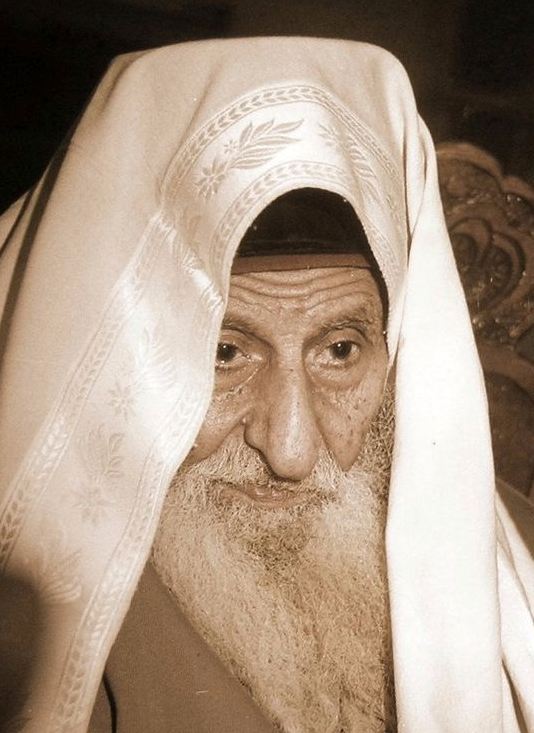
Jew of the Week: Rav Yitzhak Kaduri

Rav Yitzchak Kaduri

Rav Yitzchak Kaduri

Yitzhak ben Zeev Diva (c. 1902-2008) was born in Baghdad to a rabbi who worked as a spice trader. Early on, he plunged into the depths of Jewish wisdom and by his teenage years was already recognized as a prodigy. In 1923, he settled in the Holy Land to bring spirituality into the secular Zionism that was flourishing in Israel. Upon arrival, he officially changed his last name to Kaduri. He continued his learning under some of the greatest rabbis of the time, particularly at Jerusalem’s famous Porat Yosef Yeshiva. Meanwhile, refusing to live on charity, he worked as a scribe and bookbinder, committing the books that he worked on to memory. It is said that he memorized the entire Talmud (over 5400 pages of dense text), together with its commentaries, along with a multitude of other works. He wrote several mystical texts of his own, which were never published, as Rav Kaduri did not want them getting into the wrong hands. He went on to become the head mekubal (“Kabbalist”) among Israel’s rabbis. His son spearheaded the opening of Rav Kaduri’s own yeshiva – Nachalat Yitzchak – located in the Bukharian Quarter of Jerusalem next to the Rav’s home. Rav Kaduri was famous for eating very little, and speaking very little. Despite his occupation with study, his doors were always open to help others (in fact, he refused to lock the doors of his home even amidst a spate of thefts). Hundreds of people sought his advice and blessings each day, and he was known as a miracle worker and healer. At his funeral, 8 years yesterday, over 300,000 people came to pay their respects.

Words of the Week

When God created the first man, He showed him all the trees of the Garden of Eden, and said to him: ‘See My works, how beautiful and praiseworthy they are. And everything that I created, I created for you. Be careful not to spoil or destroy My world—for if you do, there will be nobody after you to repair it.’
– Midrash Kohelet Rabbah 7:13