Planting Trees on Tu b’Shevat
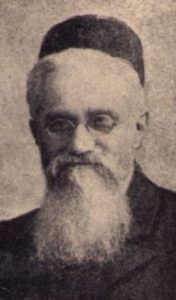
Rabbi Ze’ev Yavetz
Ze’ev Wolf Yavetz (1847-1924) was born in what is now Kolno, Poland (then part of the Russian Empire) to a wealthy Orthodox Jewish family. A noted scholar from a young age, he became a distinguished historian, linguist, writer, and teacher. When he was 40, Rabbi Yavetz made aliyah to the Holy Land with his family and joined the Yehud moshava, where he worked in a vineyard. Shortly after, he was hired by Baron Edmond de Rothschild to head the new Rothschild-funded school in Zikhron Ya’akov. (Zikhron Ya’akov was one of the first modern Jewish settlements in Israel, founded by Edmond de Rothschild in 1882, and named after his father Ya’akov “James” Rothschild.) In 1890, when the holiday of Tu b’Shevat came around, Rabbi Yavetz wanted to do something meaningful with his students in honour of the Jewish “new year for trees”. So, he took his class on a tree-planting trip. This turned into a yearly tradition, and was soon adopted by neighbouring schools and villages. Eventually, the Jewish National Fund adopted the custom, too, and to this day over a million Jews participate in the JNF’s Tu b’Shevat tree-planting drive each year. In all, the JNF has planted over 260 million trees in Israel, making it the only country in the world to have increased its tree population in the last century. Meanwhile, Rabbi Yavetz joined the Hebrew Language Committee (famously founded by Eliezer Ben-Yehuda) and helped to develop the modern Hebrew tongue. He coined a number of modern Hebrew words, including tarbut and kvish. Unlike other Zionists, Rabbi Yavetz never abandoned his faith, and worked hard to ensure Jews in Israel observe Torah law, and live like their ancestors. For this reason, he was a co-founder of the Mizrachi religious Zionist movement. (The more well-known Bnei Akiva organization is the youth arm of Mizrachi.) Mizrachi would go on to establish Israel’s Ministry of Religious Affairs, ensure that Israeli government kitchens keep kashrut, and that public services rest on Shabbat. Mizrachi also had a political party, which had many names over the years, and is now known as HaBayit HaYehudi (“The Jewish Home”). Rabbi Yavetz spent the last years of his life in London, where he wrote a monumental 14-volume history of the Jewish people called Toldot Israel. Today, a school in Zikhron Ya’akov is named after him, as is the village of Kfar Yavetz.
Happy Tu b’Shevat!
Words of the Week
… from the most inhospitable soil, surrounded on every side by barrenness and the most miserable form of cultivation, I was driven into a fertile and thriving country estate where the scanty soil gave place to good crops and cultivation, and then vineyards and finally to the most beautiful, luxurious orange groves, all created in 20 or 30 years by the exertions of the Jewish community who live there.
– Winston Churchill, reporting to Parliament after visiting Rishon LeZion in 1921
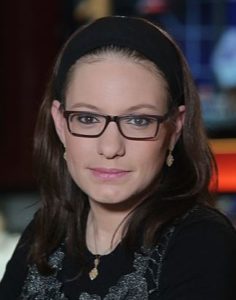 Sivan Rahav (b. 1981) was born in Herzliya to a secular family. She knew she wanted to be a journalist from childhood, and would already interview her friends in second grade. By 8, she earned herself a “children’s press” card, and by 14 was interviewing the likes of Yitzhak Rabin and
  Aharon Yehuda Leib Shteinman (1914-2017) was born in what is now the city of Brest, Belarus. To avoid being conscripted into the Polish army, the young yeshiva student fled to Switzerland with some classmates. He continued his diligent studies in a Swiss yeshiva until being arrested during World War II and sent to a labour camp. Shteinman was the only member of his family to survive the Holocaust. He settled in Israel after the war. There, the young rabbi quickly made a name for himself as a Torah prodigy, and was soon appointed rosh yeshiva, head of a Torah academy. He would serve as a rosh yeshiva for the next five decades, while also establishing a number of children’s schools for the underprivileged. Meanwhile, Rav Shteinman wrote profusely, authoring dozens of bestselling books and discourses on Torah, Talmud, and Jewish thought, as well as being recognized as an expert in the field of education. While abstaining from politics himself, Rav Shteinman was the spiritual leader of Israel’s Degel HaTorah party, playing an influential role in government. In his 90s, and in frail health, the Rav decided to journey around the world to strengthen Jewish communities. Countless thousands gathered to greet him and hear his wise words in Los Angeles, New York, Mexico City, Buenos Aires, Manchester, Odessa, Berlin, Gibraltar, Paris, and many more small towns. On these trips, he would give as many as 10 talks a day.
 Rav Shteinman was known for his extreme piety, humility, and modesty. His daily diet was nothing but a cucumber, a boiled potato, and one small bowl of oatmeal. He lived in a tiny apartment, with little furniture but walls lined end to end with books. He slept on the same thin mattress that was given to Jewish refugees upon arrival in Israel for some 50 years. Streams of people lined up at his open door each day seeking counsel and blessings. Rav Shteinman stood only for truth, even when it brought him adversity. This was particularly clear when he supported the Nachal Charedi, an IDF unit for yeshiva students. Even after some backlash from ultra-Orthodox communities, the Rav stood his ground and continued his support. He was widely recognized as the gadol hador, the world’s chief rabbi. Sadly, the great rabbi passed away yesterday, at 103 years of age. (His condition had turned critical two weeks ago after the tragic death of his 72-year old daughter from a heart attack, even though no one had told him of her passing.) Rav Shteinman wrote in his will that it would suffice to have just ten men to carry out his funeral, and requested no eulogies. Nonetheless, the funeral procession brought over 600,000 people. Israel’s President Reuven Rivlin stated that Rav Shteinman “bore the entire weight of the Jewish people’s existence on his shoulders… he knew how to convey his ideas gently, in a pleasant manner, and with a great love of the Jewish people… He was a man whose wisdom was exceeded only by his humility.”