Category Archives: Religious Leaders

Spiritual and Religious Greats of the Jewish People

Jew of the Week: Ben Ish Chai

Baghdad’s Greatest Sage
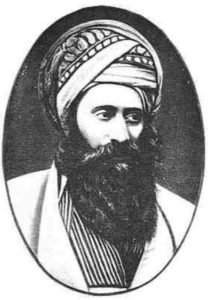
Rabbi Yosef Chaim of Baghdad, the Ben Ish Chai

Yosef Chaim ben Eliyahu (1832-1909) was born in Baghdad, the son of the city’s chief rabbi. After being miraculously saved at the age of 7, he resolved to devote his life to God and His Torah. He went to study at Baghdad’s Beit Zilka school, and spent all of his extra time absorbing his father’s extensive library of religious texts. When he was 14, a letter arrived from the chief rabbi of Turkey with a question for his father regarding a difficult case. His father was away at the time, so young Yosef Chaim answered the question himself. The chief rabbi sent a letter back: “Your son, dear to your soul, has already preceded you and decided this case. May his father rejoice in him…” Not surprisingly, when his father passed away, Yosef Chaim was immediately chosen as his replacement, and officially given the title of Hakham (the traditional Sephardic term for a rabbi). He was beloved by the entire Baghdad community, who regularly crowded into synagogues to hear his penetrating sermons, and who listened to his every word and instruction. One set of those sermons – which combined Halacha (Jewish law), with Kabbalah (Jewish mysticism), organized by the weekly Torah portion – was compiled into a book called Ben Ish Chai. The book was so popular that Hakham Yosef Chaim himself became known as the “Ben Ish Chai”. (The title has further significance because the Hakham believed himself to be a reincarnation of the great Biblical figure Benayah, who was called Ben Ish Chayil.) The Ben Ish Chai was known for his incredible humility and piety. He slept very little, built a mikveh inside his house so that he can purify himself daily, and at one point spent six continuous years fasting (eating only a little bit at night). He inspired Sephardic and Ashkenazi Jews alike, as well as the local Arabs. It is said that during his tenure there was no Jew in Baghdad that did not keep kosher or Shabbat. Throughout this time he never took a penny for his work, and made a living through his publications and his own wise investments. Many of his students became great rabbis in their own right, and Ben Ish Chai is still among the most popular Jewish books today, especially in the Sephardi world. Hakham Yosef Chaim also wrote a number of other works, including a book of kosher stories so that Jews wouldn’t be too drawn to secular novels. He is regarded as one of the greatest Kabbalists of all time. The Porat Yosef Yeshiva in Jerusalem’s Old City – today one of the most famous and prestigious in the world – was founded upon his instructions and guidance. Tonight, the 13th of Elul, marks 110 years since his passing.

10 Ladino (“Sephardic Yiddish”) Words to Use All the Time

Why Break a Glass at a Jewish Wedding?

Words of the Week

Just as punishment is brought upon a person because of evil speech, so is he punished if he could have spoken good words but did not.
– Zohar III, 46b 

The Porat Yosef Yeshiva near the Western Wall in Jerusalem. The Yeshiva was founded by Jewish-Indian philanthropist Yosef Shalom at the request of the Ben Ish Chai. The original building was destroyed by the Arabs in 1948. It was rebuilt in 1967 following Jerusalem’s reunification during the Six-Day War.
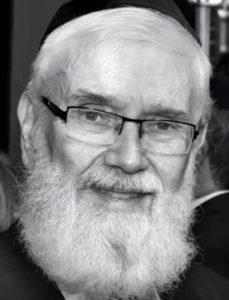
Jews of the Week: Rabbi Zlotowitz and Rabbi Scherman

The ArtScroll Revolution 

Rabbi Meir Zlotowitz

Meir Yakov Zlotowitz (1943-2017) was born in New York to Orthodox Jewish immigrants from Poland. He showed an affinity for art from a young age, and after graduating from yeshiva (and receiving his rabbinic ordination), he co-founded ArtScroll Studios. Originally, the company produced artfully-decorated pamphlets, posters, ketubot, and scrolls. In 1975, a close friend of Rabbi Zlotowitz passed away shortly before Purim. The rabbi decided to honour his friend by composing a new translation and commentary on Megillat Esther within the shloshim, the first 30-day period of mourning. Rabbi Zlotowitz worked day and night for 30 days, barely eating or sleeping at all. When he was done, he produced a beautifully-designed and intellectually in-depth edition of the Book of Esther. It was an instant hit, and quickly sold 20,000 copies. The success of the publication made Rabbi Zlotowitz realize he could do the same for other Jewish holy texts. He went in search of a partner who could work with him, and found the perfect person:

Rabbi Nosson Scherman

Nosson Scherman (b. 1935) was born in New Jersey to a traditional family and originally attended public school. He went to a Jewish after-school program and was inspired to go to yeshiva several years later. Scherman became a rabbi, first worked as a school teacher, and then became principal of Yeshiva Karlin Stolin. He wrote the introduction to Rabbi Zlotowitz’s Megillat Esther, then joined him full time at ArtScroll. The partners had little money and set up the Mesorah Heritage Foundation to help finance their work. Under their leadership and wisdom, ArtScroll has produced over 700 titles and some 2000 volumes, including possibly the world’s most popular Chumash, and the entire Talmud (a whopping 73-tome set). This Talmud was the product of over 70 scholars working together from all over the world, and for many it is the go-to version of Talmud today. It has allowed thousands of regular people to learn and love the Talmud, in clear English and with insightful commentaries. ArtScroll has been credited with revolutionizing Jewish study, and with helping to facilitate the massive baal teshuva movement in recent decades, inspiring the return of countless Jews to their faith and traditions. Despite being in his 80s, Scherman continues to helm ArtScroll, producing ever more beautiful and enlightening Jewish books.

Purim Begins Tonight! Chag Sameach!

15 Purim Facts Every Jew Should Know

Words of the Week

It’s amazing how much you can accomplish when you don’t care who gets the credit.
– Gertrude Elion

Jews of the Week: the Genius of Rogatchov and Joseph Trumpeldor

An Unparalleled Genius and a Zionist Icon

Joseph Trumpeldor

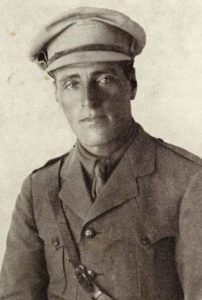
Joseph Volfovich Trumpeldor (1880-1920) was born in Russia, the son of a cantonist (young Jews forcefully conscripted into the Russian army). He became a dentist, but in 1902 enlisted in the Russian army. Trumpeldor lost his left arm in one battle of the Russo-Japanese War, yet wanted to continue serving, reportedly saying “I still have another arm to give to the motherland.” He returned to the battlefield and was captured by the Japanese. Trumpeldor spent most of his captivity studying, learning more about Judaism, Jewish history, and the Zionist cause. He even started writing on Jewish topics and found fellow Jewish prisoners who dreamed of settling in the Promised Land. Upon his release, he received four medals, and was later made an officer, making him the most decorated Jew in the Russian army, and its first Jewish officer. Unable to return to the military, he became a lawyer. In 1911, Trumpeldor made aliyah and settled in Kibbutz Degania. With the outbreak of World War I, he went to Egypt to establish the Jewish Legion (which fought for Britain) alongside Ze’ev Jabotinsky. The legion, also known as the Zion Mule Corps, is considered the first entirely Jewish military unit in two thousand years, and a precursor to the IDF. It helped the British conquer the land of Israel from the Ottoman Turks. Trumpeldor was a key soldier in that effort, and was wounded in the Battle of Gallipoli. After the war, he returned to Russia to gather more young Jews to settle in Israel. In 1920, while working to build the new town of Tel Hai, a band of Arabs attacked the Jewish community. Trumpeldor was shot twice, and succumbed to his injuries. According to legend, his last words were “Never mind, it is good to die for our country.” Trumpeldor immediately became a symbol of Jewish strength, self-defense, and resilience, and an inspiration for a new generation of Zionists. The day of his death, the 11th of Adar (this coming Monday), is a minor holiday in Israel.

Rabbi Yosef Rosen, the Rogatchover Gaon

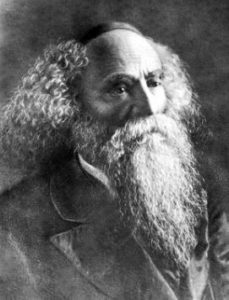
That same date is also the yahrzeit of Rabbi Yosef Rosen (1858-1936). He was born in the town of Rogatchov (in modern Belarus) to a Chabad family. By the age of 13, he was recognized as a genius and was sent to study with some of the great rabbis of the day in the town of Slutzk. At 31, he was appointed one of two chief rabbis of Dvinsk (in modern Latvia), and served in that role for nearly five decades, until his last days. Rabbi Rosen ensured the survival and flourishing of Jewish life under Russian Imperial, and then Communist, rule, often with great sacrifice to himself. Meanwhile, he published several important works of Jewish commentary and Jewish law. Some of his best writings were published only after his death, under the title Tzafnat Paneach, “Decipherer of Secrets”. Rabbi Rosen was known as the Rogatchover Gaon, the “Genius of Rogatchov”, and was famous for his unbelievable breadth of knowledge on just about any subject. After once meeting him for a lengthy discussion, the renowned poet Bialik said that “from the mind of the Rogatchover could be carved out two Einsteins” and that he is “a great spiritual national treasure.” Rabbi Rosen had many students, including Rabbi Menachem Mendel Schneerson, the Lubavitcher Rebbe, who also received his rabbinic ordination from the Gaon. The Rebbe once said that Rabbi Rosen was able to simplify all of Judaism into ten ideas, and quoted him as saying: “Were I a little bit smarter, it would be only one idea!”

Did You Know These Famous People Converted to Judaism?

Words of the Week

Love and work are the two things you have to do in life.
– Sigmund Freud