
The Reform Rabbi Who Made Israel Happen
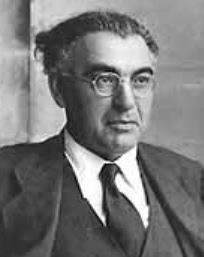
Rabbi Abba Hillel Silver
Abraham Silver (1893-1963) was born in what is today Lithuania (then Poland) to an Orthodox Jewish family, the son and grandson of rabbis. The family settled in New York when he was nine years old. He first studied at the Orthodox Yeshivat Etz Chaim (now Yeshiva University), where he founded a Zionist youth club that later became Young Judea, America’s first Zionist youth organization. He eventually took up studies at the University of Cincinnati and Hebrew Union College, America’s main seminary for Reform rabbis. (It was during this time that he changed his name to Abba Hillel Silver.) After graduating, he served as the rabbi of a small town in West Virginia for two years, and then took the helm of Temple Tifereth-Israel in Cleveland, which is still one of the largest Reform synagogues in America. He went on to serve in this position for nearly 46 years, and the synagogue would come to be known as “Silver’s Temple”. He made the congregation less “Reform” and more traditional—Sabbath services were held on Sunday (!) before he took over and moved them back to Saturday. He was also instrumental in making Zionism acceptable within Reform Judaism, which was staunchly anti-Zionist at the time. Meanwhile, he founded the Anti-Nazi League, and managed to form a successful boycott of Nazi German goods in the 1930s. Silver was not only concerned with the Jewish community, but became well known as a worker’s rights and civil rights activist. Among other achievements, he helped draft Ohio’s first unemployment insurance laws. His greatest passion was the re-establishment of a Jewish state in Israel. Silver campaigned across the country to raise funds and support (among both Jews and Christians). He co-founded the United Jewish Appeal, and between 1946 and 1949 headed the American branch of the Jewish Agency. Silver also met with President Truman numerous times to get him to recognize a Jewish state. It was Silver who gave the critical speech at the United Nations on May 8, 1947, convincing the international body to vote for Partition. His words were later described as “Israel’s acceptance speech”. He returned a year later in May of 1948 to deliver the news to the United Nations that Israel had declared independence. Had Chaim Weizmann not accepted, it is believed Silver would have been Israel’s first president. In 1952, Silver was selected to give the blessings at President Eisenhower’s inauguration. He won numerous awards, and also published seven popular books on Judaism, along with many penetrating sermons and essays. The town of Kfar Silver in Israel is named after him. Today is his yahrzeit.
Words of the Week
Generally his view was that it was not new liturgies we needed, but the reading of prayers in the kind of earnest and exalting way that could not help but uplift the mood of the worshippers. He himself conducted every service as though it were fresh, revelatory, almost with a Hasidic touch of intensity—with kavvanah, which was one of his favorite words. He constantly urged me to read, to study, and to write…
– Leon I. Feuer, Abba Hillel Silver: A Personal Memoir
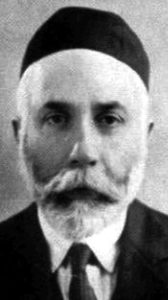
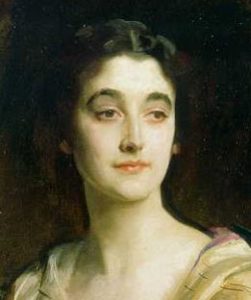
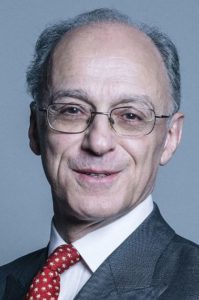
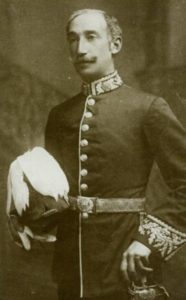 Sir Edward Sassoon (1856-1912), the son of
 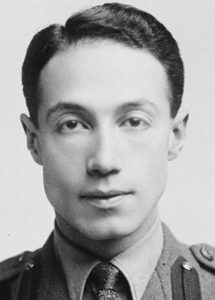 Their first child was Sir Philip Albert Gustave David Sassoon (1888-1939). He studied at the prestigious Eton College, and then at Oxford—one of just 25 Jewish students at the time. Following this, he joined the British Army and had the rank of second lieutenant. He followed his father into Parliament in 1912. When World War I broke out, Sir Philip was sent to mainland Europe and was the private secretary of Field Marshal Douglas Haig, commander of the British Expeditionary Force. He was later awarded the Croix de Guerre for “distinguished service” in the war. Returning to Parliament after the war, Sir Philip made it his personal mission to bring civilian air travel to England and the world. Airplanes were still little-known by the public, and considered far too dangerous. Sir Philip bought his own airplane in 1919 to promote air travel to the masses. In 1931, he was appointed Under-Secretary of State for Air. He also served as England’s First Commissioner of Works, and chaired London’s famous National Gallery. Philip owned Trent Park in the north of London, and built a mansion there where he liked to host his many friends. Interestingly, during World War II the British used Trent Park as a luxury prison for high-ranking German POWs, on whom they