
Category Archives: Writers & Thinkers

Jews in the Wonderful World of Literature, Thought, and Scholarship

Jews of the Week: Isaac Leeser and Warder Cresson

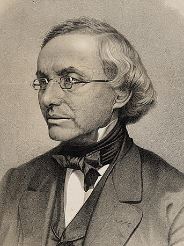
Isaac Leeser

Isaac Leeser

Isaac Leeser (1806-1868) was born in the Germanic kingdom of Westphalia. Growing up, he received both a religious Jewish education, as well as a secular German one, and was fluent in Latin, German, and Hebrew. He immigrated to the United States at the young age of 17 and lived with his wealthy uncle. While working in his uncle’s business, Leeser started to teach Judaism in his local synagogue, and vocally defended his religion when it was under attack in the public sphere. By age 22, he was quite well known, and was invited to take over Philadelphia’s Congregation Mikveh Israel, one of America’s oldest Sephardic synagogues. Leeser introduced American Jewry to the German custom of delivering a sermon between prayers (something now common in all synagogues). He wrote a book about Judaism in 1829 but found no publisher willing to print it. So, he started his own press, establishing the Jewish Publication Society. In 1845, he published his English translation of the Torah – the first by a Jew. Eight years later, he published a complete English Tanakh. This translation was the authoritative Jewish version for decades, and is still widely used today. Leeser helped found some of America’s first Jewish schools, seminaries, and magazines. He was also a civil rights activist and worked hard on behalf of all minorities. He is regarded as one of America’s most important Jewish pioneers.
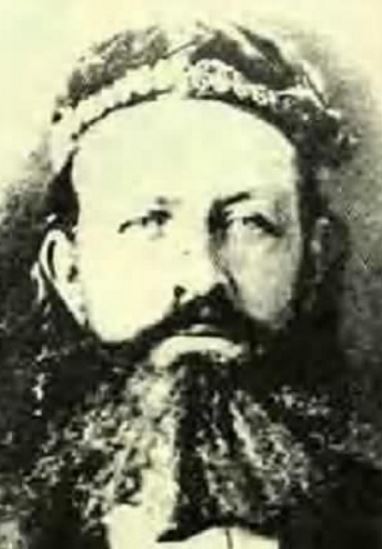
Michael Boaz Israel, aka. Warder Cresson

Michael Boaz Israel, aka. Warder Cresson

In 1840, Leeser met a wealthy farmer named Warder Cresson (1798-1860). Cresson was a very religious Quaker, a preacher and writer. After some discussions with Leeser, Cresson took a deep interest in Judaism. In 1844, he was appointed America’s first consul in Jerusalem. This brought him face-to-face with Judaism and he grew close to Jerusalem’s ancient Sephardic community. He started writing for Leeser’s magazine, The Occident, and even began doing counter-missionary work to stop Christian proselytizing of Jews. In 1848, Cresson converted to Judaism, was circumcised, and took on the Hebrew name Michael Boaz Israel ben Avraham. Upon his return to Philadelphia, his wife divorced him, sued him, and sought to have him declared insane. The case made headlines across the US. Cresson ultimately won the suit, proving his absolute sanity and wisdom. He returned to Jerusalem, married a Sephardic woman and had three kids. In 1852, he established a Jewish agricultural colony – predating the Zionist movement by several decades, and in fact, helping to inspire it. He continued writing on Jewish topics, and died as a respected and prominent leader in Israel’s Sephardic community. His original tomb and burial place on the Mount of Olives was recently rediscovered.

Words of the Week

Just as the olive yields oil for light only when it is pounded, so are man’s greatest potentials realized only under the pressure of adversity.
– The Talmud


Jews of the Week: Margaret and H.A. Rey

Curious George

Margaret and H.A. Rey

Margaret and H.A. Rey

Margarete Elisabethe Waldstein (1906-1996) was born in Hamburg, Germany, the daughter of a Jewish politician. She studied art and worked in advertising until 1935, when she fled Nazi Germany for Brazil. In Rio de Janeiro, she reconnected with an old family friend who had also moved to Brazil. Hans Augusto Reyersbach (1898-1977) was born in Hamburg, too, and now working as a salesman in Rio. The two got married that same year, and resettled in Paris. Reyersbach started drawing a series of animal cartoons and was soon commissioned to write a children’s book by a French publisher. Cecily G. and the Nine Monkeys, a story about a giraffe and her monkey friends, was published in 1939 under the pen name H.A. Rey. The story became popular very quickly. Particularly beloved was one of the monkey characters in the book, originally named Fifi, and commonly translated to other languages as George. The following year, Rey started working on a new manuscript featuring the curious monkey. By this point, World War II had started, and the Nazis were approaching Paris. Hans and Margaret fled the city on a pair of bicycles. The manuscript was one of the few things they took with them. The couple arrived in Spain, then Portugal, then headed back to Brazil, and finally settled in New York. Curious George was published in 1941, and like its predecessor, was very popular. Hans and Margaret went on to produce seven Curious George books together. Hans wrote and illustrated many more children’s books before passing away in 1977. Two years later, Margaret became a professor of creative writing at Brandeis University. Meanwhile, she worked on a second series of Curious George books, as well as a number of short TV films based on the stories. In 1989, she established the Curious George Foundation with two goals: to promote creative writing among children, and to prevent cruelty to animals. When she passed away in 1996, Margaret left major donations for the Boston Public Library, the Beth Israel Deaconess Medical Center, and donated the family’s entire literary estate. Curious George continues to be among the most popular children’s books all over the world. A third series of Curious George stories have been produced in recent years, as well as a TV series which airs on PBS. In 2006, an animated film starring Will Ferrell and Drew Barrymore was released. Two sequels and a video game have been produced since then. Today, there is an official children’s bookstore in Cambridge, Massachusetts called The World’s Only Curious George Store. There is also a Curious George Live national tour, and a popular Curious George-themed water park at Universal Studios in Florida.

Words of the Week

One should always see to it that tomorrow should be much better than today.
– Rabbi Yosef Yitzchak of Lubavitch

Jew of the Week: Rebbetzin Esther Jungreis

JungreisEsther Jungreis (1936-2016) was born in Hungary, the daughter of a rabbi. During the Holocaust, the family was sent to Bergen-Belsen, and later loaded up on a train headed for Auschwitz. On route, they managed to escape to Switzerland with the help of Rudolph Kastner’s Aid and Rescue Committee. The quota for migrants to Israel was filled, so the family was given papers to go to the States. Jungreis went on to marry a rabbi and settled in North Woodmere, New York, where the couple founded the town’s Jewish Center and Congregation Ohr Torah. Seeing the rampant assimilation in the United States, Jungreis made it her life’s work to prevent what she saw as a “spiritual holocaust”. In 1973, she started an organization called Hineni, aimed at inspiring Jewish youth to return to their roots. Under her dedicated leadership and moving speeches, Hineni grew to become an international organization, no longer focused solely on youth but rousing countless young and old alike. Jungreis organized events and gave lectures around the world – visiting fifteen or more countries a year was normal for her. Her weekly class drew as many as 1500 people at a time. Meanwhile, Jungreis wrote a regular column for The Jewish Press (the world’s largest English-language Jewish paper) for some 45 years, making it the longest running column in the publication’s history. She also wrote four best-selling books, and had a television programme. In 2004, the Rebbetzin spoke at the Republican National Convention, and in 2008 was selected by President Bush to join him on his delegation to Jerusalem for Israel’s 60th anniversary. Today, she is recognized as one of the central pioneers of the modern kiruv (Jewish outreach) movement. Sadly, the Rebbetzin passed away yesterday. She worked tirelessly until the very end, and in her last article – published just last week – finished with these words: “When will we wake up? When will we don our priestly garments and fulfill our G-d-given destiny and be ‘a light unto all mankind’?”

Words of the Week

A long life is not good enough, but a good life is long enough.
– Rabbi Theodore Meshulem Jungreis