
Category Archives: Business & Finance

Jews in the World of Business and Finance

Jew of the Week: Naftali Bennett

Software Entrepreneur, Special Forces Commander

Naftali Bennett

Naftali Bennett

Naftali Bennett (b. 1972) was born in Haifa to Modern Orthodox parents who made aliyah to Israel (from San Francisco) following the Six-Day War. He studied at Yavne Yeshiva, where he became a youth leader for Bnei Akiva, the religious Zionist organization. After his studies, Bennett joined the IDF and served in the Sayeret Matkal and Maglan special forces units, rising to the rank of company commander. His primary area of operations was in Lebanon. After completing his service, Bennett studied at the Hebrew University, earning a law degree. In 1999, he moved to New York and co-founded the software company Cyota. As its CEO, Bennett built the start-up into a successful tech firm and sold it in 2005 for $145 million. Bennett then returned to Israel and continued his work as a software entrepreneur. At one point he served as CEO of Soluto, which was recently sold for nearly $130 million. Not long after his return to Israel, the Lebanon War broke out and Bennett returned to the IDF, leading a number of search-and-destroy missions in Hezbollah territory. Following the war, Bennett joined Netanyahu’s Likud party and soon became his Chief of Staff. Between 2010 and 2012, Bennett was the director-general of Yesha, the organization that represents Jewish settlements in Judah and Samaria (commonly known as the “West Bank”). After founding a number of other organizations promoting Israel and the Zionist cause, Bennett left Likud and joined HaBayit HaYehudi (The Jewish Home), a religious Zionist political party. He immediately ran for party leadership and won by a landslide. Just a few months later, Bennett was able to win 12 seats for the party in Israel’s Knesset (compared to just 3 seats for the party in the previous election). Among other roles, he became the Minister of the Economy and Minister of Religious Services, as well as a member of the Foreign Affairs and Defense Committee. He has been praised for his work as Minister of the Economy, opening up new trade agreements with emerging markets around the world, boosting trade with Russia, China, Brazil, and India, as well as dealing with increasing boycotts of Israeli products. Bennett is continuing to lead HaBayit HaYehudi into Israel’s coming elections in March. Some of his platform positions have been controversial, among them opposing a Palestinian state, and fighting Israel’s big unions. At the same time, he is pushing education reform, more investment in underprivileged parts of Israeli society and in small businesses, and providing affordable housing and land provisions for veterans. He is also focused on integrating Israeli-Arabs and Ultra-Orthodox Jews more tightly into Israel’s society and workforce. Bennett remains a reservist in the IDF, holding the rank of Major.

UPDATE: On June 13, 2021, Naftali Bennett became Israel’s 13th prime minister, as the head of the Yamina party. He is the first religious prime minister in the country’s history.

Words of the Week

The fact that the entire world says something does not mean it is correct.
Naftali Bennett, in an interview for Israel’s Channel Two.
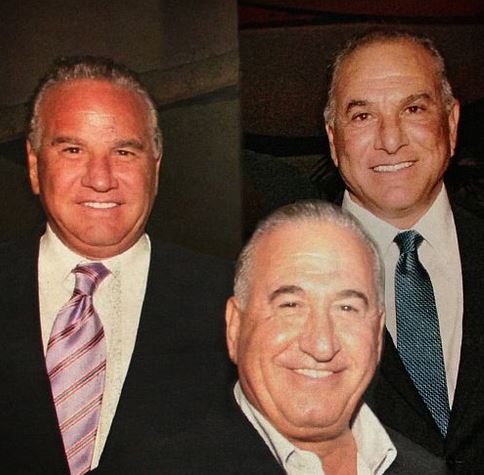
Jews of the Week: Joe, Ralph, and Avi Nakash

The Jordache Brothers

Avi, Joe, and Ralph Nakash

Joseph Nakash (b. 1942) was born in Israel to poor Syrian-Jewish immigrant parents. At 20, having never finished high school, Joseph moved to New York with just $25. He initially worked as a stock boy making $40 a week before taking over as store manager, saving money to bring over his brothers, Raphael and Avraham, from Israel. Soon after they arrived, the trio combined their savings to purchase an appliance store in Brooklyn, which they converted to a retailer selling designer jeans. The store was an instant hit, and in just a few years, they opened three more locations. They soon started producing their own brand of jeans: Jordache (a contraction of their names: Joe, Ralph, his son David, and Avi Nakash). Taking a loan to start a massive ad campaign, the brothers were able to turn Jordache into a household name in jeans. By the mid-80s, their revenues neared half a billion dollars, and the brothers began to expand their business into other areas. They started their own global cargo shipping business, and also acquired 50% of Guess (a deal which ended in 1990 with Jordache keeping the “Gasoline” brand and Guess keeping the “Diesel” brand). By 1995, Jordache began to lose its “high-end” status so the brothers made an agreement with Wal-Mart to sell the jeans as a discount label. This actually turned out to be a blessing, further propelling their sales. At the same time, they began to manufacture jeans for other brands like Tommy Hilfiger, American Eagle, and even Levi’s! Since then, the Nakash brothers have also expanded into airlines, hotels, agriculture, banking, and real estate. Their Israeli olive oil factory produces award-winning oils, and their Tel-Aviv tomato plant supplies Heinz with tomato paste. Most recently, they purchased Miami’s Versace Mansion (outbidding Donald Trump), and the Setai Miami Beach Hotel, among the city’s most expensive and prestigious. Their shipping company also won exclusive rights to operate Israel’s Red Sea port in Eilat. Despite the fact that the Nakash empire is worth over $2 billion, many of the company’s decisions are still hammered out at the family’s Shabbat dinner table.

Words of the Week

One who does not see God everywhere does not see Him anywhere.
– Rabbi Menachem Mendel of Kotzk, The Kotzker Rebbe

Jews of the Week: Houda & Ebrahim Nonoo

Houda Nonoo with former president George W. Bush

Houda Nonoo with former president George W. Bush

Houda Ezra Ebrahim Nonoo (b. 1964) was born in the small Arabian kingdom of Bahrain, to Jewish parents of Iraqi ancestry. She spent a major part of her formative years in Britain, where she went to Jewish school. Nonoo earned her BA and MBA in England, and also married there. After her father died, she returned to Bahrain and took over the family business, growing it ever larger. She was soon a well-noted businesswoman, and the secretary-general of the Bahrain Human Rights Watch Society. From there, she was able to get a seat in Bahrain’s parliament, appointed by the King of Bahrain himself. For over three years, she sat on the Shura Council, which is the upper house of the Bahraini legislature. In 2008, Nonoo was appointed Bahrain’s ambassador to the U.S. This made her the first Jewish ambassador from any modern Arab country. She served in that post for the next five years.

Her cousin and fellow businessman, Ebrahim Daoud Nonoo, also served in Bahrain’s parliament. He is the CEO of the Basma Company, which offers an array of services from security and IT solutions to travel, and custodial services. Meanwhile, he continues to direct the family’s foreign exchange and investment business, together with his siblings. Their Bahrain Stock Company now has 19 branches across the kingdom, and is the country’s main Western Union agent. In 2006, Ebrahim financed the reconstruction of Bahrain’s only remaining synagogue. Today, there are less than 50 Jews left in Bahrain.

Words of the Week

Better a sinful person who knows that he has sinned, than a righteous person who knows that he is righteous.
– Rabbi Yaakov Yitzchak Horowitz, The “Seer of Lublin”