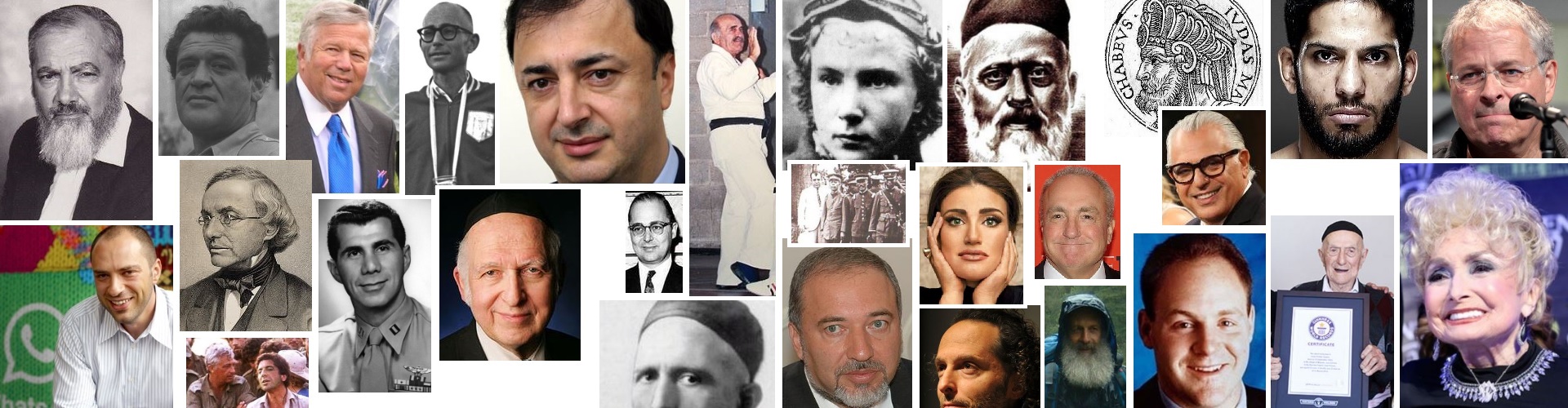
Meyer Guggenheim, with (top to bottom) Daniel, Solomon, Simon, and Benjamin
Meyer Guggenheim (1828-1905) was born in Switzerland to a traditional Ashkenazi Jewish family. At 19, he set out on his own and journeyed to the United States. After working in various shops in Philadelphia, Guggenheim opened up his own company, importing Swiss embroidery. Business went well, and he soon searched for new opportunities. In 1881, Guggenheim invested $5000 in two Colorado silver mines, and quickly realized their incredible potential. He sold all his other ventures and put all of his money into mining and smelting. With the help of his seven sons, Guggenheim quickly expanded across the US. By 1901, the family controlled the largest metal-processing plants in the US, and also owned mines in Mexico, Bolivia, Chile, and the Congo. In 1922, various disputes led to the Guggenheims being kicked out of their largest company by its own board. Soon, they sold off all of their mines. The family would invest elsewhere, and the fortune vacillated over the decades. In 1999, it ceased to be a strictly family affair with the opening of Guggenheim Partners. Today, the firm has 2300 employees, and controls $260 billion in assets worldwide (including the Los Angeles Dodgers baseball team, purchased for a record $2.15 billion in cash).
After the elder Guggenheim’s passing, his son Daniel Guggenheim (1856-1930) took over the business. By 1918, he raised the family fortune to as much as $300 million, making them among the wealthiest people in the world, as well as among the most generous philanthropists. Daniel’s son was a World War I pilot, inspiring Daniel to invest considerably in aviation technology. To this day, the most prestigious prize in aeronautics is the Daniel Guggenheim Medal. Another son, Solomon Guggenheim (1861-1949), was a patron of the arts and an avid collector. He established New York’s world-famous Guggenheim Museum. Meanwhile, Simon Guggenheim (1867-1941) served as a US senator. He established a fund in honour of his deceased son that has granted over 15,000 scholarships to date, totalling over $250 million! His $80,000 donation (equivalent to $2.5 million today) to a Colorado school was, at the time, the largest private grant ever made to a state institution. Benjamin Guggenheim (1865-1912) worked for the family business out of Paris, and in 1912 boarded the Titanic to head back home. When the iceberg hit, he was offered a place among the first women being evacuated, but rejected, saying “No woman shall remain unsaved because I was a coward.” One survivor reported that “after having helped the rescue of women and children, [he] got dressed, a rose at his buttonhole, to die.” His body was never recovered.
Words of the Week
We can easily forgive a child who is afraid of the dark; the real tragedy of life is when men are afraid of the light.
– Plato



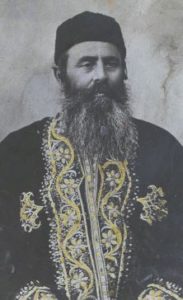 Shlomo ben Yakov Moussaieff (1852-1922) was born in the emirate of Bukhara (present-day Uzbekistan). Both a renowned rabbi and a wealthy businessman, he made aliyah to the Holy Land in 1888 – bringing with him forty cases of gold – and was one of the founders of Jerusalem’s famous Bukharian Quarter. Moussaieff built four synagogues, and homes for 25 poor families. Meanwhile, he published a prayer book and disseminated it widely, making it his mission to inspire more Jews to pray regularly. He also continued his business ventures, particularly in real estate, tea, silk, and gemstones. Moussaieff was an avid collector of rare manuscripts, and amassed an impressive library with 225 ancient texts, including prized manuscripts of Maimonides and the mystical teachings of the Arizal. Until his last days, Moussaieff was committed to the development of Israel, and stated in his will that only those of his seven children that remain in Israel would receive any inheritance.
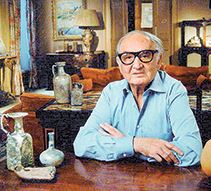 His grandson, also Shlomo Moussaieff (1923-2015), though better known as Sam, would become even more famous. One of twelve children raised in Jerusalem, Sam Moussaieff ran away from home as a teen to avoid his strict father. Living in a synagogue, he worked for a carpenter and sold ancient coins he would find in Jerusalem’s caves and tombs. Once arrested by Arab policemen, he ended up in a Muslim school for nearly a year, becoming proficient in Arabic and the Koran. At 17, Moussaieff enlisted in the British Army to fight the Nazis. After World War II, he fought for Israel’s independence and was captured by the Jordanians, who imprisoned him for a year. Moussaieff returned to Jerusalem and joined the family jewellery business. He soon opened his own antiquities shop in Jaffa, at times getting in trouble for smuggling goods. In 1963, Moussaieff was offered to have his record cleared of legal issues, as well as the rights to an exclusive shop in London’s Hilton Hotel, in exchange for handwritten letters from Maimonides which he owned. Moussaieff accepted and moved to London. His shop soon specialized in jewellery, and he became the dealer of choice for wealthy barons from Arab oil states thanks to his pristine Arabic. Moussaieff became world-renowned for his extremely rare and special gems. He owned the most precious stone in the world: a red diamond valued at $20 million. In 2011, he was ranked among the richest Londoners, with an estimated worth of some $350 million. Moussaieff amassed a personal collection of over 60,000 ancient artifacts, including millennia-old seals from Jerusalem’s First Temple, and reportedly even items associated with the forefather Abraham! His stated goal was to collect indisputable evidence proving the accuracy of the Torah. Moussaieff was given an honourary degree by Bar Ilan University (to whom he donated many artifacts, including his grandfather’s ancient manuscripts) which established the Dr. Shlomo Moussaieff Center for Kabbala Research. Interestingly, Moussaieff once purchased an ancient Torah scroll for $1 million from the Allenby family – who had the Torah because the elder Shlomo Moussaieff gave it as a gift to General Allenby during World War I!