Category Archives: Business & Finance

Jews in the World of Business and Finance

Jews of the Week: Isaiah Kenan & Larry Weinberg

Portland Trail Blazers and AIPAC
Larry Weinberg

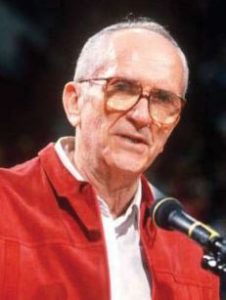
Lawrence Jay Weinberg (1926-2019) was born in New York City. He fought valiantly with the US Army in World War II, earning a Purple Heart, Combat Infantry Badge, and the Bronze Star. He was horribly injured in a battle in France, and spent a year in recovery. After university studies, Weinberg founded the Larwin Company, a housing developer. Two decades later, having merged with another company, it had become the top housing developer in the country, building over 8000 residential units a year. Meanwhile, Weinberg was also the founder of Com-Air Products, a manufacturer of jet engine parts. In 1970, Weinberg teamed up with two other prominent Jewish businessmen to bring an NBA team to Portland. They succeeded, and five years later, Weinberg became president of the Portland Trail Blazers. The team won its first NBA Championship in 1977. Weinberg continued as president until selling the team to Microsoft co-founder Paul Allen in 1988. By that point, Weinberg had also become a major force within AIPAC, the “pro-Israel Lobby” in Washington, and had served as its president for several years.

Isaiah “Si” Kenen

AIPAC was founded by Isaiah Leo Kenen (1905-1988). Kenen was born to a Russian-Jewish immigrant family in Canada. He studied philosophy at the University of Toronto, and went on to become a journalist for the Toronto Star. In 1926, he moved to Cleveland, where he took up the study of law and was admitted to the bar in 1933. Some years later, he became president of the Cleveland Zionist District, and during this time worked for the Jewish Agency. After 1948, he served in Israel’s delegation to the United Nations. In 1951, he was asked to lobby Congress for some financial aid for Israel to deal with the huge influx of Jewish refugees it was receiving, especially the nearly 1 million Sephardic and Mizrachi Jews expelled from Arab countries. (While the world focuses on Palestinian refugees, the plight of Jewish refugees continues to be ignored.) Kenen’s lobbying team would transform into AIPAC in 1959, and has worked hard to draw American support for Israel ever since. AIPAC has become a powerful lobbying group (once ranked as the second most powerful), which has unfortunately brought with it a great deal of negative publicity, not to mention being implicated in wild conspiracy theories. Today, AIPAC has more than 100,000 members, and has been called “the single most important organization in promoting the US-Israel alliance.” Their yearly conference draws some 18,000 supporters, along with a host of renowned speakers. This year’s conference will take place in Washington DC starting March 24th.

The Mizrahi Project: Remembering the Jewish Refugees

Words of the Week

I am convinced that it is true that God created this earth but it is also a fact that only an Israel can keep this earth from dying.

– Tashbih Sayyed, Pakistani-American scholar

Jew of the Week: Evelyn Berezin

The Woman That Made Bill Gates and Steve Jobs Possible

Evelyn Berezin, “Godmother of the Word Processor”

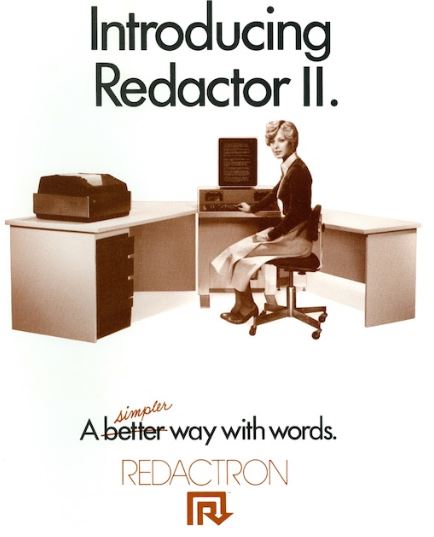
Evelyn Berezin (1925-2018) was born in the Bronx to poor Russian-Jewish immigrants. Growing up, she loved reading science fiction and wished to study physics. She excelled at school and graduated two years early. Berezin had to wear make-up and fake her age to get a job at a research lab. She ended up studying economics because it was a more “fitting” subject for women at the time. During World War II, she finally received a scholarship to study physics at New York University. Berezin studied at night, while working full time at the International Printing Company during the day. She continued doing graduate work at New York University, with a fellowship from the US Atomic Energy Commission. In 1951, she joined the Electronic Computer Corporation, designing some of the world’s very first computers. At the time, computers were massive machines that could only do several specific functions. Berezin headed the Logic Design Department, and came up with a computer to manage the distribution of magazines, and to calculate firing distances for US Army artillery. In 1957, Berezin transferred to work at Teleregister, where she designed the first banking computer and the first computerized airline reservation system (linking computers in 60 cities, and never failing once in the 11 years that it ran). Her most famous feat was in 1968 when she created the world’s first personal word processor to ease the plight of secretaries (then making up 6% of the workforce). The following year, she founded her own company, Redactron Corporation, and built a mini-fridge-sized word processor, the “Data Secretary”, with a keyboard and printer, cassette tapes for memory storage, and no screen. With the ability to go back and edit text, cut and paste, and print multiple copies at once, Berezin’s computer freed the world “from the shackles of the typewriter”. The machine was an in instant hit, selling thousands of units around the world. Berezin’s word processor not only set the stage for future word processing software, like Microsoft Word, but for compact personal computers in general. It is credited with being the world’s first office computer. Not surprisingly, it has been said that without Evelyn Berezin “there would have been no Bill Gates, and no Steve Jobs”. Redactron grew to a public company with over 500 employees. As president, she was the only woman heading a corporation in the US at the time, and was described as the “Most Senior Businesswoman in the United States”. Redactron was eventually bought out by Burroughs Corporation, where Berezin worked for several more years. In 1980, she moved on to head a venture capital group investing in new technologies. Berezin served on the boards of a number of organizations, including Stony Brook University and the Brookhaven National Laboratory, and was a sought-after consultant for the world’s biggest tech companies. She was a key part of the American Women’s Economic Development Corporation for 25 years, training thousands of women in how to start businesses of their own, with a success rate of over 60%. In honour of her parents, she established the Sam and Rose Berezin Endowed Scholarship, paying tuition in full for an undergraduate science student each year. Sadly, Berezin passed away earlier this month. She left her estate to fund a new professorship or research centre at Stony Brook University. Berezin won multiple awards and honourary degrees, and was inducted into the Women in Technology International Hall of Fame.

Words of the Week

As much as I love, esteem, and admire the Greeks, I believe the Hebrews have done more to enlighten and civilize the world. Moses did more than all their legislators and philosophers.
– John Adams2nd president of the United States

An ad for Berezin’s new-and-improved Redactor II, typing as many as 60 letters per second!

Jews of the Week: Renée and Sir Naim Dangoor

The “Exilarch” and the First “Miss Iraq”

Sir Naim Dangoor in 2015

Naim Eliahou Dangoor (1914-2015) was born in Baghdad to a wealthy and religious family, at a time when a full third of the city’s population was Jewish. His grandfather was the Chief Rabbi of Baghdad, while his father operated the largest Arabic printing press in the world. At 17, Dangoor journeyed to England to study engineering at the University of London. Upon his return to Iraq, he hoped to work as a railway engineer but was barred from the position because he was Jewish. Instead, Dangoor was conscripted into the army. There, he met Ahmed Safwat, and the two decided to start a business together. The first major contract secured by their company (Eastern Industries Ltd.) was to replace the windows of Iraq’s government buildings. They soon diverged into property development and manufacturing. They made matches, furniture, and opened Iraq’s very first Coca-Cola bottling plant.

Renée Dangoor

Meanwhile, Naim married his cousin, Renée Dangoor(1925-2008). She was born in Shanghai, where her family temporarily lived for business. The family moved back to Baghdad when she was still a child. In 1947, she participated in the country’s first beauty pageant, and was crowned the first ever “Miss Iraq”. She married Naim the following year. Unfortunately, things got really bad for Iraq’s Jews after the founding of the State of Israel. By 1959, the Dangoors had no choice but to flee. Naim continued to operate his businesses for a few more years until the government stripped him of his citizenship and took over his company. The family settled in England and started from scratch, opening a new property development business, and establishing a community centre for Iraqi Jewish immigrants. To preserve their culture, Naim founded The Scribe – Journal of Babylonian Jewry, which would go on to publish magazine issues for 35 years, distributed in 25 countries. By 1980, Dangoor had rebuilt his wealth. He wanted to give back to his new home, and established the Exilarch Foundation to provide charitable funds to organizations across the UK. Among other things, the Foundation has provided full scholarships to over 5000 needy students. The Dangoors made the largest ever private donation to both the Royal Society of Medicine and the Francis Crick Institute (Europe’s largest biomedical research facility). After Renée succumbed to cancer, Naim became one of the biggest contributors to Cancer Research UK. He also donated a massive sum to the University of Nanjing in China, in honour of his wife who was born nearby. Among the many other beneficiaries of the Dangoors is Bar-Ilan University, which now runs the Dangoor Centre for Personalised Medicine. Shortly before his passing, at age 100, Dangoor was knighted by the Queen, making him the second-oldest person ever to receive the honour.

50 Things a Jew Should Always Do

Words of the Week

The idea is that you’re supposed to be a light to the nations. If you only have your light on at home, nobody else sees it.
– Rabbi David Wolpe

Clockwise from left: Hakham Ezra Reuben Dangoor, Chief Rabbi of Baghdad from 1923-1926; Naim and Renée at a Baghdad party; an Arabic newspaper announces “Miss Iraq” in 1947; the first Coca-Cola ad in Iraq, circa 1950; Naim with his business partner Ahmed Safwat.