The Home Depot
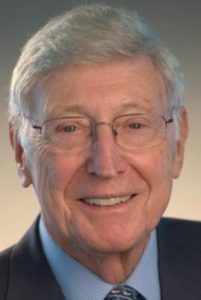
Bernie Marcus
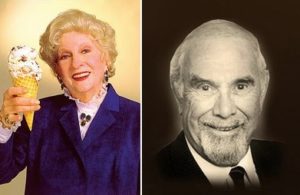
Bernard Marcus (b. 1929) was born in New Jersey to Russian-Jewish immigrants. His dream was to become a doctor, but he could not afford the tuition. Instead, he studied pharmacy at Rutgers University (where he was part of the Jewish AEPi fraternity) and paid his way by building cabinets with his father. While working at a drug store after graduating, Marcus realized that he is far more interested in business than pharmacy. He went on to work in various retail jobs, eventually becoming the CEO of a home improvement store. There he met Arthur Max Blank (b. 1942). Blank had studied business in college, and worked in various accounting jobs until becoming VP of finance at the same home improvement store as Marcus. The two were both fired from the company in 1978. Undeterred, they decided to start their own home improvement store, with a new “warehouse” concept, and a focus on superb customer service and a vision of giving back to the community. The two hired a fellow employee who had been fired, Ron Brill, as well as businessman Pat Farrah, who had once owned a home improvement store. The following year they opened the first Home Depot in Atlanta. Just two years later, they branched out into Florida and went public. Within a decade, Home Depot had become America’s largest home improvement store. Today, it has over 2200 stores across the US, Canada, and Mexico, with some 385,000 employees, and is the world’s largest buyer of construction materials. True to their original vision, The Home Depot Foundation has donated over $200 million in support of various causes, including Habitat for Humanity. They have been lauded for their environmental conservation, avoiding lumber purchases from endangered forests, running the largest light bulb recycling program in the US, and spending $100 million over ten years to build 100,000 green homes and plant 3 million trees. Home Depot also sponsors the US and Canada Olympic Teams.
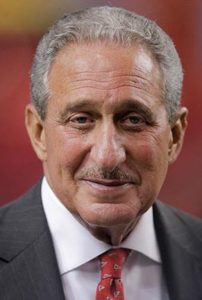
Arthur Blank
Marcus and Blank served as CEO and president of Home Depot for 19 years. Upon retirement, Blank purchased the Atlanta Falcons football team, and recently founded a new Major League Soccer team, Atlanta United FC. He is also a noted philanthropist, donating millions to various causes, including a recent $7 million to Denver’s National Jewish Health Center. Blank has signed The Giving Pledge, committing to donating at least 50% of his wealth to charity. Marcus has signed the Pledge, too, and was one of America’s most charitable donors in 2005. Among his many contributions, he has given $25 million to Autism Speaks, $15 million for a new nanotechnology research centre, and $5 million to co-found the Israel Democracy Institute. He now chairs his Marcus Foundation, which has given countless sums to children’s causes, Jewish communities, medical research, and support for military veterans. When asked why he was so passionate about charity, he said: “It goes back to what I learned as a young Jewish boy growing up in Newark, N.J. with immigrant parents: You have an obligation to give back to society. Thirty years ago, when I had no money, I worked for various charities, gave my heart, soul and time – now I can also give money.”
Words of the Week
We have neither taken other men’s land, nor are we in possession of other men’s property, but of the inheritance of our forefathers; it was wrongfully held by our enemies at one time, but we, grasping our opportunity, hold firmly the inheritance of our forefathers.
– Simon Maccabee (Book of Maccabees I,15:34-35)
 Aharon Yehuda Leib Shteinman (1914-2017) was born in what is now the city of Brest, Belarus. To avoid being conscripted into the Polish army, the young yeshiva student fled to Switzerland with some classmates. He continued his diligent studies in a Swiss yeshiva until being arrested during World War II and sent to a labour camp. Shteinman was the only member of his family to survive the Holocaust. He settled in Israel after the war. There, the young rabbi quickly made a name for himself as a Torah prodigy, and was soon appointed rosh yeshiva, head of a Torah academy. He would serve as a rosh yeshiva for the next five decades, while also establishing a number of children’s schools for the underprivileged. Meanwhile, Rav Shteinman wrote profusely, authoring dozens of bestselling books and discourses on Torah, Talmud, and Jewish thought, as well as being recognized as an expert in the field of education. While abstaining from politics himself, Rav Shteinman was the spiritual leader of Israel’s Degel HaTorah party, playing an influential role in government. In his 90s, and in frail health, the Rav decided to journey around the world to strengthen Jewish communities. Countless thousands gathered to greet him and hear his wise words in Los Angeles, New York, Mexico City, Buenos Aires, Manchester, Odessa, Berlin, Gibraltar, Paris, and many more small towns. On these trips, he would give as many as 10 talks a day.
 Rav Shteinman was known for his extreme piety, humility, and modesty. His daily diet was nothing but a cucumber, a boiled potato, and one small bowl of oatmeal. He lived in a tiny apartment, with little furniture but walls lined end to end with books. He slept on the same thin mattress that was given to Jewish refugees upon arrival in Israel for some 50 years. Streams of people lined up at his open door each day seeking counsel and blessings. Rav Shteinman stood only for truth, even when it brought him adversity. This was particularly clear when he supported the Nachal Charedi, an IDF unit for yeshiva students. Even after some backlash from ultra-Orthodox communities, the Rav stood his ground and continued his support. He was widely recognized as the gadol hador, the world’s chief rabbi. Sadly, the great rabbi passed away yesterday, at 103 years of age. (His condition had turned critical two weeks ago after the tragic death of his 72-year old daughter from a heart attack, even though no one had told him of her passing.) Rav Shteinman wrote in his will that it would suffice to have just ten men to carry out his funeral, and requested no eulogies. Nonetheless, the funeral procession brought over 600,000 people. Israel’s President Reuven Rivlin stated that Rav Shteinman “bore the entire weight of the Jewish people’s existence on his shoulders… he knew how to convey his ideas gently, in a pleasant manner, and with a great love of the Jewish people… He was a man whose wisdom was exceeded only by his humility.”