Author Archives: Jew of the Week

Jew of the Week: André Citroën

The Man Who Made the Citroën Car and Helped Win World War I
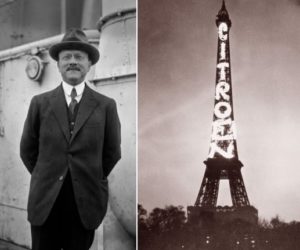
As a child, André Citroën was inspired by the Eiffel Tower. He lived to see his name displayed on it. This early “billboard” marketing technique is still a Guinness World Record for largest advertising sign.

André-Gustave Citroën (1878-1935) was born in Paris to a Dutch-Jewish father and Polish-Jewish mother. The last name “Citroën” comes from his grandfather, who sold fruit for a living in the Netherlands and was known as Limoenman, so his son made the family last name Citroen, which means “lemon”. As a child, Citroën was inspired by the Eiffel Tower and by the works of Jules Verne and dreamed of becoming an engineer. After graduating with an engineering degree, Citroën went on a trip to Poland to see his mother’s birthplace. There, he saw a carpenter working with a gear that had a “fish bone” structure. Citroën realized that such gears could be used in automobiles to make them quieter and more efficient. He bought the patent from the carpenter, then tweaked the designs until he came up with the automotive double helical gear. The Mors auto company successfully integrated these gears to make better cars, and by 1906 Citroën was the company’s director. With the outbreak of World War I, factories were being converted to produce weapons, and Citroën soon became world-renowned for increasing factory productivity. He took charge of fellow car-maker Renault’s large plant, now having its 35,000 employees making armaments. Citroën’s work played a key role in ensuring the Allies were well-armed and helping them win the war. Following the war, Citroën founded his own Citroën automobile company in 1919. Within just a dozen years, it became the world’s fourth largest car manufacturer. The company was most famous for its executive Traction Avant model, which pioneered a number of revolutionary features including independent suspensions on all four wheels and front-wheel drive. Investing so much money into research and development ultimately drove the company to bankruptcy and it was bought out by its tire maker Michelin. Citroën died the following year from cancer. He was buried in Paris’ famous Montparnasse Cemetery, with a traditional Jewish ceremony presided by Paris’ chief rabbi. A number of streets and parks in the city are named after him, and in 1998 Citroën was inducted into the Automotive Hall of Fame. Meanwhile, his company retained his original vision, and continued to pioneer many new technologies (like modern disc brakes, self-leveling suspensions, and swiveling headlights), becoming one of the most iconic car brands in the world.

Should You Wear a Red String On Your Wrist?

Words of the Week

If someone says,“I have worked hard, and I have not been successful,” don’t believe him. If someone says,“I have not worked hard and I have been successful,” don’t believe him. If someone says,“I have worked hard and I have been successful,” believe him!
– Talmud (Megillah 6b)
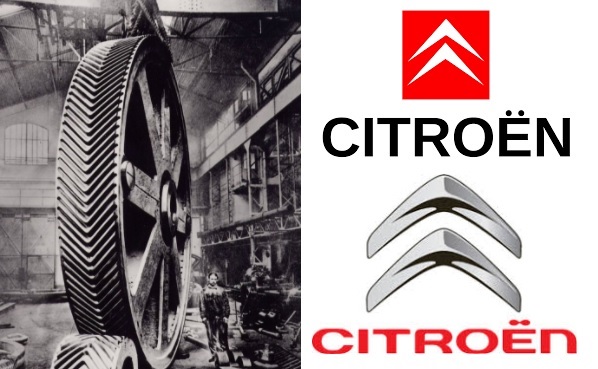
The double helical gear inspired the Citroën logo.
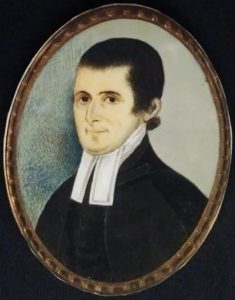
Jews of the Week: Mendes Seixas Family

Gershom Mendes Seixas

Antonio Abraham Mendes Seixas (d. 1738) was born in a small village in Portugal to a family of Conversos (or Marranos), Jews who had been forcibly converted to Christianity but continued to practice their ancestral faith in secret. The Seixas family was made up of physicians, lawyers, and merchants, and were among the most successful in Portugal. Despite this, they were still hounded by the Inquisition, and many were imprisoned or put to death. Abraham Mendes Seixas himself barely escaped the Inquisition, and settled in London with his wife and three kids around 1725. There, the family openly returned to Judaism, and Seixas renewed his marriage vows under a proper chupah in a public ceremony. Seixas quickly rebuilt his wealth and became a prominent member of London’s growing Sephardic community. When he passed away in 1738 he left very little for his only son, Isaac Mendes Seixas (b. 1709) apparently believing he was unfit to run the business. Isaac set forth for a new start in America. The son proved a good businessman, and quickly rose to the highest ranks of the merchant class in the New World. He married Rachel Levy, daughter of the great (former Jew of the WeekMoses Levy, and became an important member of Shearith Israel, one of America’s first synagogues.

Isaac’s son, Gershom Mendes Seixas (1745-1816) was the hazzan of that synagogue, and although not ordained for the role, served as its rabbi. Some say he may have been the first rabbi born in America, while others point out he was the first rabbi to give sermons in English. He was also the first Jew to sit on the board of an American university (Columbia). His good friend of twenty years, and fellow on Columbia’s board, was Alexander Hamilton, one of the Founding Fathers of the United States. It is quite likely that Gershom helped Hamilton in drafting and promoting some of the famous Federalist Papers. Meanwhile, Gershom’s older brother Moses Mendes Seixas (1744-1809) moved to Newport and became one of its richest businessmen. He co-founded the Bank of Rhode Island, and served as president of Touro Synagogue, America’s first (and also to whom George Washington wrote one of his most well-known letters). Meanwhile, younger brother Benjamin Mendes Seixas (1748-1817) was one of the founders of the New York Stock Exchange, and youngest brother Abraham Mendes Seixas (1751-1799) was a decorated officer in the Continental Army during the American Revolution. The entire family was known for their tremendous patriotism and philanthropy.

Did You Know These People Are Jewish, Too?

Words of the Week

For happily the Government of the United States gives to bigotry no sanction, to persecution no assistance, requires only that they who live under its protection should demean themselves as good citizens, in giving it on all occasions their effectual support.
– George Washington, in his 1790 letter to the Touro Synagogue and the Jewish community of Newport.

Jew of the Week: Diane von Fürstenberg

Diane von Fürstenberg    (Credit: Ed Kavishe)

Diane Simone Michelle Halfin (b. 1946) was born in Belgium, the daughter of a Moldavian-Jewish immigrant father and a Greek-Jewish mother who survived the Holocaust. She was born just 18 months after her mother was liberated from Auschwitz. Halfin studied economics at Madrid University and the University of Geneva. During this time, she met Prince Egon of the German aristocratic house of Fürstenberg. The couple soon married and had two children: Prince Alexander and Princess Tatiana. The now-Princess Diane did not want to be a trophy wife, and “decided to have a career. I wanted to be someone of my own, and not just a plain little girl who got married beyond her desserts.” She followed her passion into fashion design and apprenticed at a textile factory in Italy. It was here that she first came up with her idea of the “jersey dress”. Unfortunately, the Prince and Princess separated (a major reason being the disapproval of the Prince’s family of a Jewish bride), and Diane became a full-time fashion designer in New York. She started her business with a $30,000 loan from her father. In 1974, she finally introduced her jersey “wrap dress”. It took the world by storm, and over 5 million dresses were sold in just one year. Von Fürstenberg expanded into cosmetics and fragrances, and was soon among New York’s most successful fashion designers and businesspeople. After moving to Paris in 1985 to open a publishing house and a European cosmetics line, she returned to New York in 1997 to re-launch her American business. The jersey dress returned to immense popularity. In 2004, von Fürstenberg launched new collections of jewellery and beachwear. A couple of years later, she was made President of the Council of Fashion Designers of America, a position she still holds. She is one of the most popular designers among celebrities, and her dresses have been worn by the likes of Kate Middleton, Michelle Obama, Madonna, and Jennifer Lopez. Von Fürstenberg is also a noted philanthropist (together with her current husband Barry Diller), having donated millions to a wide array of causes including public housing, education, human rights, health, and the environment. Every year, she presents a $50,000 “DVF Award” at the United Nations building to each of five women “who display leadership, strength, and courage”. She is on the board of Vital Voices, an organization that assists women around the world, particularly in the area of economic empowerment. In 2014, she gave $12 million to help restore the crumbling historic Jewish ghetto of Venice (the oldest in the world). Von Fürstenberg also had her own reality TV show (House of DVF) that ran for two seasons, and has written two popular books. She still presides over 111 DVF stores around the world. She was recently ranked by Forbes among the world’s most powerful women, and in the TIME 100 list of iconic figures.

Words of the Week

One feels the beauty of the world only according to the measure of beauty that is in the inner core of one’s soul.
– Rabbi Abraham Isaac Kook