In Memory of Two Great Israeli Women
 Aura Ambache (1924-2022) was born in Egypt to a Jewish family of Russian and Polish heritage, that had been expelled from Yafo by the Turks before World War I. Ambache went to French schools in Egypt before heading to South Africa for university studies in math and physics. The family moved back to Israel in 1946 and Ambache joined the Jewish Agency. The following year, she married Chaim Herzog, who would go on to become Israel’s sixth president. Both husband and wife fought in the War of Independence, with Mrs. Herzog serving as an intelligence officer with Unit 8200. She was seriously injured during an attack on the Jewish Agency building. In 1958, she helped organize the first Chidon Tanach, the International Bible Contest, and between 1959 and 1968 was the head of Israel’s Department of Culture. The following year, she founded the Council for a Beautiful Israel, an NGO which works to preserve the environment of the Holy Land and boost the standard of living in the country. Herzog also wrote a book called Secrets of Hospitality. Between 1983 and 1993, she was Israel’s First Lady. Sadly, Herzog passed away last week. Her son Isaac Herzog is the current President of Israel, while son Michael Herzog is Israel’s ambassador to the US.
 Tova Gusta Wolf (1915-2022) was born in Oswiecim (Auschwitz), Poland to a Hasidic family, the oldest of six children. She was very active in the Beitar Zionist youth movement and during this time met her husband Eliyahu Berlinski. The young couple decided to make aliyah together in 1938, as soon as they married. (They had to sneak in past British authorities who had then restricted Jewish immigration to the Holy Land.) This prescient move saved their lives. Back in Poland, Tova’s entirely family (except for one sister) would perish in the Holocaust. While originally interested in acting and theatre, the loss of her family inspired her to grieve through painting. Berlinski went on to study at the renowned Bezalel Academy of Arts in Jerusalem, and spent time learning with the abstract expressionists in Paris. She won the Jerusalem Prize in 1963 and became one of Israel’s most famous painters. She has been described as the artist who “painted the pain of Auschwitz”. In 2000, she received the Mordechai Ish-Shalom Award for Lifetime Achievement. Sadly, Berlinski passed away earlier this week, aged 106. She had been painting until her last days.
Words of the Week
We need leaders not in love with money but in love with justice. Not in love with publicity but in love with humanity.
– Dr. Martin Luther King Jr.
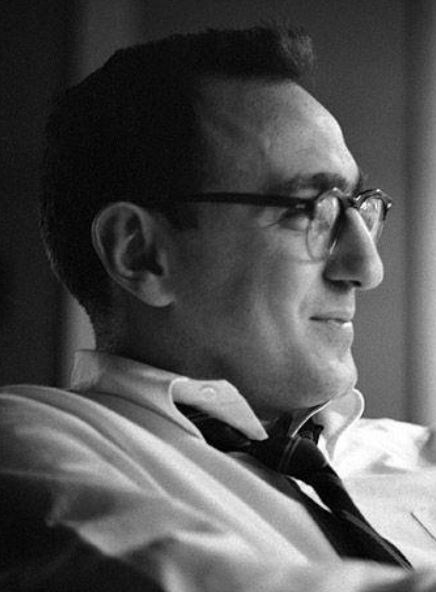
 Ferenc Hoffman (1924-2005) was born in Budapest, Hungary to a secular Jewish family. He loved to write from a young age, and won a prize for a novel he wrote while still in high school. He was also an avid chess player. During World War II, he was first expelled from university before being imprisoned at a number of concentration camps, ending up in the Sobibor death camp. One of the ways he survived is by challenging the guards to chess matches. Another is by maintaining his sense of humour. After the Holocaust, he went by the name Franz Kishunt, studying sculpting and art history while also writing satire. In 1949, he escaped communist Hungary and made aliyah, becoming “Ephraim Kishon”. He was a passionate Zionist and would staunchly defend the State of Israel for the rest of his life—often being disparaged by the media for his hardline views. Within two years of settling in the Holy Land, Kishon was fluent in Hebrew (he literally hand-copied an entire dictionary) and began writing satire for a number of papers. His most famous column was Had Gadya in the Ma’ariv newspaper, which he wrote almost daily for over 30 years. Kishon soon became Israel’s greatest and most famous humourist. He also wrote popular plays, an opera, and books that have been translated into some 40 languages, including So Sorry We Won! about the Six-Day War. In the 1960s, Kishon entered the world of film. He wrote, directed, and produced five movies, the first being the critically-acclaimed Sallah Shabbati, highlighting the struggle of Mizrachi Jewish refugees to Israel. The film won a Golden Globe and was nominated for an Oscar, making Kishon the first Israeli with that distinction. (The film also launched the international career of Israeli actor Chaim Topol, most famous for portraying Tevye in Fiddler on the Roof.) Kishon’s fourth film, The Policeman, also won a Golden Globe and was nominated for an Oscar. Not surprisingly, Kishon has been credited with opening up Israeli cinema to the world, and paving the path to Hollywood for Israelis. He won a long list of awards, including the Bialik Prize and the Israel Prize. He was a billiards champ, a pioneer in the field of computer chess, and even created a board game (“Havila Higiya”) once popular in Israel. Kishon has been called the “father of Israeli satire”, and inspired an entire generation of Israeli humourists.