Tag Archives: Zionist

Jews of the Week: Isaiah Kenan & Larry Weinberg

Portland Trail Blazers and AIPAC
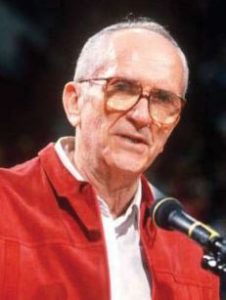
Larry Weinberg

Lawrence Jay Weinberg (1926-2019) was born in New York City. He fought valiantly with the US Army in World War II, earning a Purple Heart, Combat Infantry Badge, and the Bronze Star. He was horribly injured in a battle in France, and spent a year in recovery. After university studies, Weinberg founded the Larwin Company, a housing developer. Two decades later, having merged with another company, it had become the top housing developer in the country, building over 8000 residential units a year. Meanwhile, Weinberg was also the founder of Com-Air Products, a manufacturer of jet engine parts. In 1970, Weinberg teamed up with two other prominent Jewish businessmen to bring an NBA team to Portland. They succeeded, and five years later, Weinberg became president of the Portland Trail Blazers. The team won its first NBA Championship in 1977. Weinberg continued as president until selling the team to Microsoft co-founder Paul Allen in 1988. By that point, Weinberg had also become a major force within AIPAC, the “pro-Israel Lobby” in Washington, and had served as its president for several years.

Isaiah “Si” Kenen

AIPAC was founded by Isaiah Leo Kenen (1905-1988). Kenen was born to a Russian-Jewish immigrant family in Canada. He studied philosophy at the University of Toronto, and went on to become a journalist for the Toronto Star. In 1926, he moved to Cleveland, where he took up the study of law and was admitted to the bar in 1933. Some years later, he became president of the Cleveland Zionist District, and during this time worked for the Jewish Agency. After 1948, he served in Israel’s delegation to the United Nations. In 1951, he was asked to lobby Congress for some financial aid for Israel to deal with the huge influx of Jewish refugees it was receiving, especially the nearly 1 million Sephardic and Mizrachi Jews expelled from Arab countries. (While the world focuses on Palestinian refugees, the plight of Jewish refugees continues to be ignored.) Kenen’s lobbying team would transform into AIPAC in 1959, and has worked hard to draw American support for Israel ever since. AIPAC has become a powerful lobbying group (once ranked as the second most powerful), which has unfortunately brought with it a great deal of negative publicity, not to mention being implicated in wild conspiracy theories. Today, AIPAC has more than 100,000 members, and has been called “the single most important organization in promoting the US-Israel alliance.” Their yearly conference draws some 18,000 supporters, along with a host of renowned speakers. This year’s conference will take place in Washington DC starting March 24th.

The Mizrahi Project: Remembering the Jewish Refugees

Words of the Week

I am convinced that it is true that God created this earth but it is also a fact that only an Israel can keep this earth from dying.

– Tashbih Sayyed, Pakistani-American scholar
Jew of the Week: Amos Oz

Israel’s Greatest Writer

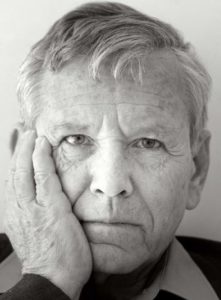
Amos Oz (Credit: Michiel Hendryckx)

Amos Klausner (1939-2018) was born in Jerusalem, the only child of Lithuanian- and Polish-Jewish parents. Although his family was entirely secular, Amos was sent to a religious school because the only other option was a socialist school that his parents vehemently opposed. At 14, he decided to go off on his own, changed his last name to “Oz”, and joined a kibbutz. He wasn’t fit for kibbutz work, and was made fun of constantly. Oz found solace in writing, and was eventually given permission by the kibbutz to have one day off a week to do so. After three years of military service, the kibbutz sent him to study literature and philosophy at the Hebrew University. He graduated in 1963, returning to the kibbutz to work as a teacher, and continuing to write once a week. Two years later, he published his first book, a collection of short stories. It was his third publication, the novel My Michael, that became a bestseller and thrust him into fame. (Even after this, his kibbutz only allowed three days a week to write!) Oz would follow that up with 13 more popular novels, four more collections of prized short stories, and another twelve of essays on various topics, along with two children’s books. The most famous of these is his 2002 memoir, A Tale of Love and Darkness, which was adapted into a film by Natalie Portman. All in all, he produced some 40 books and 450 essays, with his work translated into nearly 50 languages – more than any other Israeli writer. Oz served in both the Six-Day War and the Yom Kippur War. In 1987, he came a professor of Hebrew literature at Ben-Gurion University, a post he held until 2014. While often seen as the face of the Israeli left, Oz defended Israel in its military campaigns, explaining their necessity and never failing to point out the evils of the terrorist enemy. He was one of the first to speak of a two-state solution (penning an essay immediately after the Six-Day War) and was opposed to Israeli settlements, but supported the West Bank barrier wall. He admitted that Israelis have always been willing to work for peace while Arabs not so much, and said that it takes “two hands to clap”. He remained a staunch Zionist his entire life and vocally opposed non-Zionists. In these ways, he mitigated the Israeli left, trying to keep them from falling into extremes, and from getting into the habit of blaming Israel for everything. Oz worked tirelessly for peace, and some of his actions in doing so were severely criticized (like the recent letter he sent to imprisoned Palestinian activist/terrorist Marwan Barghouti). Among his long list of awards is the Israel Prize, the French Legion of Honour, the Spanish Order of Civil Merit, and the South Korean Park Kyong-ni Prize for Literature. Sadly, Oz passed away last week. The man who has been called Israel’s greatest writer was laid to rest in the kibbutz that was his home for over three decades.

Words of the Week

The story of modern Israel, as many have noted, is a miracle unlike any… It is a robust and inclusive democracy, and is at the leading edge of science and technology… What hypocrites demand of Israelis and the scrutiny Israel is subjected to by them, they would not dare make of any other nation.
– Salim Mansur

Jews of the Week: Recha Freier & Ruchie Freier

Two Trailblazing Women

Ruchie Freier

Rachel “Ruchie” Freier (b. 1965) was born in Brooklyn to a Hasidic Jewish family. In high school, she took a course in stenography and went on to work as a legal secretary. She soon became a paralegal, and was her family’s breadwinner, supporting her husband’s full-time religious studies. At 30, she realized she was working under lawyers that were younger and less knowledgeable than she was, and made the decision to go to law school herself. Juggling school, work, and raising six kids, it took Freier ten years to earn a bachelor’s degree in political science and a law degree. She passed the bar in 2006, becoming America’s first Hasidic female lawyer. Meanwhile, Freier was heavily involved in community work, and spent time as an advocate for New York’s oft-misunderstood Hasidic Jews. In 2005, she set up a charity called Chasdei Devorah to support poor Jewish families, and in 2008 co-founded B’Derech to help troubled teens. In 2016, she was elected Civil Court Judge after a tough race. That made her the world’s first female Hasidic judge. Freier also serves on New York’s Criminal Court. Amazingly, she is a licensed paramedic, too, and works with Ezras Nashim, an all-female volunteer ambulance service (a branch of the more famous, all-male Hatzalah). The New York Times has appropriately called her a “Hasidic superwoman”. Freier has won multiple awards, and was recently ranked by the Jerusalem Post among the 50 Most Influential Jews in the World.

Recha Freier

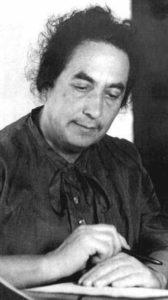
Ruchie Freier is not to be confused with Recha Freier (1892-1984), also born to a devoutly Orthodox family, in Germany. Recha Freier experienced tremendous anti-Semitism in her youth, and this inspired her to become a Zionist. Her husband was a rabbi in Berlin, while she taught in a high school and spent the rest of her time writing. In 1932, Freier was asked to help five young men who could not get jobs because they were Jewish. Freier had the idea to send the boys to the Holy Land instead to learn farming. She raised the necessary funds and organized their voyage and settlement. Thus was born what would become the Youth Aliyah. The organization would go on to save 7000 young Jews from Nazi Germany and settle them in Israel. Freier coordinated with (former Jew of the WeekHenrietta Szold to make sure the teens were taken care of in their new home. Freier herself escaped Germany in 1940 by crossing the border to Yugoslavia. There, she saved 150 Jewish orphans. All made it safely to Israel in 1941. Two years later, Freier established the Agricultural Training Center to educate impoverished children. She was also an avid musician and pianist, and in 1958 founded the Israel Composer’s Fund. In addition to composing a number of original musical pieces, Freier wrote works of poetry and Jewish folklore. In 1981, she was awarded the Israel Prize for her contributions, the State’s highest honour.

Words of the Week

If you love life, don’t waste time, for time is what life is made up of.
– Bruce Lee