
Tag Archives: Yom Kippur War

Jews of the Week: Zev Wolfson and Sir Isaac Wolfson

Zev Wolfson

Zev Wolfson (1928-2012) was born in Lithuania, deported to Siberia during World War II and finally made his way to New York. With no money he began working as a light-bulb salesman, but soon found his way into real estate where he quickly earned a large sum of wealth. Inspired by the sight of an Israeli flag, Wolfson began working tirelessly for Israel, lobbying the U.S. government to help the nascent state. He secured arms for Israel during the critical period of the Yom Kippur War, and built countless institutions across the country. Yitzchak Rabin said he didn’t know “one other Jew in the world who, as an individual, had done more for the State of Israel”. In spiritual matters, too, Wolfson was a giant, financing yeshivas worldwide, and paying for such programs as RAJE, Aish Fellowships, and Argentina’s Morasha, which bring thousands of young Jews to Israel every year at virtually no cost. Possibly every Jew in the world has somehow been touched by Wolfson’s outreach – he even established a Torah-learning program in Iran during the times of the Shah! Humble and dedicated to Torah, he made sure to donate more than 50% of his earnings, and was known to fly economy class despite his wealth. His family continues to contribute hundreds of millions of dollars to Jewish causes every year.
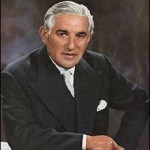
Sir Isaac Wolfson

Zev Wolfson is not to be confused with Sir Isaac Wolfson (1897-1991) of Scotland, another great Jewish philanthropist. Born to poor Polish immigrants, Isaac Wolfson couldn’t afford school so he became a salesperson. He worked his way up to become director of Great Universal Stores, once among the largest retailers in the UK, with over 50,000 employees. A devout Orthodox Jew, Sir Wolfson donated virtually all of his wealth, much of it to build the young State of Israel, saying “No man should have more than £100,000. The rest should go to charity.”

Words of the Week

People are accustomed to look at the heavens and wonder what happens there. It would be better if they would look within themselves to see what happens there.
– Menachem Mendel of Kotzk, “The Kotzker Rebbe”
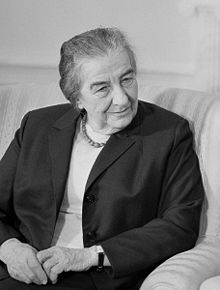
Jew of the Week: Golda Meir

Golda Meir

Golda Meir

Golda Mabovitch (1898-1978) was born in Ukraine and moved with her family to Milwaukee when she was 7 years old. A leader from her youth, she raised funds to pay for her classmates’ textbooks while in elementary school, and ran her parents’ grocery store in their absence. At 14, Golda rebelled against her mother’s wishes to abandon her studies and get married. Instead, she fled to Denver to live with her older sister. There she was first exposed to Zionism, and met her husband Morris Meyerson, from whom she took the last name, later shortening it to Golda Meir. She only married him with the promise that they would move to Israel. After working as a teacher for a few years, Meir finally made aliyah in 1921, joining a kibbutz where she worked on farms and chicken coops. Recognizing her leadership, the kibbutz appointed her their representative to the Histadrut (Federation of Labour). Meir rose through the ranks, eventually becoming head of the Jewish Agency and chief negotiator with the British Mandate. In 1948, she single-handedly raised $50 million for Israel to purchase arms in the wake of war. Ben-Gurion famously said that this was the money that “made the State possible”. She was one of 24 signatories of the Declaration of Independence, and the first person to carry an Israeli passport. Meir served as Labour Minister, and then Foreign Minister, until retiring in 1966 due to lymphoma. But she came back three years later, aged 72, to become Israel’s Prime Minister. She was Israel’s “iron lady” during the Yom Kippur War, maneuvering a victory against all odds. Nonetheless, she took the blame for the war and resigned. She succumbed to lymphoma shortly after. A winner of the Israel Prize, and voted to the list of greatest Israelis, her maxims are often quoted. Meir once said: “Pessimism is a luxury that a Jew can never allow himself.”

Words of the Week

Ten measures of speech were given to the world, and nine of them were granted to women.
– Talmud, Kiddushin 49b

Jew of the Week: Shimon Erem

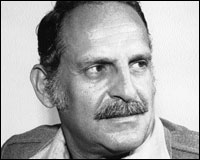
Shimon Erem, an Israeli Hero

Shimon Kazarnofsky (1922-2012) was born in Lithuania. His parents immigrated to Israel in 1925 when he was just three years old. At 15, he joined the Jewish Underground and fought valiantly to establish the State of Israel. With the outbreak of World War II, he enlisted in the British Army’s Jewish Brigade and would receive four medals for his bravery in fighting the Nazis. Stationed in Italy at the end of the war, he stayed in Europe to run underground operations: hunting escaped Nazis and smuggling Jewish refugees to Israel. At the onset of the Independence War, Kazarnofsky (now going by his new Hebraized last name, Erem) returned to Israel and organized the first Officer’s School of the Israeli Army. He battled (and was wounded) on both the Jordanian and Egyptian fronts. In 1956 he commandeered the Sinai War, then served in 1967 as commander of special forces in the Six-Day War. Despite moving to California in 1970 (where his wife is from), he immediately returned to Israel in 1973 to fight in the Yom Kippur War. Erem finally retired from the military with the rank of Brigadier General, and returned to the United States where he worked tirelessly to raise support for Israel. He once said, “Every morning when I get up, I ask myself: What can I do to help Israel today?” Sadly, Erem passed away last Sunday.

Words of the Week

… I will insist that the Hebrews have done more to civilize men than any other nation. If I were an atheist and believed in blind eternal fate, I should still believe that fate had ordained the Jews to be the most essential instrument for civilizing the nations… They are the most glorious nation that ever inhabited this earth. The Romans and their Empire were but a bauble in comparison to the Jews. They have given religion to three quarters of the globe and have influenced the affairs of mankind more, and more happily than any other nation, ancient or modern.

President John Adams, in a letter to F.A. Van Der Kemp, 16 February 1809