
The Man Who Powered Europe—and Zionism
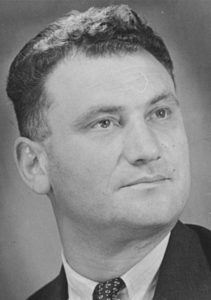
 Yonah Yosipovich Leibensohn Kremenezky (1850-1934) was born in Odessa, Ukraine to a Russian-Jewish family. He studied electrical engineering and worked on designing Russia’s first railways. In 1874, Kremenezky moved to Berlin to further his studies at the city’s Technical University. He then got a job working for Siemens, and was sent across Europe to build the continent’s first street lighting systems, starting in Paris and ending up in Vienna in 1878, where he settled permanently. Two years later, Kremenezky founded his own factory that produced lamps and batteries—the first of its kind in the Austro-Hungarian Empire. By 1883, he had become very well-known as a scientist-industrialist (a European Edison), and Crown Prince Rudolf personally asked him to help “electrify” his empire. Kremenezky did just that, laying electrical cables and setting up lighting systems, as well as building the empire’s first power plant. Meanwhile, his lamp factory designed all sorts of new lights, including ornamental bulbs and what we now know as “Christmas lights”. Kremenezky lights were a huge hit, exported around the world, even to the United States. For playing a key role in rebuilding and repowering Vienna after World War I, Kremenezky was awarded with the Ehrenbürgerrecht, the city’s highest decoration for citizens (a street in Vienna was named after him, too). Meanwhile, back in 1896, Kremenezky had met Theodor Herzl and the two became best friends. Kremenezky became a passionate Zionist, gave countless funds in support of the movement, as well as essential electrical know-how to power the future State. In 1898, he set a 500-franc prize for anyone who would write a fitting hymn for the Zionist movement. This eventually led to the adoption of HaTikvah as Israel’s national anthem. Around the same time, Hermann Schapira proposed the establishment of a Jewish National Fund that would legally purchase land in Israel and help settle Jews there. Schapira didn’t live to realize his dream, but Kremenezky was convinced and established the Jewish National Fund a couple of years later, serving as its first chairman. It was he who came up with the JNF “blue box” to collect charity. The JNF went on to play a central role in the establishment of Israel, purchasing over 50% of Israel’s landmass, developing some 250,000 acres of its land, building nearly 200 dams and reservoirs, and establishing over 1000 parks. Perhaps most famously, the JNF has planted over 260 million trees in the Holy Land, partly thanks to its Tu b’Shevat tree-planting drive which still runs to this day. A true friend, Kremenezky was the only one by Herzl’s bedside when he passed away, and financially supported Herzl’s family afterwards. When Kremenezky himself passed away, he was eulogized as a “simple, modest Jew, who did a great for the Zionist movement.” He was awarded the prestigious Wilhelm Exner Medal for excellence in scientific research and innovation, and multiple institutions and streets in Israel are named after him.
Words of the Week
There is no significant example in history, before our time, of a society successfully maintaining moral life without the aid of religion.
– Will Durant
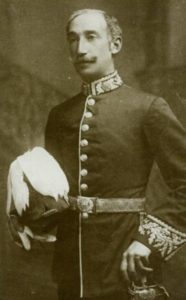 Sir Edward Sassoon (1856-1912), the son of
 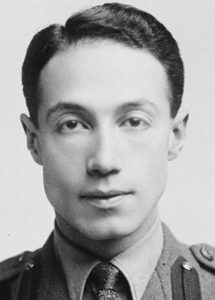 Their first child was Sir Philip Albert Gustave David Sassoon (1888-1939). He studied at the prestigious Eton College, and then at Oxford—one of just 25 Jewish students at the time. Following this, he joined the British Army and had the rank of second lieutenant. He followed his father into Parliament in 1912. When World War I broke out, Sir Philip was sent to mainland Europe and was the private secretary of Field Marshal Douglas Haig, commander of the British Expeditionary Force. He was later awarded the Croix de Guerre for “distinguished service” in the war. Returning to Parliament after the war, Sir Philip made it his personal mission to bring civilian air travel to England and the world. Airplanes were still little-known by the public, and considered far too dangerous. Sir Philip bought his own airplane in 1919 to promote air travel to the masses. In 1931, he was appointed Under-Secretary of State for Air. He also served as England’s First Commissioner of Works, and chaired London’s famous National Gallery. Philip owned Trent Park in the north of London, and built a mansion there where he liked to host his many friends. Interestingly, during World War II the British used Trent Park as a luxury prison for high-ranking German POWs, on whom they