In Memory of a Great Israeli Pioneer
 Tamar Finkelstein (1920-2022) was born in London, England while her parents worked there for the Jewish Agency. She returned with them to the Holy Land in 1923, at which point the family resettled in Haifa (and also Hebraized their last name to “Shoham”). Tamar Shoham became a youth leader of the Tzofim (Israeli scouts), and later joined the Haganah. For three years, she served as a signal operator and grenade maker. She returned to England to study at the University of London. At the same time, she operated a Haganah radio station and worked in the underground to assist Jews in making aliyah. During World War II, Shoham volunteered to serve in the British Army, and in 1944 was posted as an intelligence officer in Cairo. She returned to Israel in 1948 and took up a position at the Ministry of Foreign Affairs. There she would meet her second husband, Arye Eshel, who was Israel’s ambassador to Canada. After their wedding in 1960, she went by the name “Tamar Eshel”. Eshel was a frequent delegate to the United Nations, and in 1968 officially became Israel’s UN ambassador. She was appointed by the UN to head its Commission on the Status of Women, becoming the first Israeli in that position. After retiring, Eshel joined Jerusalem’s city council, and later became its deputy mayor. Around the same time, she was elected head of Na’amat, Israel’s largest women’s organization, that still has some 800,000 members today. In 1977, Eshel won a seat on the Knesset, and served as a parliamentarian until 1984. For the rest of her life, she volunteered for Hadassah Medical Center (established by former Jew of the Week Henrietta Szold), and at the Beit Tzipora women’s shelter, which she had co-founded. Eshel passed away last week on her 102nd birthday. She was Israel’s oldest former MK, and one of its most distinguished diplomats.
Words of the Week
The entire Torah was granted solely to bring about peace in the world.
– Rabbi Moses Maimonides (1138-1204), “Rambam”, Mishneh Torah, Hilchot Chanukah 4:14
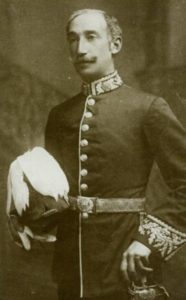 Sir Edward Sassoon (1856-1912), the son of
 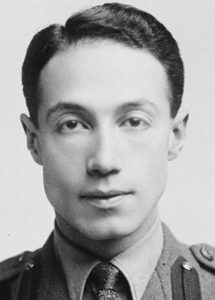 Their first child was Sir Philip Albert Gustave David Sassoon (1888-1939). He studied at the prestigious Eton College, and then at Oxford—one of just 25 Jewish students at the time. Following this, he joined the British Army and had the rank of second lieutenant. He followed his father into Parliament in 1912. When World War I broke out, Sir Philip was sent to mainland Europe and was the private secretary of Field Marshal Douglas Haig, commander of the British Expeditionary Force. He was later awarded the Croix de Guerre for “distinguished service” in the war. Returning to Parliament after the war, Sir Philip made it his personal mission to bring civilian air travel to England and the world. Airplanes were still little-known by the public, and considered far too dangerous. Sir Philip bought his own airplane in 1919 to promote air travel to the masses. In 1931, he was appointed Under-Secretary of State for Air. He also served as England’s First Commissioner of Works, and chaired London’s famous National Gallery. Philip owned Trent Park in the north of London, and built a mansion there where he liked to host his many friends. Interestingly, during World War II the British used Trent Park as a luxury prison for high-ranking German POWs, on whom they