The World’s Coolest Hats
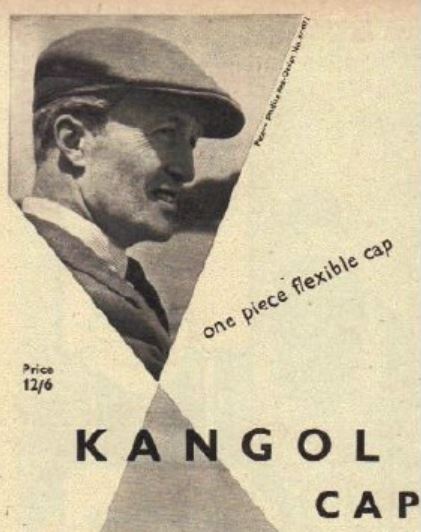 Yakov Henryk Spreiregen (1894-1982) was born to a Jewish family in Warsaw. The family immigrated to France when he was a young man—where he changed his name to Jacques—and then to England to escape the First World War. Spreiregen found a job working for a hatmaker, but was soon called up to serve in the military. After returning to England following his service, he started importing military-style berets from France. He then began making his own hats from high-quality angora wool. In 1938, Spreiregen leased an old thread factory in northwest England and founded Kangol (a name he made up from “knitting angora wool”). The company initially struggled to turn a profit, and many of the first employees were his own family members. Eventually, the hats did become popular, and earned a reputation for quality and durability. During World War II, Spreiregen won a contract to outfit the British army with berets. By the end of the war, he was making a million hats a year! Kangol later outfitted the English Olympic team, and the crew of British Airways. The company went public in 1952. Two years later, Spreiregen started a new division to produce helmets and seat belts. Kangol went on to become the largest seat belt manufacturer in Europe. In 1964, Kangol made a deal with The Beatles to make their branded hats. Soon, Kangol hats were popular among American hip hop artists, too, and have since been sported by the likes of Grandmaster Flash, Madonna, Brad Pitt, and Princess Diana. The most famous wearer of Kangol hats is undoubtedly Samuel L. Jackson, who has said that it’s a family tradition going back to his grandfather. Spreiregen retired from the company in 1972. Just a few years later, it would officially become the world’s largest hatmaker. Because Americans would often ask for the “kangaroo” hats when shopping, Kangol made their logo a kangaroo in 1983, a year after Spreiregen passed away.
14 Facts You Should Know About the Book of Psalms
Words of the Week
The real danger of antisemitism is not what others think of us, but what it makes us think of ourselves.
– Rabbi Manis Friedman

 Brian Samuel Epstein (1934-1967) was born in Liverpool, England to a Jewish family of Russian and Lithuanian heritage. His father had expanded the family furniture store to sell musical instruments, and it was here that Paul McCartney’s father bought a piano for his son. Brian Epstein was expected to go into the family business, too, but convinced his parents to allow him to go to acting school in London. He didn’t like it, and returned to Liverpool to run the family’s new NEMS music store. Epstein worked hard to make it the most successful music store in Northern England. He soon became familiar with a new local band, The Beatles (all of whom bought music at his store), and for his 21st birthday booked a party at The Cavern Club where they played. He immediately fell in love with the group, and considered managing them, even though his assistant thought they were “absolutely awful”. Nonetheless, Epstein returned regularly to the club over the next three weeks to watch the band, before proposing to become their manager. He drew up a five-year contract—technically for their parents since The Beatles were all under 21 and needed consent. Epstein got to work right away, transforming their image from a “scruffy crowd in leather” who cursed, drank, and smoked on stage, to wearing suits and presenting a “fresh” vibe. (John Lennon didn’t want to wear a suit but then said he would “wear a bloody balloon if somebody’s going to pay me.”) For nearly a year, the band made no money and Epstein paid for all of their expenses. Over that time, Epstein met with executives from Columbia Records, EMI, and several other big labels, all of whom rejected The Beatles. Eventually, Epstein threatened to stop selling EMI records at his stores, so EMI agreed to a cheap, “nothing to lose” recording contract through their smaller Parlophone label. The Beatles began recording in June of 1962, and the rest is history. Epstein guided the group and took care of them, kept them focused, set up the branding that launched “Beatlemania”, and ultimately made the Beatles the best-selling and most influential music band in history. In turn, the band loved and trusted their manager, and never even read the contracts he brought them to sign. (“We had complete faith in him when he was running us,” said Lennon.) Epstein was the best man at both Lennon’s and Ringo Starr’s weddings. (Contrary to popular belief, the latter is not Jewish.) Epstein worked round-the-clock, and soon became dependent on both stimulants and sedatives. In 1967, days after sitting shiva for his father, he took a large dose of sedatives which, though normal for him, mixed fatally with the large amount of alcohol he had drunk. His death was officially ruled an accident, and biographers have since refuted rumours of suicide. Whatever the case, The Beatles were devastated by the loss of their manager, and never recovered. The band soon fell apart. Paul McCartney would later describe Epstein as “The Fifth Beatle”. The Bee Gees wrote the song ‘In the Summer of His Years’ as a tribute to Epstein, who played a small but critical role in their success as well.