Piano Man
 William Martin Joel (b. 1949) was born in New York to an immigrant Jewish family with German and English heritage. Both of his parents were music enthusiasts, and compelled little Billy to start piano lessons at age 4. Often picked on as a teen, he decided to take up boxing and soon became an amateur champion. He only retired from boxing after seriously breaking his nose. To support his impoverished family, Joel played piano at a bar most nights. Because of this, he missed many exams and failed to graduate from high school. He decided to pursue a music career instead, inspired by the success of The Beatles. Joel first played for a number of bands, including the Echoes, the Emeralds, the Lost Souls, the Hassles, and Attila. He recorded his first solo album in 1970, but it did not do well. He went on tour and at one point opened for The Beach Boys. In 1972, Joel signed with Columbia Records and moved to LA. The first album was Piano Man, with its eponymous hit song making Joel famous. (“Piano Man” was later ranked among the 500 Greatest Songs of All Time by Rolling Stone.) His 1977 album The Stranger became Columbia Records’ all-time bestseller. In 1987, Joel performed in the Soviet Union, one of the first Americans to do so. All in all, Joel produced 13 albums, winning 5 Grammy Awards (out of 23 nominations) and selling over 160 million records worldwide. He is America’s fourth-best-selling solo artist. He was inducted into the Rock and Roll Hall of Fame in 1999, and has a star on the Hollywood Walk of Fame. He has also been awarded 7 honourary degrees. Aside from music, Joel is passionate about boating and runs the Long Island Boat Company as a side-business. Despite nearing his 73rd birthday, he is still performing.
Purim Begins Tonight! Chag Sameach!
The Purim Code That Prophesied the Nazi Nuremberg Trials
Purim-themed posts from the Jew of the Week archives: Esther, Mordechai, and Daniel
Words of the Week
I have frequently had cause to comment upon the extraordinary generosity and liberality of the American Jews in their charitable contributions. Indeed, their voluntary contributions exceed that of any other American group, and range from the stinted savings of the poorest workman to the full outpouring of those in more fortunate positions.
– President Herbert Hoover
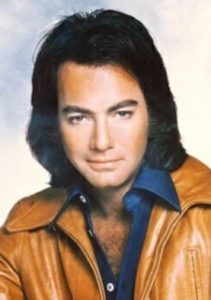 Neil Leslie Diamond (b. 1941) was born in Brooklyn to a Jewish family of Russian and Polish heritage. In high school, he sang in the school choir alongside classmate
 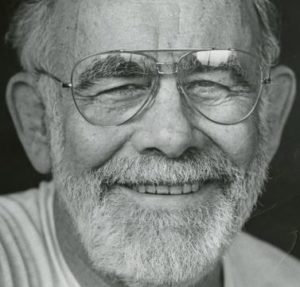 Gerald Wexler (1917-2008) was born in The Bronx to an immigrant family of German-Jewish and Polish-Jewish background. He graduated from high school by age 15, but there was little to do in the difficult days of the Great Depression. Wexler spent much of his time with a small circle of friends listening to music and discussing literature. It was only after returning from World War II military service that he finally pursued a career in journalism and music. He got a job as a reporter for Billboard Magazine, and soon became its editor. At the time, the magazine had a separate music chart for “black music”, called “Race Records”. Wexler took a stand against racism and came up with a new title, renaming the chart “Rhythm & Blues”. He thus coined the now popular term “R&B”. In 1953, the president of the start-up Atlantic Records (a fellow Jew named Herb Abramson) was drafted to the US Army. Wexler was offered to take his place. Under Wexler’s leadership, Atlantic Records became one of the world’s most successful music labels, and produced some of the biggest names in music, including Ray Charles and Aretha Franklin. For bringing the latter to the world, Wexler was named Record Executive of the Year in 1967. (Franklin had struggled to find success in music until Wexler convinced her to join him at Atlantic, and produced her breakout hit song, “Respect”.) The following year, he signed a young group called Led Zeppelin. Wexler would go on to work with other big stars, including Bob Dylan, the Bee Gees, Richard Pryor, Carlos Santana, and George Michael. He was inducted into the Rock and Roll Hall of Fame in 1987. Wexler played a central role in ending the era of “race music” (and stopping the practice of white musicians covering songs of black musicians and raking in all the fame and fortune for themselves). He opened the door for more “black music” to enter the once all-white Billboard charts, and has been credited with bringing “black music to the masses”. Not surprisingly, Wexler has been called “a prophet of roots and rhythm” and “the Jewish king of black music”.