Dustin Lee Hoffman (b. 1937) was born in Los Angeles to a family with Ukrainian-, Polish-, and Romanian-Jewish ancestry. His father was a set decorator who worked for Columbia Pictures, which likely influenced Hoffman to dream of becoming an actor. His family didn’t share this dream, and Hoffman went to college with plans to become a doctor. He dropped out after one year and joined the Pasadena Playhouse. There, he met fellow actor Gene Hackman, and the two soon moved to New York and shared an apartment (together with Robert Duvall). Hoffman had small roles in film and television over the next decade. His first lead role was in 1967’s The Graduate (the famous “Mrs. Robinson” movie), which was wildly popular and earned him an Oscar nomination. The film was hailed as a breakthrough, with Hoffman said to represent “a new breed of actor” – more human, more complex, and not the perfectly-looking stud that Hollywood employed in those days. It was said that “Hoffman’s character made conventional good looks no longer necessary on screen.” Despite the success, Hoffman turned down film in favour of the stage, starring on Broadway where he won an award for outstanding performance. It wasn’t long before Hoffman returned to film, in 1969’s Midnight Cowboy, and incredibly, was nominated for an Oscar once again. (The Library of Congress later included this iconic film in its registry for preservation.) All in all, Hoffman appeared in 6 plays, 16 TV shows, and some 60 films. He was nominated for Best Actor at the Oscars seven times, winning twice (for Kramer vs. Kramer and Rain Man); and won 6 Golden Globes as well. In recent years, he has reconnected with his Jewish roots, taken on more Torah observance, made sure that his children and grandchildren have bar and bat mitzvahs, and aims to learn Hebrew. Hoffman was recently hailed as one of the greatest performers of all time, and “one of the most versatile and iconoclastic actors of this or any other generation”. Last week he celebrated his 80th birthday.
Words of the Week
People ask me today: “What are you?” I say: “I’m a Jew.”
– Dustin Hoffman
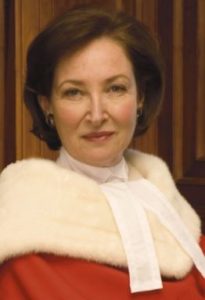 Rosalie Silberman Abella (b. 1946) was born to Jewish-Polish Holocaust survivors in a displaced persons camp in Germany. When she was a child, the family moved to Halifax, and then settled in Toronto. Abella followed in her father’s footsteps and became a lawyer, graduating from the University of Toronto. She was a civil and family lawyer for five years before being appointed to the Ontario Family Court, aged just 29. This made her the youngest judge in Canada’s history – and the first pregnant one! Sixteen years later, she moved up to the Ontario Court of Appeal. Abella also sat on Ontario’s Human Rights Commission, and became a renowned expert on human rights law. Abella coined the term “employment equity” while overseeing the Royal Commission on Equality in Employment in 1983. She pioneered a number of strategies to improve employment for women, minorities, and aboriginals, which have been implemented in countries around the world. In 2004, she was appointed to Canada’s Supreme Court, making her the first Jewish woman to sit on the nation’s highest judiciary. Recently, Abella was named the Global Jurist of the Year for her work with human rights and international criminal law. Among her many other awards, she has received 37 honourary degrees, including one from Yale University – the first Canadian woman to do so. One politician said of her: “I’ve never met any judge in my life, and I know a lot of them – I used to be a lawyer – who understands people better than Rosie, and the importance of people in the judicial process. I think the human quality she brings to the bench is unsurpassed in my experience.”
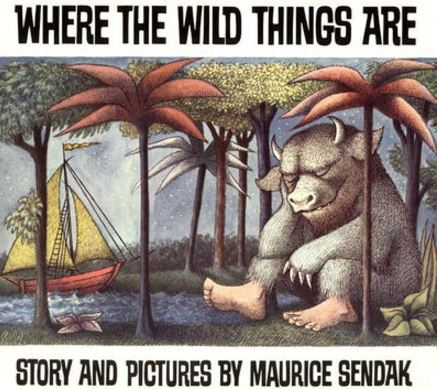
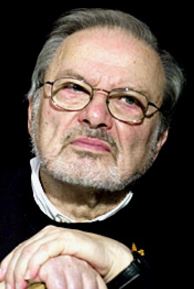 Maurice Bernard Sendak (1928-2012) was born in Brooklyn to Polish-Jewish immigrants. He fell in love with books during a lengthy childhood illness, and after watching Disney’s Fantasia at age 12, decided to become an illustrator. Skipping college, Sendak first did illustrations for toy store windows before having his art published in a textbook. He then devoted himself to illustrating children’s books, including many Jewish themed ones like Good Shabbos Everybody. (Sendak once noted that one of his greatest inspirations was his father’s telling of stories from the Torah.) By the late 1950’s, he started writing his own children’s books. His most famous work came in 1963, and made Sendak a household name. Where the Wild Things Are was very controversial when first published, criticized for its edgy theme and “dark” illustrations. Sendak attributed this to his own difficult childhood, having lost many family members in the Holocaust. Nonetheless, the book became hugely popular, and went on to sell over 20 million copies worldwide. It has since been adapted into a Hollywood film and even an opera, and has been ranked as the best picture book of all time. All in all, Sendak authored 22 books, illustrated 90 more, and wrote, directed, or produced seven films. He saw himself not as a children’s author, but an “author who told the truth about children”. Sendak won many awards, including the National Medal of the Arts, and the prestigious Hans Christian Andersen Award for “lasting contribution to children’s literature”. Sendak donated $1 million to New York’s Jewish Board of Family and Children’s Services, and left his precious collection of over 10,000 artworks, books, and manuscripts to be turned into a museum and library. He was a humble man, and avoided book signings because he “couldn’t stand the thought of parents dragging children to wait in line for hours to see a little old man in thick glasses.” After his passing of a stroke at age 83, The New York Times hailed him as “the most important children’s book artist of the 20th century.”