The Woman That Made Bill Gates and Steve Jobs Possible
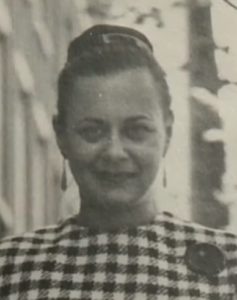
Evelyn Berezin, “Godmother of the Word Processor”
Evelyn Berezin (1925-2018) was born in the Bronx to poor Russian-Jewish immigrants. Growing up, she loved reading science fiction and wished to study physics. She excelled at school and graduated two years early. Berezin had to wear make-up and fake her age to get a job at a research lab. She ended up studying economics because it was a more “fitting” subject for women at the time. During World War II, she finally received a scholarship to study physics at New York University. Berezin studied at night, while working full time at the International Printing Company during the day. She continued doing graduate work at New York University, with a fellowship from the US Atomic Energy Commission. In 1951, she joined the Electronic Computer Corporation, designing some of the world’s very first computers. At the time, computers were massive machines that could only do several specific functions. Berezin headed the Logic Design Department, and came up with a computer to manage the distribution of magazines, and to calculate firing distances for US Army artillery. In 1957, Berezin transferred to work at Teleregister, where she designed the first banking computer and the first computerized airline reservation system (linking computers in 60 cities, and never failing once in the 11 years that it ran). Her most famous feat was in 1968 when she created the world’s first personal word processor to ease the plight of secretaries (then making up 6% of the workforce). The following year, she founded her own company, Redactron Corporation, and built a mini-fridge-sized word processor, the “Data Secretary”, with a keyboard and printer, cassette tapes for memory storage, and no screen. With the ability to go back and edit text, cut and paste, and print multiple copies at once, Berezin’s computer freed the world “from the shackles of the typewriter”. The machine was an in instant hit, selling thousands of units around the world. Berezin’s word processor not only set the stage for future word processing software, like Microsoft Word, but for compact personal computers in general. It is credited with being the world’s first office computer. Not surprisingly, it has been said that without Evelyn Berezin “there would have been no Bill Gates, and no Steve Jobs”. Redactron grew to a public company with over 500 employees. As president, she was the only woman heading a corporation in the US at the time, and was described as the “Most Senior Businesswoman in the United States”. Redactron was eventually bought out by Burroughs Corporation, where Berezin worked for several more years. In 1980, she moved on to head a venture capital group investing in new technologies. Berezin served on the boards of a number of organizations, including Stony Brook University and the Brookhaven National Laboratory, and was a sought-after consultant for the world’s biggest tech companies. She was a key part of the American Women’s Economic Development Corporation for 25 years, training thousands of women in how to start businesses of their own, with a success rate of over 60%. In honour of her parents, she established the Sam and Rose Berezin Endowed Scholarship, paying tuition in full for an undergraduate science student each year. Sadly, Berezin passed away earlier this month. She left her estate to fund a new professorship or research centre at Stony Brook University. Berezin won multiple awards and honourary degrees, and was inducted into the Women in Technology International Hall of Fame.
Words of the Week
As much as I love, esteem, and admire the Greeks, I believe the Hebrews have done more to enlighten and civilize the world. Moses did more than all their legislators and philosophers.
– John Adams, 2nd president of the United States
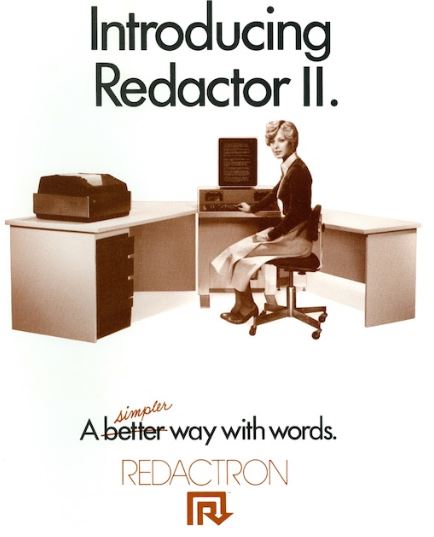
An ad for Berezin’s new-and-improved Redactor II, typing as many as 60 letters per second!
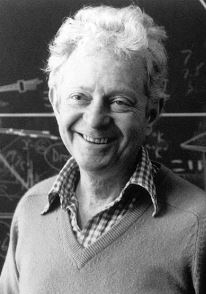
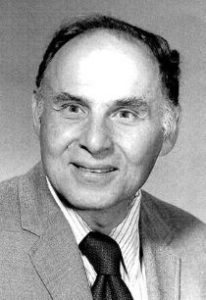
 Richard Phillips Feynman (1918-1988) was born in Queens to Lithuanian Jewish immigrant parents. Before his birth, his father had decided that his son should be a scientist, and raised Feynman from an early age to question everything. Feynman did not speak his first word until he was three years old. In childhood, he loved to take things apart and even set up a lab in his home, hiring his little sister for 4 cents a week to be his assistant. (He would later inspire and encourage her to become a renowned astrophysicist in her own right.) At 15, he taught himself advanced algebra, calculus, and trigonometry. He applied to Columbia University but was rejected because the quota for Jewish students had been filled. Feynman went to MIT instead, first majoring in math, then electrical engineering, and finally physics. He published his first two papers as an undergrad, and his senior thesis (putting forth what would become the Hellmann-Feynman theorem) brought him a great deal of recognition in the scientific community. Feynman then applied to grad school at Princeton, and got an unprecedented perfect score on the physics exam. Again, he was initially brushed aside for being Jewish before the dean was convinced not to miss out on the young genius. (Feynman was admitted only on the condition that he wouldn’t get married!) At 23, he defended his Ph.D, and was already being compared to