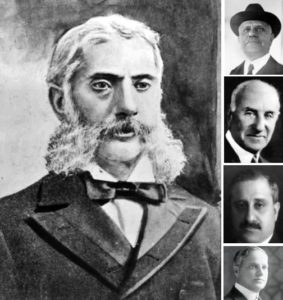
Jeffrey Hart Brotman (1942-2017) was born in Tacoma, Washington to parents of Jewish-Romanian ancestry. His father and uncles ran a successful retail store that eventually expanded to 18 locations. After earning a political science degree and law doctorate, Brotman followed his father’s footsteps and went into retail with his brother. They first opened a jeans store for women, and then a men’s clothing store. In 1982, Brotman teamed up with Jim Sinegal, who had previously worked for (recent Jew of the Week) Sol Price and learned the wholesale business from him. Brotman and Sinegal co-founded Costco. By 1993, Costco merged with Sol Price’s original wholesale company. Today, Costco has over 700 locations around the world, with 85 million members, 174,000 employees, and $120 billion in revenue, making it the 18th richest company in the world, and second largest retailer (behind Wal-Mart). Thanks largely to Brotman’s personal motto of “Do the right thing”, Costco is famous for being one of the top-rated employers in the world, giving its workers large salaries and extensive benefits. Brotman was Costco’s chairman since its founding until last week, when he sadly and unexpectedly passed away. He had served on the boards of 12 other organizations, including Starbucks (of which he was one of the first investors) and the United Way. Brotman was a philanthropist, too, donating large sums to educational and health institutions like the University of Washington and Seattle Children’s Hospital, as well as the arts and many Jewish causes. He recently gave a million dollars to his synagogue in Tacoma to build a Jewish daycare and preschool. He had stated that it was the synagogue that “launched me into being a responsible adult.” Starbucks’ founder Howard Schultz eulogized him: “He was one of the earliest believers and investors in Starbucks and in me… he has been a shining light… We have lost a titan of our community.”
Words of the Week
Helping the disadvantaged, encouraging diversity, fostering a community that treats its people well – these were values I learned from my parents… my rabbi at Temple Beth El, and my grandfather, who helped with the movement to plant trees in Israel. When I see some of the fundamental unfairness built into the system for people who are less fortunate, and couple that with my family’s tradition of helping others, I am compelled to act, compelled to give what I can to help.
– Jeff Brotman