The Hasidic Woman That Runs America’s Cybersecurity
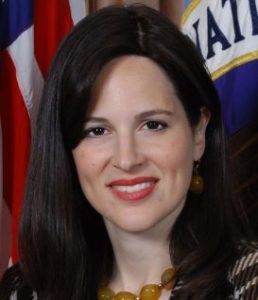 Chani Anne Neuberger (b. 1976) was born in Brooklyn to a Hasidic Jewish family with roots in Hungary. She grew up speaking Yiddish and went to school at Bais Yaakov of Boro Park. She studied at Touro College, then earned an MBA from Columbia University. A professor suggested that she apply for the prestigious White House Fellowship, and she did a couple of years later. She was selected and – to her surprise – instead of going to the Treasury Department she was posted to the Department of Defense. From there, she got a job working for the Secretary of the Navy, and eventually became the US Navy’s deputy chief management officer. In 2009, Neuberger was posted to the new Cyber Command team of the NSA (National Security Agency). Her work was impressive, and after the Snowden leaks of 2013, she was appointed the NSA’s first chief risk officer. Neuberger also served as assistant deputy director of operations, and most recently oversaw security during the 2018 US Midterm elections. Earlier this week, Neuberger was named the NSA’s new head of the Cybersecurity Directorate. She sits on the NSA’s board of directors, and is one of its highest-ranking women. Neuberger finds inspiration for her work in her own family history: Seven of her eight great-grandparents were killed in the Holocaust, her grandparents were survivors, and in 1976 her parents were hostages on the Air France plane that was hijacked by terrorists and diverted to Entebbe. Outside of government, Neuberger runs a charity called Sister to Sister which helps single mothers in Orthodox Jewish communities across the US and Canada. The organization has over 1000 members and volunteers. Neuberger remains devoutly religious, and has said that sometimes her coworkers remind her that sunset is approaching so that she can make it home for Shabbat. Her advice to religious Jews: “learn to navigate the secular world as a frum [religious] Jew without apologizing, without abandoning your principles, but also with a sense of how and when to be flexible.”
Jews and the Founding of America
The Jewish View on Extraterrestrial Life
Words of the Week
I didn’t really have any role models of working women. I heard a lot of “a frum woman can’t do this; a frum woman doesn’t do that.” But I strongly feel that a woman should use the talents Hashem gave her, and that being frum is not a barrier to professional success.
– Anne Neuberger