
Two 96-Year Old Nobel Prize Winners
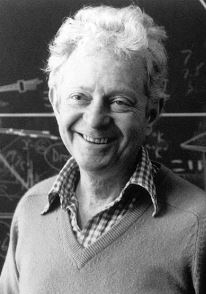
Leon Lederman in 1988
Leon Max Lederman (1922-2018) was born in New York to Ukrainian-Jewish immigrants. After serving in World War II, he returned to work on a PhD in physics at Columbia University. He would become a distinguished physics professor there before taking a leave to join the world-renowned CERN in Switzerland. There, he discovered the muon neutrino in 1962. For this, as well as developing the “neutrino beam method”, he would later win the Nobel Prize in Physics. Lederman also discovered the bottom quark. In 1979, Lederman became the director of the prestigious Fermilab, running the world’s most powerful particle accelerator. After retiring in 1989, he was an occasional teacher at the University of Chicago and the Illinois Institute of Technology. He was also president of the American Association for the Advancement of Science. In 1993 he published his bestselling book, The God Particle (coining that now-famous term). Lederman won countless awards and inspired a generation of physicists. Sadly, he was diagnosed with dementia, and the illness took a toll on both his health and his finances. He was forced to sell his Nobel Prize gold medal in order to pay for his medical bills. He passed away last week, at age 96.
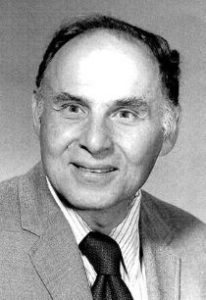
Arthur Ashkin
Another 96-year old Jewish scientist who made headlines last week is Arthur Ashkin (b. 1922). He won a Nobel Prize in Physics for his invention of optical tweezers. Like Lederman, Ashkin was born in New York to Ukrainian-Jewish immigrants, and also attended Columbia University. During World War II, he was asked to stay in his lab to build magnetrons for US Army radars. After earning his PhD in nuclear physics at Cornell, Ashkin was hired by Bell Labs. He first worked on microwave technology, then moved on to lasers. After some two decades of work, Ashkin created a working optical tweezer, described as “an old dream of science fiction”. This allows tiny things like atoms, viruses, and cells to be grabbed, moved and manipulated. Today, it is an indispensable tool for countless research facilities around the world. Ashkin also co-discovered the photorefractive effect, and holds a whopping 47 patents. In addition to his many awards, he has been inducted into the National Inventors Hall of Fame. His Nobel at age 96 makes him the oldest person ever to win the prize.
Words of the Week
An honest man, armed with all the knowledge available to us now, could only state that, in some sense, the origin of life appears at the moment to be almost a miracle.
– Francis Crick, Nobel Prize-winning biologist
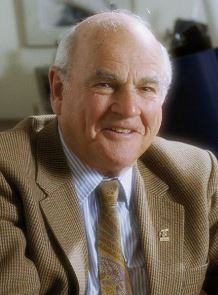
 Richard Phillips Feynman (1918-1988) was born in Queens to Lithuanian Jewish immigrant parents. Before his birth, his father had decided that his son should be a scientist, and raised Feynman from an early age to question everything. Feynman did not speak his first word until he was three years old. In childhood, he loved to take things apart and even set up a lab in his home, hiring his little sister for 4 cents a week to be his assistant. (He would later inspire and encourage her to become a renowned astrophysicist in her own right.) At 15, he taught himself advanced algebra, calculus, and trigonometry. He applied to Columbia University but was rejected because the quota for Jewish students had been filled. Feynman went to MIT instead, first majoring in math, then electrical engineering, and finally physics. He published his first two papers as an undergrad, and his senior thesis (putting forth what would become the Hellmann-Feynman theorem) brought him a great deal of recognition in the scientific community. Feynman then applied to grad school at Princeton, and got an unprecedented perfect score on the physics exam. Again, he was initially brushed aside for being Jewish before the dean was convinced not to miss out on the young genius. (Feynman was admitted only on the condition that he wouldn’t get married!) At 23, he defended his Ph.D, and was already being compared to