
The Fifth Beatle
 Brian Samuel Epstein (1934-1967) was born in Liverpool, England to a Jewish family of Russian and Lithuanian heritage. His father had expanded the family furniture store to sell musical instruments, and it was here that Paul McCartney’s father bought a piano for his son. Brian Epstein was expected to go into the family business, too, but convinced his parents to allow him to go to acting school in London. He didn’t like it, and returned to Liverpool to run the family’s new NEMS music store. Epstein worked hard to make it the most successful music store in Northern England. He soon became familiar with a new local band, The Beatles (all of whom bought music at his store), and for his 21st birthday booked a party at The Cavern Club where they played. He immediately fell in love with the group, and considered managing them, even though his assistant thought they were “absolutely awful”. Nonetheless, Epstein returned regularly to the club over the next three weeks to watch the band, before proposing to become their manager. He drew up a five-year contract—technically for their parents since The Beatles were all under 21 and needed consent. Epstein got to work right away, transforming their image from a “scruffy crowd in leather” who cursed, drank, and smoked on stage, to wearing suits and presenting a “fresh” vibe. (John Lennon didn’t want to wear a suit but then said he would “wear a bloody balloon if somebody’s going to pay me.”) For nearly a year, the band made no money and Epstein paid for all of their expenses. Over that time, Epstein met with executives from Columbia Records, EMI, and several other big labels, all of whom rejected The Beatles. Eventually, Epstein threatened to stop selling EMI records at his stores, so EMI agreed to a cheap, “nothing to lose” recording contract through their smaller Parlophone label. The Beatles began recording in June of 1962, and the rest is history. Epstein guided the group and took care of them, kept them focused, set up the branding that launched “Beatlemania”, and ultimately made the Beatles the best-selling and most influential music band in history. In turn, the band loved and trusted their manager, and never even read the contracts he brought them to sign. (“We had complete faith in him when he was running us,” said Lennon.) Epstein was the best man at both Lennon’s and Ringo Starr’s weddings. (Contrary to popular belief, the latter is not Jewish.) Epstein worked round-the-clock, and soon became dependent on both stimulants and sedatives. In 1967, days after sitting shiva for his father, he took a large dose of sedatives which, though normal for him, mixed fatally with the large amount of alcohol he had drunk. His death was officially ruled an accident, and biographers have since refuted rumours of suicide. Whatever the case, The Beatles were devastated by the loss of their manager, and never recovered. The band soon fell apart. Paul McCartney would later describe Epstein as “The Fifth Beatle”. The Bee Gees wrote the song ‘In the Summer of His Years’ as a tribute to Epstein, who played a small but critical role in their success as well.
Words of the Week
If the Jew did not exist, the antisemite would invent him.
– Jean-Paul Sartre
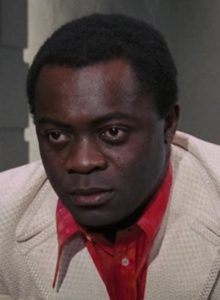 Yaphet Frederick Samuel Kotto (1939-2021) was born in New York City. His mother came from a family with Caribbean roots, and converted to Judaism in order to marry his father, an observant Jewish immigrant from Cameroon. Kotto was raised religious, and would later describe how walking to the synagogue with a kippah on his head led to some “heavy fistfights” with anti-Semites. He went to acting school at 16, and three years later appeared in his first play, Othello. Kotto acted in a number of Broadway productions before moving to Hollywood. After a decade of small film roles, Kotto was cast as the Bond villain Mr. Big in Live and Let Die. In 1977, he played Idi Amin in Raid on Entebbe about the daring Israeli mission to save hostages in Uganda, for which he was nominated Outstanding Supporting Actor at the Emmy Awards. Kotto also starred in Alien, The Running Man (alongside Arnold Schwarzenegger), and Midnight Run (with Robert De Niro). All in all, he appeared in over 60 movies and over a dozen TV shows. He once said in an interview that had he not become an actor, he would have become a rabbi. Sadly, Kotto passed away earlier this year.
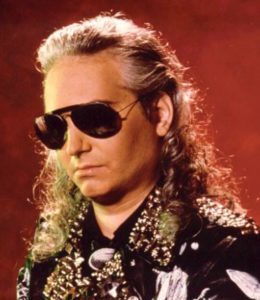 A fellow artist from New York who sadly passed away this year is James Richard Steinman (1947-2021). While studying at Amherst College, Steinman began writing music and lyrics for a number of school plays. In 1972, he wrote the music for the musical Rhinegold. The following year his first song was released commercially on Yvonne Elliman’s album. For much of the rest of the decade, he worked with the band Meat Loaf and wrote some of their greatest hits, along with one of the bestselling music albums of all time, Bat Out of Hell. In 1983, Steinman produced Bonnie Tyler’s album Faster Than the Speed of Night, and wrote its hit song “Total Eclipse of the Heart”. That year, it was the top song on the Billboard charts, followed by Air Supply’s “Making Love Out of Nothing at All”—which was also written by Steinman! All in all, Steinman wrote popular theme songs for television shows, soundtracks for movies, as well as music and lyrics for a number of stage productions. He wrote hit songs for Barry Manilow,
 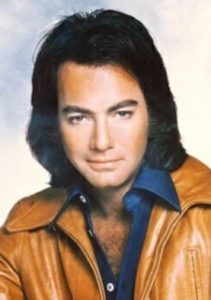 Neil Leslie Diamond (b. 1941) was born in Brooklyn to a Jewish family of Russian and Polish heritage. In high school, he sang in the school choir alongside classmate