Tag Archives: Kabbalah

Jews of the Week: Asenath Barzani & the Maid of Ludomir

Two Amazing Women

Torah

Asenath Barzani (1590-1670) was born in Mosul, Iraq to the chief rabbi of Kurdistan, Shmuel Barzani. After her father’s passing she took over his role, serving as the head of the Mosul Yeshiva and teaching Torah to the masses (preferring to do this from behind a curtain, for she was also very beautiful). Asenath was given the title Tanna’it (“Great Teacher”) and was known for performing incredible miracles, including reviving a dead dove, bringing a legion of angels down from Heaven, and fighting crime using only her mystical powers. To this day, people make pilgrimages to her grave in Iraq.

On the other side of the world, in the Ukranian town of Ludomir, lived a woman named Hannah Rachel Verbermacher (1805-1888). After a midnight incident at a cemetery, where she had a certain revelation, Hannah Rachel transformed into a highly respected Torah teacher famous across Eastern Europe (she, too, gave her speeches from behind a screen for modesty). Many Hassidim became her devoted followers, building a synagogue and study house for the great ‘Maid of Ludomir’. Some even called her rebbe, and she was often seen wearing tefillin and a tallit (which stirred up quite a bit of controversy). At the end of her life, she made Aliyah to Israel and is said to have joined a descendant of the great Yemenite sage Shalom Shabazi in the mission of bringing Mashiach. However, according to legend the angel Eliyahu came down to stop them, for the world was not yet ready!

Words of the Week

Don’t ask for a lighter burden, ask for broader shoulders.
– Jewish Proverb
Jew of the Week: the Vilna Gaon

Genius Is His Middle Name

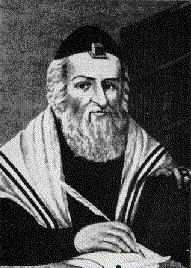
the Vilna Gaon

Eliyahu ben Shlomo Zalman Kramer (1720-1797) was born in a small village in what is now Belarus. Known popularly as the Vilna Gaon – the Genius from Vilnius – it is said he committed the entire Torah to memory by age 5, and by age 11 the entire Talmud. It wasn’t long before he was one of European Jewry’s greatest legal authorities. A prolific writer, he penned commentaries on the Tanakh, Talmud, Mishnah and many other works (a large number of them Kabbalistic). Dedicating every moment of his life to Torah learning, he generally studied secular subjects only while in the bathroom (where study of Torah is forbidden). It was there that he became an expert in astronomy and Euclidean geometry, later instructing his disciples to write a mathematical treatise called Ayil Meshulash. The Vilna Gaon led a simple, saintly, ascetic lifestyle, sleeping just 2 hours a day, usually in 4 half-hour segments. For much of his life he was a travelling nomad, though his aim was always to settle in Israel. Himself unable to accomplish this goal, at least three groups of his students and their families did succeed in making Aliyah, bringing over 500 people to Tzfat and Jerusalem long before the Zionist movement. The Vilna Gaon passed away on Tishrei 19, the 5th day of Sukkot.

Psalm of the Day on the day of Gilad Schalit’s release from captivity. Incredibly, the psalm explicitly mentions Gilad’s name, as well as freedom from captivity, the holiday of Sukkot, and Tuesday. Schalit was freed on Tuesday, during the holiday of Sukkot!

Words of the Week

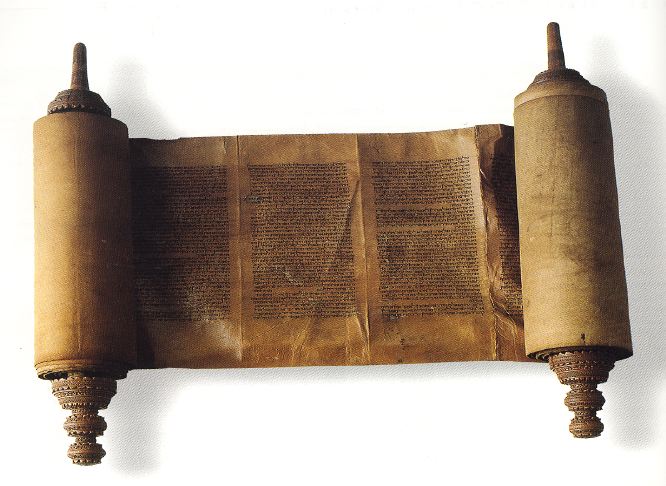
“On Simchat Torah the Torah scrolls wish to dance, so we become their feet.”
– Chassidic saying

Jew of the Week: Chaim Vital

Kabbalist and Alchemist

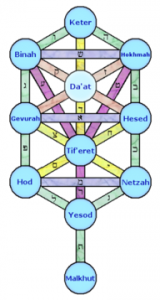
The Kabbalistic “Tree of Life” Representing the 10 Sefirot – Divine Energies that Permeate the Universe

Chaim ben Yosef Vital (1543-1620) was born in Calabria, Italy. The son of a famous scribe, Vital was the primary disciple of several great sages and kabbalists, including Rabbi Moshe Alshech, Rabbi Moshe Cordovero, and most importantly, Rabbi Isaac Luria, the Arizal. Vital transcribed the teachings of the Arizal into some of the deepest mystical texts, including Etz Chaim (“Tree of Life”) and Sha’ar HaGilgulim (“Gate of Reincarnations”). These teachings would later be spread far and wide, completely revolutionizing Judaism. After the Arizal’s passing, Rabbi Vital spent time in Egypt, then settled in Damascus where he spent the rest of his life as the head of the city’s Italian Jewish community. Rabbi Vital was also an alchemist, a subject he studied diligently for two and a half years. According to legend, he had the power of Kfitzat haDerech – something akin to teleportation or super-speed. 

Words of the Week

Great is peace! For to make peace between husband and wife, the Torah instructs that the name of God, written in holiness, should be blotted out in water.
– Talmud (Chullin 141a)