Father of Geochemistry
 Victor Moritz Goldschmidt (1888-1947) was born in Switzerland, the son of a Jewish-Austrian chemist. The family moved to Norway in 1901 and Goldschmidt went on to study chemistry and geology at what would become the University of Oslo. He got his Ph.D at just 23 years of age, and won a prestigious award for his dissertation. That same year he became an associate professor. In 1929, Goldschmidt became the chair of minerology at the University of Göttingen, but resigned six years later to protest anti-Semitism, returning to Oslo. One of his key discoveries was the mineralogical phase rule, followed by a longer list of the Geochemical Laws of the Distribution of Elements. For this ground-breaking work (and for literally writing the first textbook on geochemistry), he has been called the “Father of Geochemistry”. By 1942, the Nazis had occupied Norway and arrested Goldschmidt. He was taken to the Berg concentration camp where he fell severely ill. He was about to be deported to Auschwitz when a group of colleagues intervened and convinced the Nazis that his scientific knowledge would be useful to them. Goldschmidt was eventually able to escape to Sweden, and from there he was smuggled to England by a British intelligence unit. He assisted the British war effort, was elected to the Royal Society, and continued his work at the Macaulay Institute for Soil Research. He would return to Norway following the war, but died soon after. Goldschmidt received many awards, including being knighted by the king of Norway. The region of Goldschmidtfjella in Norway is named after him, as is the mineral goldschmidtite (KNbO3).
Words of the Week
The fact that the universe had a beginning, that it obeys orderly laws that can be expressed precisely with mathematics, and the existence of a remarkable series of “coincidences” that allow the laws of nature to support life – do not tell us much about what kind of God must be behind it all, but they do point toward an intelligent mind that could lie behind such precise and elegant principles.
– Renowned biologist Francis Collins, The Language of God
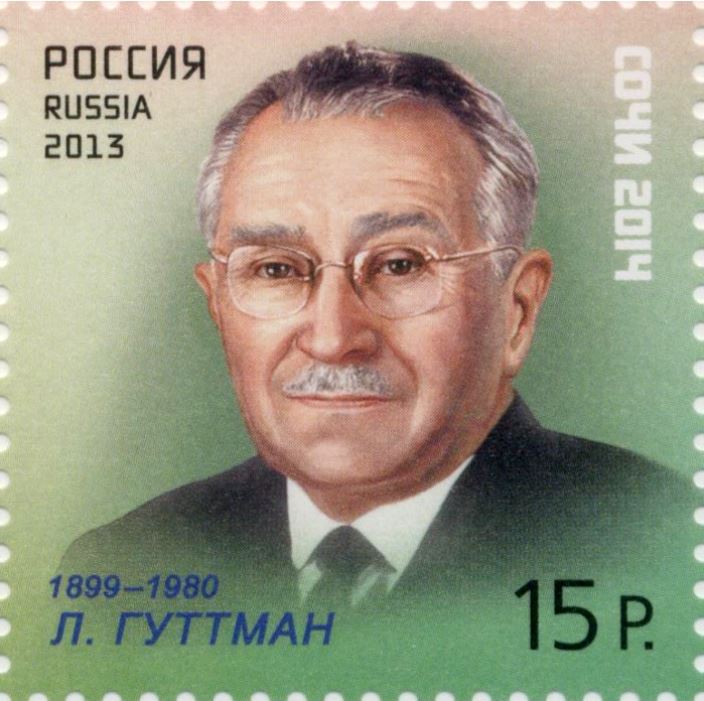
 Ludwig Guttman (1899-1980) was born to a German-Jewish family in what is now Poland. After serving in World War I, he volunteered at a hospital and first encountered a paraplegic patient. This inspired him to go to medical school and he went on to become a renowned neurosurgeon, specializing in spinal cord injuries and paralysis. He also taught at the University of Freiburg, where he supervised a Jewish fraternity that focused on fitness and physical training to give Jewish students more strength and confidence in the face of rampant anti-Semitism. When the Nuremberg Laws were passed by the Nazis, Guttman was stripped of his job and title. He was given an inferior position at the Breslau Jewish Hospital, where he eventually became the medical director. During Kristallnacht, Guttman witnessed the desecration of his synagogue and the abuse of his fellow congregants. That night, he admitted 64 Jewish patients that took refuge in his hospital, and was able to save 60 of them from deportation by the SS agents that came the next day. The following year, the Nazis gave him a visa and sent him on a medical mission to Portugal. Guttman never returned to Germany, and settled in England instead. He joined the Nuffield Department of Neurosurgery in Oxford. Guttman came up with the idea of turning paraplegic patients over in their beds every two hours to prevent bed sores, a small move that drastically cut the mortality rate. In 1943, the Royal Air Force asked Guttman to found and head the National Spinal Injuries Centre at Stoke Mandeville Hospital to look after injured pilots who commonly had spinal problems. It was here that Guttman realized how sports could be a powerful tool for rehabilitation. In 1948, he organized the first Stoke Mandeville Games for disabled war veterans, a huge success. Four years later, he turned it into an international event, and in 1956 was recognized by the IOC (International Olympic Committee) for his pioneering work. The Stoke Mandeville Games became an official part of the 1960 Rome Olympics, and by 1984 was known as the Paralympic Games. (When host city Mexico refused to hold the games in 1968, Guttman arranged for them to be held in Israel). Guttman founded what would become the English Federation of Disability Sport, as well as the International Spinal Cord Society. He was the first editor of the scientific journal Spinal Cord. The Guttmann Institute in Barcelona is named after him, as is the Ludwig Guttmann Prize awarded by the German Medical Society for Paraplegia. He was the subject of a BBC documentary called The Best of Men, and was knighted by Queen Elizabeth II in 1966. There are currently over 4400 athletes competing at the Tokyo Paralympic Games, the largest ever.