In Memory of a Great Israeli Hero
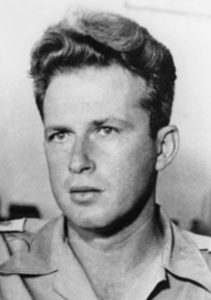
Yitzhak Rabin in 1948
Yitzhak Rabin (1922-1995) was born in Jerusalem to Russian-Jewish parents who settled in the Holy Land during the Third Aliyah. He was raised in Tel-Aviv, and at the age of 14 enrolled in an agricultural school founded by his mother, at the same time enlisting in the Haganah defense force. Though originally hoping to be an irrigation engineer, he ultimately decided to stay in the military and fight for the Jewish homeland. In 1941, he joined the Haganah’s elite unit, Palmach, and his first mission was to assist the Allied Forces in the invasion of Lebanon during World War II. After the war, he spent time training new recruits and worked against British efforts to restrict Jewish immigration. At one point, Rabin was arrested by the British and spent five months in prison. During Israel’s War of Independence, Rabin was the Palmach’s COO and commanded its second battalion. He was in charge of the southern front against Egypt, and was involved in the capture of the cities of Ramle and Lod, and the liberation of Ramat Rachel. He was part of Israel’s delegation during the 1949 peace talks that ended the war. He later headed Israel’s Northern Command, and in 1964 was made Chief of Staff, the top general of the IDF. It was under his tenure that Israel planned and executed the miraculous Six-Day War and recaptured Jerusalem. For Rabin, this was the culmination of his military career, and the fulfilment of his dreams. It was time to retire. The following year, he was made ambassador to the United States, serving in that role for 5 years. Rabin was instrumental in getting the US to start selling its fighter jets to Israel, and during his time the US became Israel’s biggest military supplier. He returned to Israel following the Yom Kippur War and was elected to the Knesset. Several months later, Golda Meir resigned and Rabin became Israel’s prime minister. In 1976, he gave the difficult order to plan a rescue operation for Jewish hostages held in Entebbe, resulting in the stunning Operation Thunderbolt. A year later, his Labour Party was defeated in the elections, but Rabin remained in the Knesset, and in 1984 was appointed Minister of Defense. As terrorism from the West Bank got worse, Rabin instituted an “Iron Fist” determent policy, and during the First Intifada was nicknamed “Rabin the Bone Breaker”. Nonetheless, the violence only worsened, and Rabin decided to give peace a chance. He won the 1992 election and returned to the role of prime minister, his main goal to end the Arab-Israeli conflict. He signed the controversial Oslo Accords in 1993, for which he was awarded the Nobel Peace Prize. He also worked out the Israel-Jordan Peace Treaty of 1994. Meanwhile, Rabin was a huge economic reformer, transforming Israel from a state with a more socialist bent to a fully capitalist one. His “Yozma” program encouraged foreign venture capital and led to the development of Israel’s booming high-tech sector. His government boosted spending in education by 70%, and in 1995 instituted Israel’s universal health care system. On November 4th of that same year, Rabin was tragically assassinated by an extremist for “capitulating” to the Arabs. The square where he was shot was renamed after him, as were many other streets and landmarks. Politics aside, very few people have done more for the State of Israel and its citizens than Yitzhak Rabin. He is rightfully remembered as one of Israel’s greatest heroes.
Video: Bill Clinton Describes His “Love Like No Other” for Yitzhak Rabin
Words of the Week
It does no good… to brand one as an “enemy” or “anti-Semite”, however tempting it is to do so even if that person vehemently denies it. It can only be counterproductive. On the contrary, ways and means should be found to persuade such a person to take a favourable stance, at least publicly. We haven’t got too many friends, and attaching labels will not gain us any.
– Rabbi Menachem Mendel Schneerson (1902-1994), the Lubavitcher Rebbe
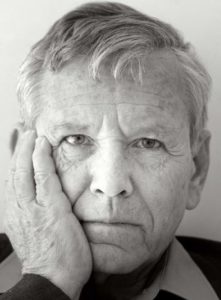
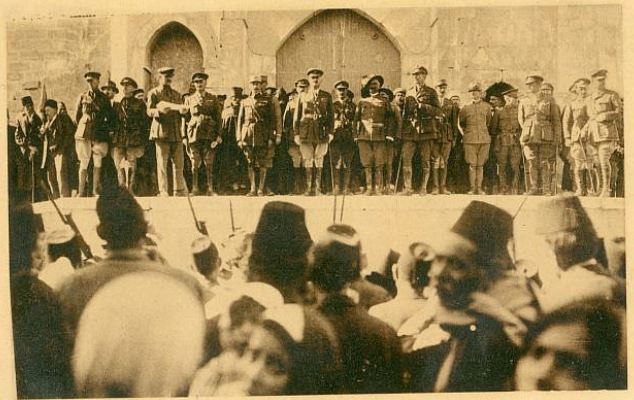
 Abraham Tzvi Idelsohn (1882-1938) was born in Latvia to a religious Jewish family. He studied to be a synagogue cantor. At 27, he made aliyah to Israel and worked as a musician and composer. In 1919, he opened a Jewish music school. A few years later, he left for Ohio where he served as professor of Jewish music at Hebrew Union College, the major seminary of Reform Judaism. Between 1914 and 1932 he published his ten-volume magnum opus, Thesaurus of Hebrew Oriental Melodies. Many consider him “the father of Jewish musicology”. His most famous melody is undoubtedly ‘Hava Nagila’. In December of 1917, British army general Edmund Allenby defeated the Ottomans and conquered the Holy Land for Great Britain. The Jews of Israel were elated, and celebrated the general’s arrival in Jerusalem. They asked Idelsohn to compose a song for the special occasion. Idelsohn remembered an old happy tune he had adapted from a Hasidic niggun. The song was a hit. A few years later, he asked his music class to write words for the song.
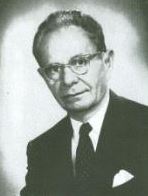 A young Moshe Nathanson (1899-1981) was in that class, and wrote a couple of simple lines based on Scriptural verses from Psalm 118. The rest is history. Nathanson was born in Jerusalem, the son of a rabbi. In 1922 he moved to Canada and double-majored in law and music at McGill University. He ended up studying at what is now the prestigious Julliard School of Music in New York. From there, he was hired to be the cantor of the first Reconstructionist Synagogue, and served in that role for the next 48 years. He wrote an important four-volume tome of liturgical songs. Nathanson also spent 10 years broadcasting Jewish music on American airwaves (“Voice of Jerusalem”) and dedicated much of his life to promoting Jewish folk music. Today, Nathanson’s and Idelsohn’s ‘Hava Nagila’ is the most recognizable Jewish/Hebrew song in the world, and a staple of every bar mitzvah and wedding. There is even a full-length documentary about it, called Hava Nagila (The Movie). This past year marked the song’s centennial anniversary.