The Commando Heading the Jewish Agency

Almog in 1982
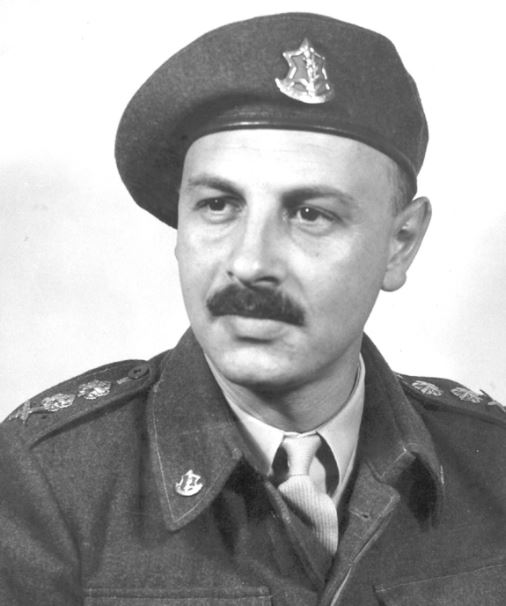
Doron Avrotzky Almog (b. 1951) was born in Rishon LeZion, Israel. He went to a military boarding school and eventually joined the Paratroopers Brigade. He became an officer in 1971, and served as a company commander during the Yom Kippur War, in which his brother Eran lost his life. In 1976, Almog was one of the company leaders of Operation Thunderbolt to save Israeli hostages in Entebbe. In fact, he was the first commando to disembark at the Entebbe airport runway, and led the way to capture the control tower. Almog fought in the 1982 Lebanon War, too, and later commanded Operation Moses to airlift over 7000 Ethiopian Jews to Israel. In 2000, now with the rank of major general, he was appointed to head the IDF Southern Command. Almog had a son with severe disabilities who died young, and a daughter born with a heart defect that ended her life after just a month. Sadly, a devastating suicide bombing in a Haifa restaurant in 2003 took the lives of five more of his family members, and left another severely injured. These horrible tragedies motivated Almog to devote the rest of his life to helping people with disabilities. He retired from the military that same year, and founded the village of Aleh Negev (also called Nahalat Eran, both after his son and fallen brother), a 40-acre rehabilitation and living centre for people with severe disabilities. Today, the village cares for 150 residents, and provides services for another 12,000 patients across Israel. Almog was awarded the Israel Prize in 2016 for lifetime achievement. Last week, he was appointed as the new head of the Jewish Agency. His most pressing task will be settling new Ukrainian and Ethiopian refugees in Israel. In his first speech, he said his mission would be “To reach the heart of every Jew on Earth. To instill pride in our Judaism and the State of Israel, the most important enterprise of the Jewish people since 1948. To instill pride in this one miracle called the State of Israel and its extraordinary achievements in science, technology, culture, agriculture, medicine, society, economy, army, aliyah, and more.”
Words of the Week
“They called me a wiseguy. I won ‘Italian of the Year’ twice in New York, and I’m Jewish, not Italian… I was denied in a country club once.”
– James Caan (1940-2022)
 Ferenc Hoffman (1924-2005) was born in Budapest, Hungary to a secular Jewish family. He loved to write from a young age, and won a prize for a novel he wrote while still in high school. He was also an avid chess player. During World War II, he was first expelled from university before being imprisoned at a number of concentration camps, ending up in the Sobibor death camp. One of the ways he survived is by challenging the guards to chess matches. Another is by maintaining his sense of humour. After the Holocaust, he went by the name Franz Kishunt, studying sculpting and art history while also writing satire. In 1949, he escaped communist Hungary and made aliyah, becoming “Ephraim Kishon”. He was a passionate Zionist and would staunchly defend the State of Israel for the rest of his life—often being disparaged by the media for his hardline views. Within two years of settling in the Holy Land, Kishon was fluent in Hebrew (he literally hand-copied an entire dictionary) and began writing satire for a number of papers. His most famous column was Had Gadya in the Ma’ariv newspaper, which he wrote almost daily for over 30 years. Kishon soon became Israel’s greatest and most famous humourist. He also wrote popular plays, an opera, and books that have been translated into some 40 languages, including So Sorry We Won! about the Six-Day War. In the 1960s, Kishon entered the world of film. He wrote, directed, and produced five movies, the first being the critically-acclaimed Sallah Shabbati, highlighting the struggle of Mizrachi Jewish refugees to Israel. The film won a Golden Globe and was nominated for an Oscar, making Kishon the first Israeli with that distinction. (The film also launched the international career of Israeli actor Chaim Topol, most famous for portraying Tevye in Fiddler on the Roof.) Kishon’s fourth film, The Policeman, also won a Golden Globe and was nominated for an Oscar. Not surprisingly, Kishon has been credited with opening up Israeli cinema to the world, and paving the path to Hollywood for Israelis. He won a long list of awards, including the Bialik Prize and the Israel Prize. He was a billiards champ, a pioneer in the field of computer chess, and even created a board game (“Havila Higiya”) once popular in Israel. Kishon has been called the “father of Israeli satire”, and inspired an entire generation of Israeli humourists.