Tag Archives: IDF

Jew of the Week: David Ben-Gurion

David Ben-Gurion

David Ben-Gurion

David Grün (1886-1973) was born in Poland and at just 14, already started a Zionist youth club with friends to promote immigration to Israel and study of Hebrew. While a student at the University of Warsaw in 1905, he was arrested twice as a member of the socialist Poalei Tzion party. The following year he made his way to the Holy Land and settled there. Just 20 years old, he became the chairman of Poalei Tzion in Yafo. Due to various disputes, Grün left politics and focused on farming in Petah-Tikva and the Galilee. He joined an armed defence group in 1908 to protect Jewish settlements increasingly under attack. In 1912 he temporarily relocated to Istanbul to study law, and it was there that he Hebraized his name to Ben-Gurion (and would convince countless others to do the same over the course of his life, wanting them to drop their old “diaspora” names for a fresh start in a newly resurrected Jewish Homeland). He returned to Jerusalem, only to be deported to Egypt due to World War I, then made his way to the U.S. where he toured for 3 years raising support for the Jewish cause. In 1918 he enlisted in the Jewish Legion of the British Army. After the war, Ben-Gurion resettled in Israel and established the Histadrut, Israel’s first labour union (which is 650,000 members strong today). By 1935, he became the chairman of the Jewish Agency – the largest Jewish non-profit organization in the world – overseeing the immigration and settlement of Jews in Israel. He served in this role until 1948, when he became the new State of Israel’s first Prime Minister. One of his first acts in the ensuing War of Independence was the fusion of all militias into one unified army: the IDF. After the war, he worked tirelessly to establish the state and its institutions, overseeing massive construction projects and mass immigration of Jews from around the world, not to mention an international hunt for Nazi war criminals. Although he worked to create a free, modern, non-theocratic state of Israel, he ensured that the Jewish essence would remain, setting Shabbat as an official rest day, kosher food in all state institutions, and autonomy in religious education. He also focused on Israel’s military might, ordering the creation of special operations units while pushing heavily for attaining nuclear capability. He would serve as prime minister in two stints lasting nearly 14 years, in addition to being minister of defence. After retiring in 1970, he wrote an 11-volume history of Israel’s beginnings, adding to two previous tomes he had written. He passed away shortly after, and is commemorated as the central founder of the modern State of Israel.

Words of the Week

Oil, which saturates everything it comes in contact with, represents innerness. Wine, which causes the heart to spill out its deepest secrets, represents outwardness. Chanukah is oil, Purim is wine.
The Lubavitcher Rebbe

Jew of the Week: Ruth Westheimer

Dr. Ruth

Dr. Ruth: Beloved Therapist, Deadly Sniper

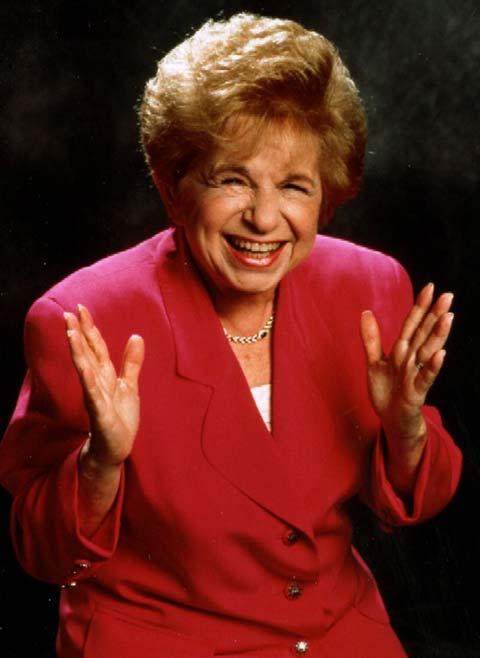
Karola Ruth Siegel was born in Germany to an Orthodox Jewish family. Orphaned by the Holocaust, she migrated to Israel at 17 and joined the Haganah defence force, fighting in the 1948 War of Independence as a sniper (“For some strange reason,” she says, “I can put five bullets into that red thing in the middle of the target.”) After recovering from injuries sustained by a nearby exploding shell, Ruth studied psychology at the University of Paris. From there she immigrated to the U.S., receiving a PhD in human sexuality. In 1980, she was invited to do a 15-minute radio segment discussing sex. That transformed into one of the most popular radio shows of all time, featuring “Dr. Ruth”, which quickly became a household name. Later a television program, Dr. Ruth remains the most well-known sex therapist in America. She wrote several popular books on the subject, taught at Princeton and Yale, won a Leo Baeck Medal for humanitarian work, and still belongs to two Manhattan synagogues.

Words of the Week

An honest man, armed with all the knowledge available to us now, could only state that, in some sense, the origin of life appears at the moment to be almost a miracle.
Francis Crick, Nobel Prize-winning discoverer of DNA structure

Jews of the Week: Spitz, Torres, Lezak & Leibovitch

World’s Best Swimmers

Mark Spitz

Mark Spitz – Greatest Olympian

Jews play an illustrious role in swimming history. One of the early greats was California Jew Mark Spitz, who began his career at the 1965 Maccabiah Games, winning 4 gold medals. The 1972 Munich Olympics were his shining moment, winning an incredible 7 gold medals while setting 7 new records. This added to the 2 gold medals he’d already won in the ’68 Olympics. Mark Spitz was famously the only one to swim with a mustache (which would later inspire Michael Phelps). He has been voted “Athlete of the Century” and “Greatest Olympian”. Meanwhile, Dara Torres is considered the greatest female swimmer in American history. She’s competed in 5 Olympic Games and has won a staggering 12 Olympic medals. In Beijing 2008, Torres set the record for being the oldest swimmer in Olympic history. She still managed to win 3 silver medals. Born to a Jewish father, Dara converted to Judaism officially before marrying Israeli surgeon Itzhak Shasha.

Keren Leibovitch

Keren Leibovitch

The 2008 Olympics also saw Jason Lezak win a breathtaking relay, ironically earning Michael Phelps an 8th gold medal and thus breaking Mark Spitz’s long-time record. Like Spitz, Lezak is a Jew from California who captains the US swim team and has 7 Olympic medals under his belt. Lastly, and most heroically, is Keren Leibovitch. While serving in the IDF, she had an accident that rendered her legs 90% paralyzed. She became a Paralympic swimmer, winning 4 golds, 2 silvers and a bronze medal over her career, plus 3 World Championships and 3 world records. She has the distinction of being the greatest Israeli Paralympian of all time.

Words of the Week

A single action is better than a thousand groans.
– Rabbi Sholom DovBer of Lubavitch (1860-1920)