This week we honour a small handful of the many heroes that emerged during the recent catastrophe in Israel:
Michael Shamai, a former IAF pilot, was completing his shift flying a medical rescue helicopter when he got the call about the attack. Together with his Ecuadorian copilot, he immediately headed south to rescue as many victims as possible. Shamai had to fly multiple missions “in the dark” without GPS navigation, maneuvering away from gunfire and rockets, without any protection or even a helmet, saving dozens. Guy Madar was celebrating the holiday with his family in Kiryat Gat when he heard of the attack. He grabbed his firearm, got in his car, and drove down to Re’im where he encountered terrorists. He killed six of them and rescued an injured soldier. He then joined a policeman on the scene and they continued driving further south together before being ambushed by another group of terrorists. Madar and the policeman both got shot, but managed to eliminate all the terrorists. Madar secured a tourniquet to his bleeding leg, and was nearly unconscious when discovered by a team of IDF soldiers, who at first confused him for a terrorist before seeing his tzitzit. In Kibbutz Kerem Shalom, social worker Amichai Shindler was hiding with his family in the safe room when terrorists tried to burst inside. He kept them at bay, so they set off explosives near the door. Shindler absorbed the blow to save his wife and six children, losing his right arm and suffering major injuries to his face, jaw, and left hand. He lay bleeding for another three and a half hours before medics arrived. At Kibbutz Be’eri, paramedic Amit Mann was treating victims and saving lives for hours on end without rest before terrorists appeared. She did whatever she could to protect and hide the wounded in her clinic before being murdered. Aner Elyakim Shapiro was at the music festival and packed into a nearby bomb shelter with a large group of people. Terrorists threw grenades into the shelter, and Shapiro bravely threw them back outside. He deflected seven grenades before the eighth detonated in his hand. Shapiro perished, but saved everyone else inside. Witnesses described him as a “guardian angel”. Matan Abergil was in an armoured personnel carrier with 6 other soldiers when a terrorist threw a grenade inside the vehicle. Abergil quickly jumped on top and absorbed the blow, saving all of his fellow soldiers.
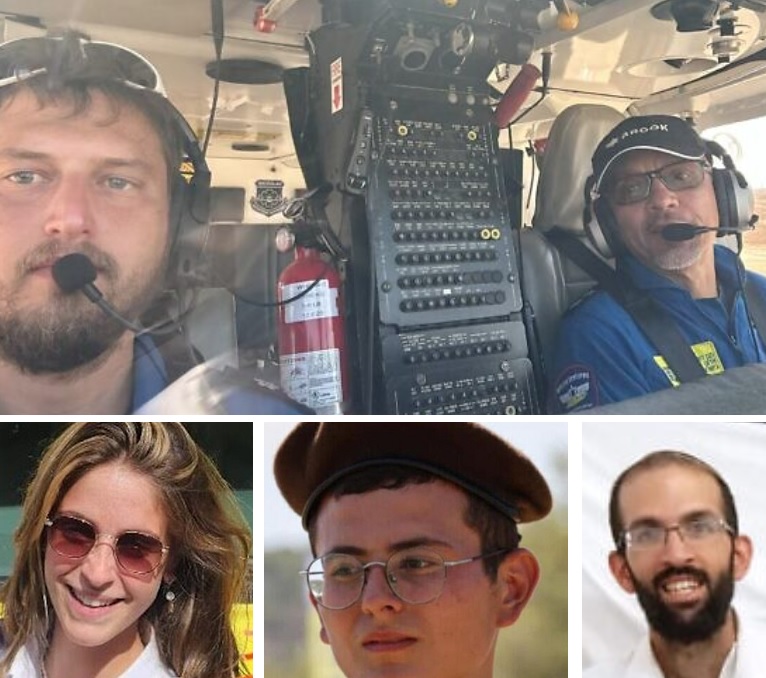
Top: Michael Shamai (left) and his copilot Jorge Ordoñez. Bottom from left: Amit Mann, Matan Abergil, and Amichai Shindler
An Interview with an IDF Soldier on the Front Lines
Hamas Massacre Smashes Israel’s Faulty Strategy
The Real Reason Biden Came to Israel
Hamas Chief Lives a Life of Luxury in Qatar
The Dizengoff Square Candle Memorial
Words of the Week
The less we fear God, the more we fear the non-Jew and develop in our collective psyche an inferiority complex toward him. The latent power of fear in the soul seeks an outlet, and object to fear. It is either God or others… When it becomes clear in our minds and our hearts that a Jew must fear God alone, the fear of God becomes the motivating power necessary to stand up and fight against our enemies.
– Rabbi Yitzchak Ginsburgh
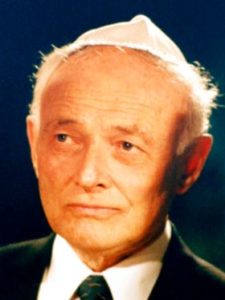 Liviu Librescu (1930-2007) was born in Ploiesti, Romania. In November of 1940, the Romanian government allied with Nazi Germany, and Librescu’s family was deported to a labour camp. Eventually, they ended up in the Focsani Ghetto from which Librescu was liberated in 1945. He stayed in Romania and enrolled in aerospace engineering studies (inspired by his time watching birds fly in and out of the ghetto). A year after graduating he joined the Bucharest Institute of Applied Mechanics where he served as a researcher for 22 years. In 1969, Librescu earned his Ph.D in fluid dynamics, and wrote some very important papers that were unfortunately unknown in the West. He was also recruited by the government to work on top secret military projects. However, Librescu was soon fired for refusing to swear allegiance to the Romanian Communist Party and for requesting to emigrate to Israel. Thankfully, one of his groundbreaking research papers was smuggled out of Romania and brought him international attention. It reached the desk of Israeli Prime Minister Menachem Begin, who personally put pressure on the Romanian government to free Librescu. In 1978, the Romanians relented and Librescu made aliyah to the Holy Land. For the next seven years, Librescu taught at Tel-Aviv University and the world-famous Technion in Haifa. In 1985, he took a sabbatical year and visited Virginia Tech in the US. He decided to stay and joined their Department of Engineering Science and Mechanics. Librescu went on to become one of Virginia Tech’s most famous and beloved professors. He is credited with publishing more papers (250) than any other Virginia Tech professor, and among his many awards are a Dean’s Award for Excellence in Research and a Frank J. Maher Award for Excellence in Engineering Education. He was also on the editorial boards of seven scientific journals, and a guest editor of five more. On April 16, 2007, Librescu was teaching his regular class when a gunman walked into the engineering building at Virginia Tech and opened fire. When the gunman tried to enter Librescu’s classroom, the professor blocked the door and told his students to escape through the windows. He was fatally shot five times. All but one of his students were able to escape. The remaining 22 were saved by Librescu’s heroic actions. In a horrible twist of irony, the Virginia Tech shooting took place on the 27th of Nisan – Holocaust Memorial Day. President Băsescu of Romania posthumously awarded Librescu the Grand Cross of the Order of the Star of Romania (the country’s highest civilian honour), and renamed the street in front of the US Embassy in Bucharest after him. Virginia Tech’s Jewish Student Center is now named after him, too, as is a professorship at Columbia Law School. He was called the “Most Inspiring Person of 2007”. President George W. Bush eulogized Librescu with the following words: “With the gunman set to enter his class, this brave professor blocked the door with his body while his students fled to safety. On the Day of Remembrance, this Holocaust survivor gave his own life so that others may live.”