Tag Archives: Hasidic Jews

Jews of the Week: Recha Freier & Ruchie Freier

Two Trailblazing Women

Ruchie Freier

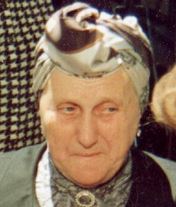
Rachel “Ruchie” Freier (b. 1965) was born in Brooklyn to a Hasidic Jewish family. In high school, she took a course in stenography and went on to work as a legal secretary. She soon became a paralegal, and was her family’s breadwinner, supporting her husband’s full-time religious studies. At 30, she realized she was working under lawyers that were younger and less knowledgeable than she was, and made the decision to go to law school herself. Juggling school, work, and raising six kids, it took Freier ten years to earn a bachelor’s degree in political science and a law degree. She passed the bar in 2006, becoming America’s first Hasidic female lawyer. Meanwhile, Freier was heavily involved in community work, and spent time as an advocate for New York’s oft-misunderstood Hasidic Jews. In 2005, she set up a charity called Chasdei Devorah to support poor Jewish families, and in 2008 co-founded B’Derech to help troubled teens. In 2016, she was elected Civil Court Judge after a tough race. That made her the world’s first female Hasidic judge. Freier also serves on New York’s Criminal Court. Amazingly, she is a licensed paramedic, too, and works with Ezras Nashim, an all-female volunteer ambulance service (a branch of the more famous, all-male Hatzalah). The New York Times has appropriately called her a “Hasidic superwoman”. Freier has won multiple awards, and was recently ranked by the Jerusalem Post among the 50 Most Influential Jews in the World.
Recha Freier

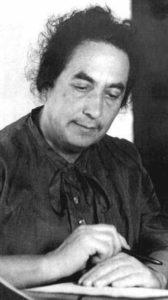
Ruchie Freier is not to be confused with Recha Freier (1892-1984), also born to a devoutly Orthodox family, in Germany. Recha Freier experienced tremendous anti-Semitism in her youth, and this inspired her to become a Zionist. Her husband was a rabbi in Berlin, while she taught in a high school and spent the rest of her time writing. In 1932, Freier was asked to help five young men who could not get jobs because they were Jewish. Freier had the idea to send the boys to the Holy Land instead to learn farming. She raised the necessary funds and organized their voyage and settlement. Thus was born what would become the Youth Aliyah. The organization would go on to save 7000 young Jews from Nazi Germany and settle them in Israel. Freier coordinated with (former Jew of the WeekHenrietta Szold to make sure the teens were taken care of in their new home. Freier herself escaped Germany in 1940 by crossing the border to Yugoslavia. There, she saved 150 Jewish orphans. All made it safely to Israel in 1941. Two years later, Freier established the Agricultural Training Center to educate impoverished children. She was also an avid musician and pianist, and in 1958 founded the Israel Composer’s Fund. In addition to composing a number of original musical pieces, Freier wrote works of poetry and Jewish folklore. In 1981, she was awarded the Israel Prize for her contributions, the State’s highest honour.

Words of the Week

If you love life, don’t waste time, for time is what life is made up of.
– Bruce Lee
Jew of the Week: Rabbi Israel Baal Shem Tov

Founder of the Hasidic Movement

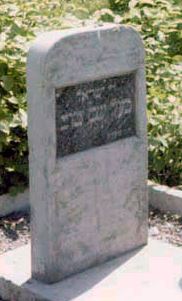
The Baal Shem Tov’s gravestone in the Jewish cemetery of Medzhybizh, Ukraine.

Israel ben Eliezer (1698-1760) was born to very poor parents in what is today Western Ukraine. He was orphaned at just 5 years of age, and adopted by the Jewish community. Even as a child, Israel would go out into the forests by himself after school and spend hours meditating. It is said that he started receiving visions from Biblical prophets while still a teenager. He married young, too, and when his wife tragically passed away, Israel left his village and embarked on a long journey. During his travels, he met a mystical sage named Rabbi Adam Baal Shem (the title baal shem, “Master of the Name”, was given to spiritual healers and great mystics). Israel soon started his own kabbalistic circle, and the group became active in assisting Jewish communities across Eastern Europe. Rabbi Israel remarried and had two children, sustaining the family by working as a clay and lime digger. He also worked as a school teacher and a gabbai (synagogue warden), and later became a shochet and managed his brother-in-law’s tavern. During this time, he became very proficient in healing herbs and his reputation as a baal shem grew rapidly. By 1740, Israel was known as the “Baal Shem Tov”, and countless people journeyed to Medzhybizh to learn from him. There, the Baal Shem Tov started a new movement that would be known as Hasidism, which strove to integrate mystical teachings into the daily lives of Jews, while focusing on serving God with utmost joy and happiness. The movement spread very rapidly, invigorating poor Eastern European Jews with a fresh breath of life. (Ironically, Hasidic Judaism took off among poor Jewish peasants who knew little Torah and ritual observance, while today Hasidic Judaism is associated with rigorous Torah study and strict ritual observance!) Meanwhile, the Baal Shem Tov battled passionately against various false messianic movements sweeping European Jewry, particularly the Frankists. He inspired a whole generation of great rabbis and is considered the founder of Hasidic Judaism. Many legends surround the Baal Shem Tov, including a purported ability to read people’s minds, exorcise demons, and even fly! Rabbi Israel passed away on the holiday of Shavuot.

Shavuot Starts Tonight!

Words of the Week

I would rather have questions that can’t be answered than answers that can’t be questioned.
– Richard Feynman

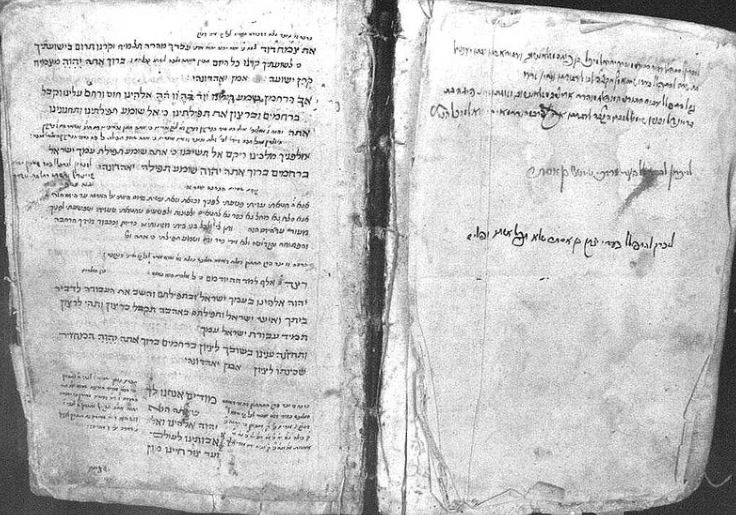
Incredibly, the Chabad Library in New York has the Baal Shem Tov’s personal siddur, with his handwritten notes in the margins.

Jew of the Week: Yitta Schwartz

The Woman With 2000 Children

A rare photo of Yitta Schwartz from the 1980s

A rare photo of Yitta Schwartz from the 1980s

Yitta Schwartz (1916-2010) was born in Kalev, Hungary to a Chassidic family. During the Holocaust, her entire family was taken to the Bergen-Belsen concentration camp, where two of her six children died. A strong and pious woman, Schwartz persevered, and took care of many other people in the camp, often at great personal risk. One Holocaust survivor recalls how Schwartz took care of the deceased, carefully cleaning their bodies, digging graves, and burying them. Following the war, Schwartz’s family started to rebuild in Belgium, and helped countless refugees in the process, giving them shelter in their own tiny apartment. In 1953, the family (now with 11 children) moved to the US, where Schwartz had 5 more kids. Schwartz’s husband sold furniture, while she took care of their 16 children, and then the many grandchildren that followed. By the time of her passing at the age of 93, Schwartz had over 200 grandchildren, many more great-grandchildren, and nearly 2000 descendants altogether. Not surprisingly, the vast majority of her time was spent going from one family event to the next. When arriving at these gatherings, people would say she resembled the Prophet Elijah, her presence filling the room with light, and everyone clambering for a bit of the great matriarch’s attention and blessings. A very modest woman, she avoided being photographed or filmed. She is remembered as having an infectious smile, a thirst for life, and an excellent memory. Knowing that she would always live on in the doting hearts of her descents, she once said, “If you leave a child or grandchild, you live forever.”

Words of the Week

So said God: ‘Let a wise man not glory in his wisdom, nor let the strong one glory in his strength, nor let the wealthy glory in his wealth. Only in this may one glorify himself: in discerning and knowing Me, for I am God, Who performs kindness, justice, and righteousness – for these are what I desire…’
– Jeremiah 9:22-23