Tag Archives: Germany

Jew of the Week: Menachem Mendel Schneerson

The Lubavitcher Rebbe
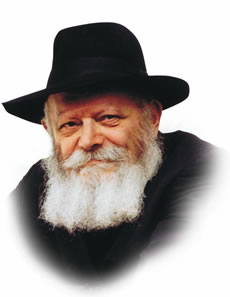
Menachem Mendel Schneerson – The Lubavitcher Rebbe

Menachem Mendel Schneerson (1902-1994) was the 7th and final Rebbe of Chabad-Lubavitch. From an early age he was focused on the well-being of others, diving into the Black Sea to save a drowning boy when he was just 9 years old. After marrying, he settled in Germany, where he studied math, physics, and philosophy at the University of Berlin. Simultaneously, he began writing commentaries on the Torah. With the rise of the Nazis, Rabbi Schneerson moved to France in 1933, and studied mechanics and engineering at ESTP, then enrolled at the world-famous Sarbonne and studied math until the outbreak of World War II. In 1941, the Rebbe finally made it to America. Immediately, he went to work at the Brooklyn Navy Yard to help the war effort, and was on the team that supplied the U.S.S. Missouri battleship. By 1942, Rabbi Schneerson began taking charge of Chabad. He reluctantly accepted the title of Rebbe in 1951. Over the years, he launched many campaigns to reignite Judaism globally. He sent thousands of emissaries, called shluchim, around the world, setting up Chabad houses on every continent (except Antarctica, for now), thereby putting kosher food, warm hospitality and prayer services always within reach for Jews anywhere in the world. He was a noted kabbalist, and gave countless penetrating discourses. He touched the lives of thousands of people, and inspired countless more. In 1983, the US Congress established the Rebbe’s birthday as “Education Day”. Posthumously, he was awarded the Congressional Gold Medal.

Words of the Week

You must approach a fellow Jew as though you are the King’s servant sent with a message to His most precious child.
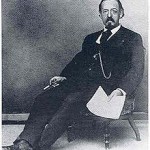
– Rabbi Menachem Mendel Schneerson, the Lubavitcher Rebbe

Jew of the Week: Léon Blum

Prime Minister of France

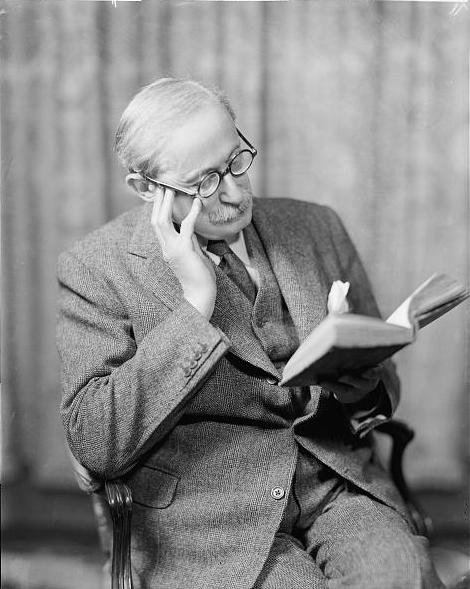
Leon Blum, Three-Time Prime Minister of France

Few can claim having lived a rollercoaster life like that of Andre Léon Blum (1872-1950). In his youth, he was inspired to join France’s socialist community while studying at the Sarbonne and living through the infamous Dreyfus affair. Writing for a popular journal and rising through the ranks, he became a well-known champion for the little guy. It eventually won him the role of prime minister of France – no less than three times! This, in an era of open Jew-hatred. In fact, before becoming PM he was dragged out of his car and nearly beaten to death by a royalist anti-Semite band known as the Camelots du Roi. When Blum was elected, an opposition leader had this to say: “Your coming to power is undoubtedly a historic event. For the first time this old Gallo-Roman country will be governed by a Jew. I dare say out loud what the country is thinking, deep inside: it is preferable for this country to be led by a man whose origins belong to his soil… than by a cunning Talmudist.” With the start of World War II, Blum chose bravely not to flee and stayed in his country. He was arrested and imprisoned, first in Vichy, then in Germany. At his trial in 1942, he argued so eloquently that it embarrassed the entire Nazi regime and the Germans called off the trial! Unfortunately it did not save him from the concentration camps. Blum suffered first in Buchenwald, then in Dachau. He only survived thanks to local authorities who disobeyed orders to kill him. Incredibly, after surviving all of these ordeals, he became prime minister of France yet again after the war. A wonderful writer, Blum penned many gems about life: “When a woman is twenty, a child deforms her; when she is thirty, he preserves her; and when forty, he makes her young again.”


Words of the Week

Light attracts. Where a lantern is placed, those who seek light gather around.
– Rabbi Yosef Yitzchak Schneersohn of Lubavitch (1880-1950)

Jews of the Week: Siegfried Marcus, Emil & Mercedes Jellinek

Car Inventors

Siegfried Marcus - Car Inventor

Siegfried Marcus – Car Inventor

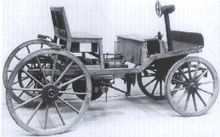
In 1870, German-Austrian Jew Siegfried Marcus (1831-1898) had the bright idea of putting a combustion engine on a handcart, creating the first-ever self-propelling vehicle powered by gasoline. In 1883, Marcus received the patent for the ignition system, leading to the first official automobile as we know it, called the “Second Marcus Car”. Thus was born the automobile industry, the internet of its day that immeasurably revolutionized the world. Meanwhile, fellow (non-Jewish) Germans Daimler and Maybach created the first car for market.

Son of a rabbi, Emil Jellinek made it happen

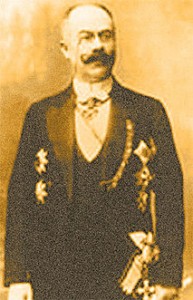
However, they could not sell their version until Emil Jellinek (1853-1918), the son of Hungarian-Czech Rabbi Aaron Jellinek, took over the business. He convinced Maybach to build a new and improved car, to be called Mercedes, named after his daughter Mercedes Jellinek. (“Mercedes” is a Spanish name that was given to the girl by her French-Sephardic mother, whom Emil Jellinek married during his time in France.) The Mercedes quickly shattered all records, going 60 km/h and easily winning the competitive Nice races. It was branded “the car of tomorrow” and took the world by storm. In the 1930s, the Nazi Ministry for Propaganda attempted to rewrite history by expunging any evidence of Marcus being the inventor of the car and giving credit to Daimler and Benz.

This is Mercedes – Jellinek that is

First Marcus Car of 1870


Words of the Week

No two cities have counted more with mankind than Athens and Jerusalem. Their messages in religion, philosophy and art have been the main guiding light in modern faith and culture. Personally, I have always been on the side of both…
– Winston Churchill

Second Marcus Car of 1888