
Belgium’s First Female Prime Minister
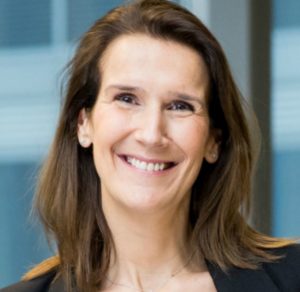
Sophie Wilmes (Credit: Damien Caumiant)
Sophie Wilmes (b. 1975) was born in Brussels, Belgium. Her father was an economist and professor, and both of her parents were involved in Belgian politics. Several members from her mother’s side of the family perished in the Holocaust. Wilmes studied communications and finance, then worked for the European Commission of the EU as a financial officer. In 2000, she became a municipal councillor in Brussels. After 14 years in local politics, she moved up to provincial governance, then got elected to the Belgian parliament. In 2015, she became Belgium’s Minister of Budget. She oversaw the country’s National Lottery, and later also its Science Policy. In 2019, Belgium’s coalition government fell apart, and Wilmes was appointed to be the “caretaker” prime minister during a transition to a new government. This made her the first female, and first Jewish, prime minister of Belgium. When the pandemic struck in the midst of her transitional term, the parliament gave her full ministerial powers to deal with the calamity. Nonetheless, she handed over the premiership one year later, as planned, when a new coalition government was formed. Wilmes is now Belgium’s deputy prime minister, and the country’s new foreign minister. She is married to an Australian businessman and former football player. The couple has four children. Wilmes writes that her primary focus is maintaining a free society, being a transparent civil servant, and doing her utmost to “improve everyone’s day-to-day lives”.
Words of the Week
Zionism is one of the greatest movements of the present time. All lovers of Democracy cannot help but support whole-heartedly and welcome with enthusiasm the movement to restore your wonderful and historic nation, which has contributed so much to the civilization of the world and which rightfully deserve an honorable place in the family of nations.
– Dr. Sun Yat-Sen, “Father of the Chinese Nation”
 Simone Annie Liline Jacob (1927-2017) was born and raised in Nice, France. Just after finishing high school, her entire family was rounded up and sent to Auschwitz. Jacob’s mother, father, and brother perished in the Holocaust; two sisters survived. After being liberated from the camps, Jacob settled in Paris and studied law and politics. There, she met her soon-to-be husband Antoine Veil, with whom she would be married for 66 years. In 1956, she became a magistrate, and worked for the French Ministry of Justice, heading its penitentiary system. She was hailed for her role in dramatically improving prison conditions, and was known to regularly visit prisons on her days off. By 1964, Veil had become France’s Director of Civil Affairs. She worked tirelessly for women’s rights, and succeeded in finally getting French women full equality in legal matters. In 1970, Veil took over as secretary general of the Supreme Magistracy, then became Minister of Health in 1974, making her the first female minister in French history. Among her most famous laws was opening access to contraceptives, legalizing abortion (still known as “Veil’s Law”, which she intended only as a “last resort, for desperate situations”), and banning smoking in public areas. She also introduced maternity benefits, improved hospital conditions, enhanced the medical school curriculum, and worked to stop the illegal harvesting of organs from the deceased. Meanwhile, Veil worked for the European Economic Community, believing that a unified Europe was the only way to prevent another devastating war. When the EEC was reformed as the European Union, she was elected to its parliament, and shortly after, as its first president. She would serve on the European Parliament until 1993, in its Environment, Health, and Political Affairs Committees. Veil then returned to the French government, serving as Minister of State and Minister of Health until 1995. She continued her work in France and Europe until her last days, and faced a great deal of anti-Semitism throughout, including death threats and swastikas painted on her car and home. Not surprisingly, in recent years her greatest passion was Holocaust education, and she was president of the Foundation for the Memory of the Shoah. Among her many awards are the prestigious Charlemagne Prize, the Truman Award for Peace, the Legion of Honour, and the Order of the British Empire. In 2008, Veil became one of the forty “immortal” members of the illustrious French Academy. She also held 18 honourary degrees, including one from Yale and another from Yeshiva University. Sadly, Simone Veil passed away earlier this year, just shy of her 90th birthday. She was laid to rest with full military honours in the Pantheon, Paris’ famous mausoleum, alongside just 71 of France’s most cherished figures, including Voltaire and Rousseau. She remains among the most revered women in French history.