
The Jewish General Revered in China and Taiwan
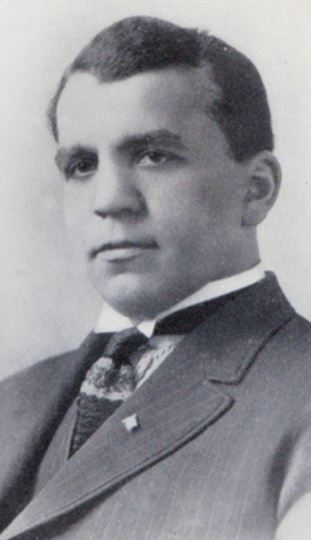 Moszek Abram Miączyn (1887-1970) was born in Poland to a deeply religious Jewish family. When he was two years old, the family moved to England and changed their last name to Cohen. Growing up in poverty, he got into a lot of trouble and was sent to a Rothschild-funded school for wayward youth. In 1905, his parents sent him to Canada to work on a farm, hoping it would strengthen and mature the young man. Now known as Morris Cohen, he became a typical “cowboy” and, when not raising livestock, spent his time in saloons, playing cards, shooting guns, and ending up in jail on several occasions. Cohen befriended Chinese immigrants working on the Canadian Pacific Railway. At the time, racism and abuse against the Chinese was rampant, and Cohen soon gained a reputation as the only white man who stood up for them. This eventually brought him an invitation from Sun Yat-sen, renowned philosopher and freedom fighter, who led the resistance in overthrowing the Chinese monarchy and who is today revered as a founding father in both China and Taiwan. Cohen and Sun Yat-sen became close friends. Meanwhile, Cohen enlisted in the military during World War I, fighting valiantly and rising to the rank of sergeant. When he was shot and injured in his right arm, he decided he needed to learn how to shoot with his left, too, and carried a revolver on both sides, earning the nickname “Two-Gun Cohen”. Upon his return to Canada, Cohen found himself without money or work. He headed to China and rejoined Sun Yat-sen, becoming his advisor and aide-de-camp. He helped in building China’s railways, and at the same time trained Sun Yat-sen’s revolutionary troops. Cohen became Sun Yat-sen’s personal bodyguard, and was given the Chinese name Ma Kun. After Sun Yat-sen’s passing, Cohen continued to work for the Kuomintang (the Chinese Nationalist Party), and was given the rank of major-general in the Revolutionary Army. During World War II, Cohen fought alongside the Chinese against the Japanese. He was captured in one battle, imprisoned and tortured, and was only freed in December 1943 in a prisoner exchange. He settled in Montreal and got married. In 1947, as the UN vote on the partition of Israel approached, Cohen heard that China planned to oppose, so he reached out to his contacts and made sure the Chinese government would abstain, which they did. Cohen remained neutral during the China-Taiwan split in 1949, and was one of the few people in the world permitted to travel directly between the two countries, as he was admired in both. At his funeral in Manchester, England’s Blackley Jewish Cemetery in 1970, delegations from both China and Taiwan arrived, marking one of the rare occasions when the two governments appeared together in public. Cohen’s life inspired at least three films, including The Gunrunner, where Cohen’s character was played by Kevin Costner.
Words of the Week
Since the Exodus, freedom has always spoken with a Hebrew accent.
– Heinrich Heine

 Charles Ellis Schumer (b. 1950) was born in Brooklyn to a Jewish family with Russian, Ukrainian, and Polish ancestry. He scored a perfect 1600 on his SAT and went to Harvard, where he first studied chemistry before switching to law. He passed the bar in 1975, but went right into politics, having once been inspired when volunteering on a presidential campaign. Schumer was elected to the New York State Assembly straight out of law school. After three terms, he won a seat on the US House of Representatives. He served on the House for nine terms until 1998, when he ran for a Senate seat instead and won again. He has since been re-elected to the Senate three times, with consistently high approval ratings. In 2016, he was voted head of the Senate Democrats, making him the minority leader. Earlier this year, when the Democrats took control of the Senate, he became the majority leader. In both cases, Schumer became the first Jew (and first New Yorker) to hold the Senate leader title. Impressively, Schumer visits every single one of New York’s 62 counties every year to meet with his constituents. He has been praised for helping average New Yorkers deal with even minor issues that are not the role of a senator to address. Over the years, Schumer has worked hard to keep jobs and factories in America, and has been fiercely critical of China. In 2017, he tried unsuccessfully to get Trump to impose a ban on Chinese buyouts of American companies. (This week, he finally pushed through a massive $250 billion