Discovering the Quark
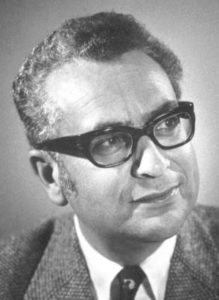
Murray Gell-Mann
Murray Gell-Mann (1929-2019) was born in Manhattan to Austrian-Jewish immigrants from what is now Ukraine. Passionate about math and science from childhood, he graduated high school at the top of his class years ahead, and began studying at Yale when he was 14 on a full scholarship. He had his PhD from MIT by 22. He did research at multiple universities before moving to Caltech in 1955, where he became the youngest professor in the school’s history, and taught there until retirement. In 1958, together with Richard Feynman, he made a huge discovery with regards to the weak nuclear force (one of the four fundamental forces of nature). He went on to make many more important discoveries in the field of quantum physics. He is most famous for proposing the quark model – revolutionizing the world of sub-atomic particles – and for coining the term “quark”. Gell-Mann won a Nobel Prize in 1969 for his work. He is also credited with defending and popularizing string theory. In the 1960s, Gell-Mann was a co-founder of the Jason Division which advised the US military and helped to develop anti-ballistic missiles. He was a science adviser for presidents Nixon and Clinton, and was an editor of the Encyclopaedia Britannica. Later in life, he delved into “complexity science”, tackling some of the most challenging problems in nature (especially biology). He even co-founded the Santa Fe Institute for researching this kind of complex science. Gell-Mann wrote a best-selling science book called The Quark and the Jaguar, and inspired the Gell-Mann Amnesia effect (see below). Sadly, Gell-Mann passed away last month.
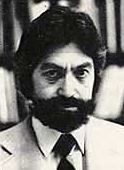
George Zweig
Gell-Mann was not alone in his proposal of the quark model. The same model was devised independently by George Zweig (b. 1937), who was born in Moscow to German-Jewish parents fleeing Nazi Germany. The family moved to the US in 1938 and settled in Detroit. Zweig earned a bachelor’s in math in 1959, and a PhD from Caltech in 1964 (a graduate student of Richard Feynman). He then went to work at the world-famous CERN, where he developed the quark model. (He called quarks “aces”, but Gell-Mann’s name stuck.) Zweig continued to do important work in quantum physics for some time before switching to neurobiology. He helped uncover how the cochlea in the ear transduces sounds into nerve impulses, and how the brain maps sounds, and made other key discoveries with regards to the amazing complexity of the ear. He also invented a device called a signiscope. Zweig was a professor at Caltech for over three decades. Nominated for a Nobel Prize, he has yet to win one, though he has won multiple other prestigious science prizes.
A Jewish Take on the Classic Moral Problem of the Trolley
Words of the Week
The Gell-Mann Amnesia effect is as follows: You open the newspaper to an article on some subject you know well… You read the article and see the journalist has absolutely no understanding of either the facts or the issues… you read with exasperation or amusement the multiple errors in a story, and then turn the page to national or international affairs, and read as if the rest of the newspaper was somehow more accurate about Palestine than the baloney you just read.
– Michael Crichton
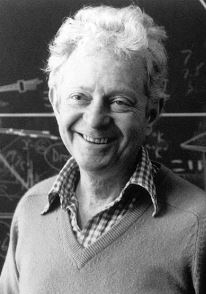
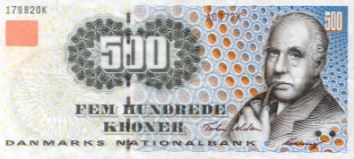
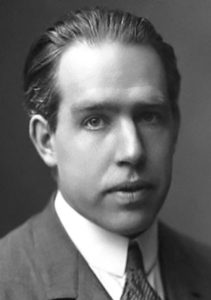 Niels Henrik David Bohr (1885-1962) was born in Copenhagen. His mother was from a prominent Jewish-Danish family, and he was partly named after his grandfather, David Baruch Adler, an influential banker and parliamentarian. Bohr’s father was a famous physiology professor, who rejected his Lutheran roots in favour of atheism. (Bohr himself would later renounce any association with the Church of Denmark.) At 20, Bohr won a gold medal from the Royal Danish Academy of Sciences for his work on water viscosity and surface tension. He went on to earn a Master’s in mathematics and a Ph.D in physics. Bohr combined Rutherford’s ideas on the atom with Planck’s quantum theories to produce a revolutionary new atomic model, known as the Bohr model. This model finally made sense of the mysterious properties of atoms, and solved a major hurdle that baffled scientists for over 30 years. The discovery would earn Bohr a Nobel Prize in Physics. By 1917, Bohr was the Chair of Theoretical Physics at the University of Copenhagen, and sought to establish a new centre for physics research. Bohr got the government on board, and after receiving large donations from wealthy Danish Jews (together with the Carlsberg brewery), founded the Institute of Theoretical Physics – now known as the Niels Bohr Institute. There, his students discovered the 72nd element of the Periodic Table – whose existence Bohr had proposed – and named it Hafnium, the Latin name for Copenhagen. When the Nazis came to power, Bohr opened the doors of his institute to fleeing Jewish scientists. Denmark itself would soon be under Nazi control. In 1943, Bohr was informed that he would be arrested since, despite his mixed ancestry, he was considered a Jew according to the Nuremberg Laws. Bohr fled to Sweden, where he met with Swedish King Gustaf V to convince him to open Sweden’s doors to Jewish refugees. Bohr succeeded, and over 7000 Danish Jews were rescued and given asylum in Sweden. He then headed to England, where he assisted the war effort through the British “Tube Alloys” weapons project, before heading to the US to advise the Manhattan Project. Although he claimed his help was not needed to make the first nuclear bomb, others have admitted that he solved an important puzzle that made it happen. Bohr campaigned against the use of nuclear weapons for the rest of his life. It was his vision that resulted in the creation of the International Atomic Energy Agency, which monitors the use of nuclear power. Bohr went on to become the President of the Royal Danish Academy of Arts and Sciences. He chaired the Nordic Institute for Theoretical Physics, and played a central role in the founding of the world-famous CERN research organization. In addition to his monumental work in quantum physics, Bohr was a noted philosopher. Along with countless other awards, Bohr was bestowed the Order of the Elephant, the highest honour in Denmark (usually reserved only for royalty and heads of state), and is on the Danish 500-krone bill. He is one of just a handful of people who has an element on the Periodic Table named after him (bohrium).