The Persian Kingmaker
 Ebrahim “Hajji” Shirazi (1745-1801) was born in the Persian metropolis of Shiraz to a family of crypto-Jews. His grandfather was a wealthy Jewish merchant who was forced to convert to Islam. The family continued to practice Judaism in secret. His father, Mohammad, became the warden of the richest area of Shiraz, as well as the kadkhoda-bashi, the government’s official representative to, and chief administrator of, the large Jewish population. Ebrahim inherited the title and role from his father. He grew even wealthier and more influential, eventually becoming kalantar, the city’s mayor. When the Persian king Karim Khan died, a civil war and power struggle ensued. Ebrahim was able to use his diplomatic skills to place Jafar Khan on the throne, and helped the new king consolidate his rule. He raised an army to defeat Jafar’s enemies, and brokered important deals with the British to support the new regime. Nonetheless, Jafar’s rule didn’t last long, and he was soon replaced by Lotf Ali Kahn, who was in turn replaced by Agha Mohammad Khan. Ebrahim became the latter’s most trusted advisor, and was soon appointed his sole grand vizier. Ebrahim effectively ran the whole Persian Empire henceforth. He continued in this role even after a takeover by a new emperor, Fath Ali Shah. In those days, Persian royalty and government officials were all expected to have multiple wives. Ebrahim, however, had only one Jewish wife. This was one of many reasons he was suspected of not being a true Muslim. Additionally, under his watch multiple new synagogues were opened in Shiraz and Tehran. At one point, Ebrahim went on a hajj to Mecca to try to cover up his Jewishness, and made sure people called him by the nickname Hajji. Nonetheless, the suspicions caught up with him and, together with his immense power and influence, brought the ire of the other Persian officials. They eventually convinced Fath Ali Shah that Ebrahim was his enemy, and the Shah had Ebrahim executed. Tragically, he also executed much of Ebrahim’s extended family. Historians have described Ebrahim Shirazi as a great Persian “kingmaker”, genius diplomat, and even as “one of the best statesmen Persia has ever had”. Meanwhile, the new Qajar dynasty went on to severely increase persecutions and forced conversions of Jews, causing many Jews to flee east to the Khanate of Bukhara, thus providing a large boost to the growing Bukharian Jewish community.
Are Bukharian Jews Descended from the Lost Tribe of Naftali?
Is it Possible to Reconcile Torah with Evolution?
Words of the Week
God knows what could be done here if you were left alone… The fate of the world depends on the fate of the people of Israel. Make yourself a shining light on a hill.
– Jordan Peterson, in a speech during his recent trip to Israel
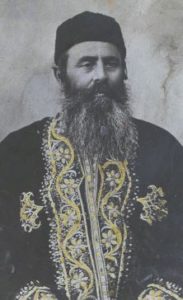 Shlomo ben Yakov Moussaieff (1852-1922) was born in the emirate of Bukhara (present-day Uzbekistan). Both a renowned rabbi and a wealthy businessman, he made aliyah to the Holy Land in 1888 – bringing with him forty cases of gold – and was one of the founders of Jerusalem’s famous Bukharian Quarter. Moussaieff built four synagogues, and homes for 25 poor families. Meanwhile, he published a prayer book and disseminated it widely, making it his mission to inspire more Jews to pray regularly. He also continued his business ventures, particularly in real estate, tea, silk, and gemstones. Moussaieff was an avid collector of rare manuscripts, and amassed an impressive library with 225 ancient texts, including prized manuscripts of Maimonides and the mystical teachings of the Arizal. Until his last days, Moussaieff was committed to the development of Israel, and stated in his will that only those of his seven children that remain in Israel would receive any inheritance.
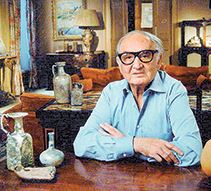 His grandson, also Shlomo Moussaieff (1923-2015), though better known as Sam, would become even more famous. One of twelve children raised in Jerusalem, Sam Moussaieff ran away from home as a teen to avoid his strict father. Living in a synagogue, he worked for a carpenter and sold ancient coins he would find in Jerusalem’s caves and tombs. Once arrested by Arab policemen, he ended up in a Muslim school for nearly a year, becoming proficient in Arabic and the Koran. At 17, Moussaieff enlisted in the British Army to fight the Nazis. After World War II, he fought for Israel’s independence and was captured by the Jordanians, who imprisoned him for a year. Moussaieff returned to Jerusalem and joined the family jewellery business. He soon opened his own antiquities shop in Jaffa, at times getting in trouble for smuggling goods. In 1963, Moussaieff was offered to have his record cleared of legal issues, as well as the rights to an exclusive shop in London’s Hilton Hotel, in exchange for handwritten letters from Maimonides which he owned. Moussaieff accepted and moved to London. His shop soon specialized in jewellery, and he became the dealer of choice for wealthy barons from Arab oil states thanks to his pristine Arabic. Moussaieff became world-renowned for his extremely rare and special gems. He owned the most precious stone in the world: a red diamond valued at $20 million. In 2011, he was ranked among the richest Londoners, with an estimated worth of some $350 million. Moussaieff amassed a personal collection of over 60,000 ancient artifacts, including millennia-old seals from Jerusalem’s First Temple, and reportedly even items associated with the forefather Abraham! His stated goal was to collect indisputable evidence proving the accuracy of the Torah. Moussaieff was given an honourary degree by Bar Ilan University (to whom he donated many artifacts, including his grandfather’s ancient manuscripts) which established the Dr. Shlomo Moussaieff Center for Kabbala Research. Interestingly, Moussaieff once purchased an ancient Torah scroll for $1 million from the Allenby family – who had the Torah because the elder Shlomo Moussaieff gave it as a gift to General Allenby during World War I!