A Medieval Jewish Banking Pioneer
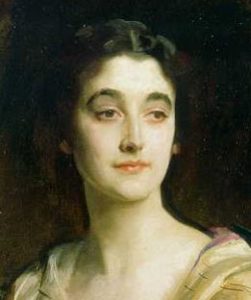
 Licoricia (d. 1277) was born to a Jewish family in medieval England. After becoming widowed at a young age and being left with four children to take care of, she survived by working as a moneylender. As women did not have the legal right to be involved with banking at the time, she was able to cut deals using a male attorney. Licoricia grew her business rapidly. By 1242 her reputation was so impressive that she married David of Oxford—then the richest Jew in England—who actually divorced his wife, with permission from King Henry III, in order to marry Licoricia! Unfortunately, her new husband died just two years later and the king used the opportunity to imprison Licoricia in the Tower of London and extract from her a whopping 5000 marks. She paid the fine, and from it 4000 marks were used to rebuild Westminster Abbey. Licoricia returned to Winchester and further expanded her finance business. Aside from King Henry III, her other notable clients were Queen Eleanor of Provence and Simon de Montfort. In 1275, King Edward I prohibited Jews from moneylending. (This didn’t help him: while Jews only charged 2 or 3 percent interest, the Lombards that replaced them charged up to 50 percent!) Two years later, Licoricia was murdered in her home in an unsolved mystery. Licoricia’s son Benedict was the only Jew in medieval European history known to have become a guildsman, allowing him to be an official citizen and permitting him to own real estate. He was ultimately hanged. Her other son Asher was temporarily imprisoned in Winchester Castle, where he inscribed the following message on the wall of his cell that still survives today: “On Friday, eve of the Sabbath in which the [Torah] portion Emor is read, all the Jews of the land of the isle were imprisoned. I, Asher, inscribed this.” In 1290, King Edward expelled all Jews from England, and they would not return until the 1600s, partly thanks to the efforts of Rabbi Menashe ben Israel. Last week, the city of Winchester unveiled a statue of Licoricia, on Jewry Street in front of her historic home. At the base of the statue is the Torah verse to “love your fellow as yourself” in English and Hebrew.
12 Women in History Who Impacted Jewish Scholarship
Words of the Week
The worst offenders are preachers who preach and expound to the masses what they themselves do not understand. Would that they keep silent about what they do not know.
– Rabbi Moshe ben Maimon (1138-1204), “Maimonides”
 Brian Samuel Epstein (1934-1967) was born in Liverpool, England to a Jewish family of Russian and Lithuanian heritage. His father had expanded the family furniture store to sell musical instruments, and it was here that Paul McCartney’s father bought a piano for his son. Brian Epstein was expected to go into the family business, too, but convinced his parents to allow him to go to acting school in London. He didn’t like it, and returned to Liverpool to run the family’s new NEMS music store. Epstein worked hard to make it the most successful music store in Northern England. He soon became familiar with a new local band, The Beatles (all of whom bought music at his store), and for his 21st birthday booked a party at The Cavern Club where they played. He immediately fell in love with the group, and considered managing them, even though his assistant thought they were “absolutely awful”. Nonetheless, Epstein returned regularly to the club over the next three weeks to watch the band, before proposing to become their manager. He drew up a five-year contract—technically for their parents since The Beatles were all under 21 and needed consent. Epstein got to work right away, transforming their image from a “scruffy crowd in leather” who cursed, drank, and smoked on stage, to wearing suits and presenting a “fresh” vibe. (John Lennon didn’t want to wear a suit but then said he would “wear a bloody balloon if somebody’s going to pay me.”) For nearly a year, the band made no money and Epstein paid for all of their expenses. Over that time, Epstein met with executives from Columbia Records, EMI, and several other big labels, all of whom rejected The Beatles. Eventually, Epstein threatened to stop selling EMI records at his stores, so EMI agreed to a cheap, “nothing to lose” recording contract through their smaller Parlophone label. The Beatles began recording in June of 1962, and the rest is history. Epstein guided the group and took care of them, kept them focused, set up the branding that launched “Beatlemania”, and ultimately made the Beatles the best-selling and most influential music band in history. In turn, the band loved and trusted their manager, and never even read the contracts he brought them to sign. (“We had complete faith in him when he was running us,” said Lennon.) Epstein was the best man at both Lennon’s and Ringo Starr’s weddings. (Contrary to popular belief, the latter is not Jewish.) Epstein worked round-the-clock, and soon became dependent on both stimulants and sedatives. In 1967, days after sitting shiva for his father, he took a large dose of sedatives which, though normal for him, mixed fatally with the large amount of alcohol he had drunk. His death was officially ruled an accident, and biographers have since refuted rumours of suicide. Whatever the case, The Beatles were devastated by the loss of their manager, and never recovered. The band soon fell apart. Paul McCartney would later describe Epstein as “The Fifth Beatle”. The Bee Gees wrote the song ‘In the Summer of His Years’ as a tribute to Epstein, who played a small but critical role in their success as well.