
Father of Religious Zionism
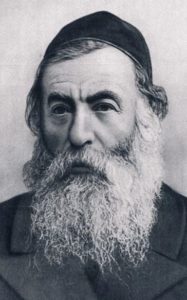 Yitzchak Yaacov Reines (1839-1915) was born near what is now Pinsk, Belarus to a long line of rabbis. He studied at the famous Volozhin Yeshiva where he received his rabbinic ordination in 1867. Rabbi Reines became the rabbi of the town of Svintsyan, Lithuania, just north of Vilnius. There, he opened his own yeshiva which, for the first time, included a secular studies curriculum as well. In 1882, a large assembly of rabbis gathered in St. Petersburg to discuss easing the plight of Russian Jewry, then suffering immense persecution and poverty. Reines proposed spreading his successful yeshiva model across Russia, allowing Jews to integrate into mainstream society (and economy) without abandoning their faith and traditions. The assembly rejected his plan, so Reines continued his mission on his own. His Svintsyan Yeshiva created a ten-year program that would give students both rabbinic ordination and a government-approved job. Unfortunately, the yeshiva faced too much opposition and shut down after four years. Meanwhile, Rabbi Reines was an active member of Hovevei Zion. In 1893, together with Rabbi Shmuel Mohilever, he proposed that Jews settle in their ancestral Holy Land and organize a mercaz ruhani, “spiritual centre”, that would combine Torah with good-old-fashioned agricultural labour. In 1899, Reines participated in the Third Zionist Congress, following which he kept a regular correspondence with Theodor Herzl. Rabbi Reines worked tirelessly to get more approval and understanding for the Zionist movement among traditional and Ultra-Orthodox Jews. In 1901, he built on his earlier mercaz ruhani model to start a new “religious Zionist” movement, known as Mizrachi. That same year, at the Fifth Zionist Congress, Reines played an instrumental role in preventing Zionism from becoming entirely secular and anti-religious (stopping the radical “Swiss faction” behind it). In 1902, Rabbi Reines published A New Light on Zion, a book that addressed the concerns that Ultra-Orthodox Jews had with Zionism. In it, he debunked many of the myths surrounding Zionism, and also composed a manual for establishing a model Jewish state in Israel that would be both materially and spiritually prosperous. Rabbi Reines assembled a large gathering of rabbis in Vilnius in 1902 to officially launch the religious Zionist movement. It would later gave birth to Israel’s first religious political party, the Mizrachi Party, which established Israel’s Ministry of Religious Affairs, and made sure that the Israeli government would adhere to Sabbath and kashrut observance. Mizrachi also built Israel’s first network of religious schools (which are Zionist and encourage students to serve in the IDF). The youth movement of Mizrachi, called Bnei Akiva, is the largest Jewish youth organization in the world (with 125,000 members in 42 countries) and operates religious Zionist schools around the globe. In 1905, Rabbi Reines resurrected his old vision and opened a new yeshiva in Lida, near Minsk, Belarus, which integrated religious and secular studies. Rabbi Reines also came up with a new Talmud-study system, wrote a commentary on the Midrash, and published a number of other acclaimed books. Today, the religious Zionist movement that he founded remains one of the largest and most influential in Israel. Rabbi Reines’ yahrzeit is this Sunday.
Words of the Week
I really wish the Jews again in Judea an independent nation.
– John Adams, second president of the United States
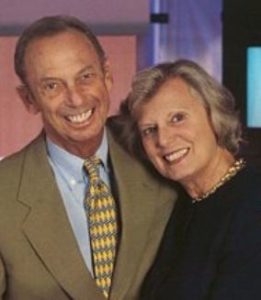 Irene Sue Kerchek (1924-2020) was born in St. Louis, Missouri. She met her future husband Abraham “Abe” Pollin (1923-2009) when she was just 17. The couple married and settled in Washington, D.C. Abe worked for his father’s construction company before he and Irene started their own business in 1957. Together, they built a prosperous real estate empire, raising up both affordable and subsidized housing projects as well as luxury properties. The Pollins went on to found and own the NBA’s Washington Wizards team, the NHL’s Washington Capitals, and the WNBA’s Washington Mystics, working hard to bring those three clubs to the city. They also built the Capital Center and what is now Capital One Arena (formerly the Verizon Center), and were credited with reviving Washington’s downtown core. In 1963, the Pollins lost their teenage daughter to heart disease, and Irene lost both of her parents to heart disease that same year. She fell into deep depression and, when nothing seemed to help her, decided to go study psychology and social work herself. She went back to university and earned two degrees. Pollin opened two pioneering therapy clinics, and wrote two acclaimed books on mental illness and counseling. Her greatest mission in life, however, was to combat heart disease. In 2008, she donated $12 million to Brigham and Women’s Hospital (of Harvard) to establish a heart wellness program. In 2012, she donated $10 million to Hadassah Medical Center in Israel to create a heart health institute, and another $10 million to do the same at Johns Hopkins University. The following year, she gave another $10 million to establish one more heart health centre in Los Angeles. After discovering that more women died from heart disease than from breast cancer, Pollin started a number of organizations to increase awareness of female heart disease and to get more women screened on time. The most famous of these organizations is Sister to Sister: The Women’s Heart Health Foundation. Through their efforts, and the screening clinics they set up across America, the lives of countless women have been saved. The Pollins were generous philanthropists and gave millions more to many other causes, including Washington’s Sixth & I Historic Synagogue, the National Symphony, and research into brain disease, which ultimately took the life of Abe Pollin. The Pollins had a summer house in Rehovot, Israel, and were close friends of
  Adin Even-Israel Steinsaltz (1937-2020) was born in Jerusalem to parents who had made aliyah from Eastern Europe a decade earlier. His father was completely secular, and a devoted socialist who had fought in the Spanish Civil War on behalf of Communist International. Nonetheless, his father wanted his son to know what Judaism was all about, and made sure to have him tutored by a rabbi. Meanwhile, young Steinsaltz studied math and science at Hebrew University. He then took up rabbinical studies at Chabad’s Yeshivat Tomchei Temimim. After receiving semicha (rabbinic ordination), Steinsaltz tried to establish a neo-Hasidic community in the Negev, but was unsuccessful. He then became a school principal and, being just 24 years old, was the youngest principal in Israel’s history. In 1965, he embarked on a life-long journey to translate the Talmud into Modern Hebrew, along with composing a detailed commentary to explain its complexities. He finished the massive 42-volume set in 2010, after which it was translated into English, too, and shared freely online to make Talmudic learning accessible for everyone. Rabbi Steinsaltz also wrote profusely about topics that span the gamut of Judaism, including bestsellers on Kabbalah and Hasidism. Altogether, he penned over 60 books and some 200 other original texts of Jewish thought. (He even wrote an unpublished science fiction novel!) Meanwhile, Rabbi Steinsaltz helped found several yeshivas in Israel, as well as the Jewish University in Russia, with campuses in Moscow and St. Petersburg. He had spent several years in the former Soviet Union to help re-establish Jewish life there, and in 1995 was given the title of Russia’s duchovny ravin, the “spiritual head” of Russian Jewry. In 2004, a large gathering of rabbis in Israel sought to re-establish the ancient Sanhedrin. Rabbi Steinsaltz accepted the nomination to head the court, being given the title nasi, “president”. Before he suffered a stroke in 2016, he was known to regularly give classes until two in the morning. He spent time at Yale University as a scholar-in-residence, and received honourary degrees from five universities. Among his many awards is the prestigious Israel Prize. His motto was “Let my people know!” and he has been compared to a modern-day