
Revolutionary Physicist
 Richard Phillips Feynman (1918-1988) was born in Queens to Lithuanian Jewish immigrant parents. Before his birth, his father had decided that his son should be a scientist, and raised Feynman from an early age to question everything. Feynman did not speak his first word until he was three years old. In childhood, he loved to take things apart and even set up a lab in his home, hiring his little sister for 4 cents a week to be his assistant. (He would later inspire and encourage her to become a renowned astrophysicist in her own right.) At 15, he taught himself advanced algebra, calculus, and trigonometry. He applied to Columbia University but was rejected because the quota for Jewish students had been filled. Feynman went to MIT instead, first majoring in math, then electrical engineering, and finally physics. He published his first two papers as an undergrad, and his senior thesis (putting forth what would become the Hellmann-Feynman theorem) brought him a great deal of recognition in the scientific community. Feynman then applied to grad school at Princeton, and got an unprecedented perfect score on the physics exam. Again, he was initially brushed aside for being Jewish before the dean was convinced not to miss out on the young genius. (Feynman was admitted only on the condition that he wouldn’t get married!) At 23, he defended his Ph.D, and was already being compared to Einstein (he would win the Albert Einstein Award in 1954). Meanwhile, Feynman was working on the Manhattan Project, leading a team developing the isotron (to isolate uranium-235), then developing what’s now called the Bethe-Feynman formula for fission bomb yield. At Los Alamos, he was one of the “human computers”, and helped to develop better machinery for some of the world’s first digital computers. Towards the end, he spent time lecturing on the dangers of nuclear power, and put together a safety manual for uranium enrichment.
After the war, Feynman joined the faculty of Cornell University, and there developed his famous (and revolutionary) “Feynman diagrams” to solve and explain quantum problems more easily. After a sabbatical in Brazil, Feynman moved to Caltech, working on superconductivity, superfluidity, nuclear decay, and quantum gravity, among many other subjects. He is credited with being the first scientist to conceive of both nanotechnology and quantum computers. In the 1960s, he began writing books on physics, many of which went on to become bestsellers and university textbooks. In 1965, he won a Nobel Prize for his theory on quantum electrodynamics, and in 1979 won the National Medal of Science. Feynman became even more famous in 1986 when he lead the team that investigated the crash of the space shuttle Challenger. Feynman was voted by scientists as one of the 10 Greatest Physicists of All Time, and Bill Gates recently wrote an article (titled “The Best Teacher I Never Had”) about how it was Feynman that served as his greatest inspiration. Feynman was famous for his sense of humour and his rebellious nature. He rejected his religion (though at a later age encountered the Talmud and said it was “a wonderful book”), resisted his superiors (he was sought out by Niels Bohr because all the other physicists were too fearful to argue with the great Bohr), and even derided his Nobel Prize (saying the real prize was the scientific discovery). Feynman also loved biology and poetry, and was an avid painter and musician. Last Friday would have been his one hundredth birthday.
Words of the Week
As they set out from their place above, each soul is male and female as one. Only as they descend to this world do they part, each to its own side. And then it is the One Above who unites them again. This is His exclusive domain, for He alone knows which soul belongs to which and how they must reunite.
– Zohar (I, 85b)
 Philippe Kahn (b. 1952) was born in Paris, France to Jewish immigrants from Eastern Europe. His mother fought alongside the French in World War II (with the rank of lieutenant), and went on to survive Auschwitz. Kahn studied in Zurich and Nice, attaining master’s degrees in both mathematics and music. During his studies, he wrote software for the world’s first modern personal computer, the French-made MICRAL of 1973. In 1982, he started his own company in California called Borland. It was one of the first start-ups to create software development tools, and stood out from other companies as it offered incredibly cheap products. (Its Turbo Pascal, for example, cost only $50 compared to the thousands of dollars that similar tools cost.) Over the next ten years, Kahn transformed Borland into a computer powerhouse with $500 million in revenue. However, a number of disagreements led to the board squeezing him out of his own company. Kahn took his severance pay and started a new company, Starfish. Just a few years later, he sold it to Motorola for a whopping $325 million. Around this time, Kahn’s daughter was born, and he got frustrated at his inability to quickly send baby photos to friends and family. He fiddled with his camera and his phone until he managed to link the two. He then sent history’s first photograph through a cellphone. This inspired him to develop the camera-phone, making it the focus of his new startup, LightSurf Technologies. This company, too, was bought out for $300 million. Since then, Kahn has started yet another company that designs and develops wearable technology. He is also an avid sailor, holding the world record for fastest San Francisco to Hawaii trip, and recently winning the Transpacific Yacht Race from LA to Hawaii. Kahn is credited with inventing the now-ubiquitous camera phone, and TIME Magazine included his first phone photograph in its 2016 list of the 100 Most Influential Photos of All Time.
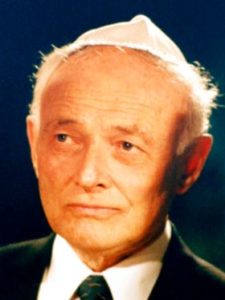 Liviu Librescu (1930-2007) was born in Ploiesti, Romania. In November of 1940, the Romanian government allied with Nazi Germany, and Librescu’s family was deported to a labour camp. Eventually, they ended up in the Focsani Ghetto from which Librescu was liberated in 1945. He stayed in Romania and enrolled in aerospace engineering studies (inspired by his time watching birds fly in and out of the ghetto). A year after graduating he joined the Bucharest Institute of Applied Mechanics where he served as a researcher for 22 years. In 1969, Librescu earned his Ph.D in fluid dynamics, and wrote some very important papers that were unfortunately unknown in the West. He was also recruited by the government to work on top secret military projects. However, Librescu was soon fired for refusing to swear allegiance to the Romanian Communist Party and for requesting to emigrate to Israel. Thankfully, one of his groundbreaking research papers was smuggled out of Romania and brought him international attention. It reached the desk of Israeli Prime Minister Menachem Begin, who personally put pressure on the Romanian government to free Librescu. In 1978, the Romanians relented and Librescu made aliyah to the Holy Land. For the next seven years, Librescu taught at Tel-Aviv University and the world-famous Technion in Haifa. In 1985, he took a sabbatical year and visited Virginia Tech in the US. He decided to stay and joined their Department of Engineering Science and Mechanics. Librescu went on to become one of Virginia Tech’s most famous and beloved professors. He is credited with publishing more papers (250) than any other Virginia Tech professor, and among his many awards are a Dean’s Award for Excellence in Research and a Frank J. Maher Award for Excellence in Engineering Education. He was also on the editorial boards of seven scientific journals, and a guest editor of five more. On April 16, 2007, Librescu was teaching his regular class when a gunman walked into the engineering building at Virginia Tech and opened fire. When the gunman tried to enter Librescu’s classroom, the professor blocked the door and told his students to escape through the windows. He was fatally shot five times. All but one of his students were able to escape. The remaining 22 were saved by Librescu’s heroic actions. In a horrible twist of irony, the Virginia Tech shooting took place on the 27th of Nisan – Holocaust Memorial Day. President Băsescu of Romania posthumously awarded Librescu the Grand Cross of the Order of the Star of Romania (the country’s highest civilian honour), and renamed the street in front of the US Embassy in Bucharest after him. Virginia Tech’s Jewish Student Center is now named after him, too, as is a professorship at Columbia Law School. He was called the “Most Inspiring Person of 2007”. President George W. Bush eulogized Librescu with the following words: “With the gunman set to enter his class, this brave professor blocked the door with his body while his students fled to safety. On the Day of Remembrance, this Holocaust survivor gave his own life so that others may live.”