Category Archives: Religious Leaders

Spiritual and Religious Greats of the Jewish People

Jew of the Week: Moshe Rabbeinu

The Greatest Prophet
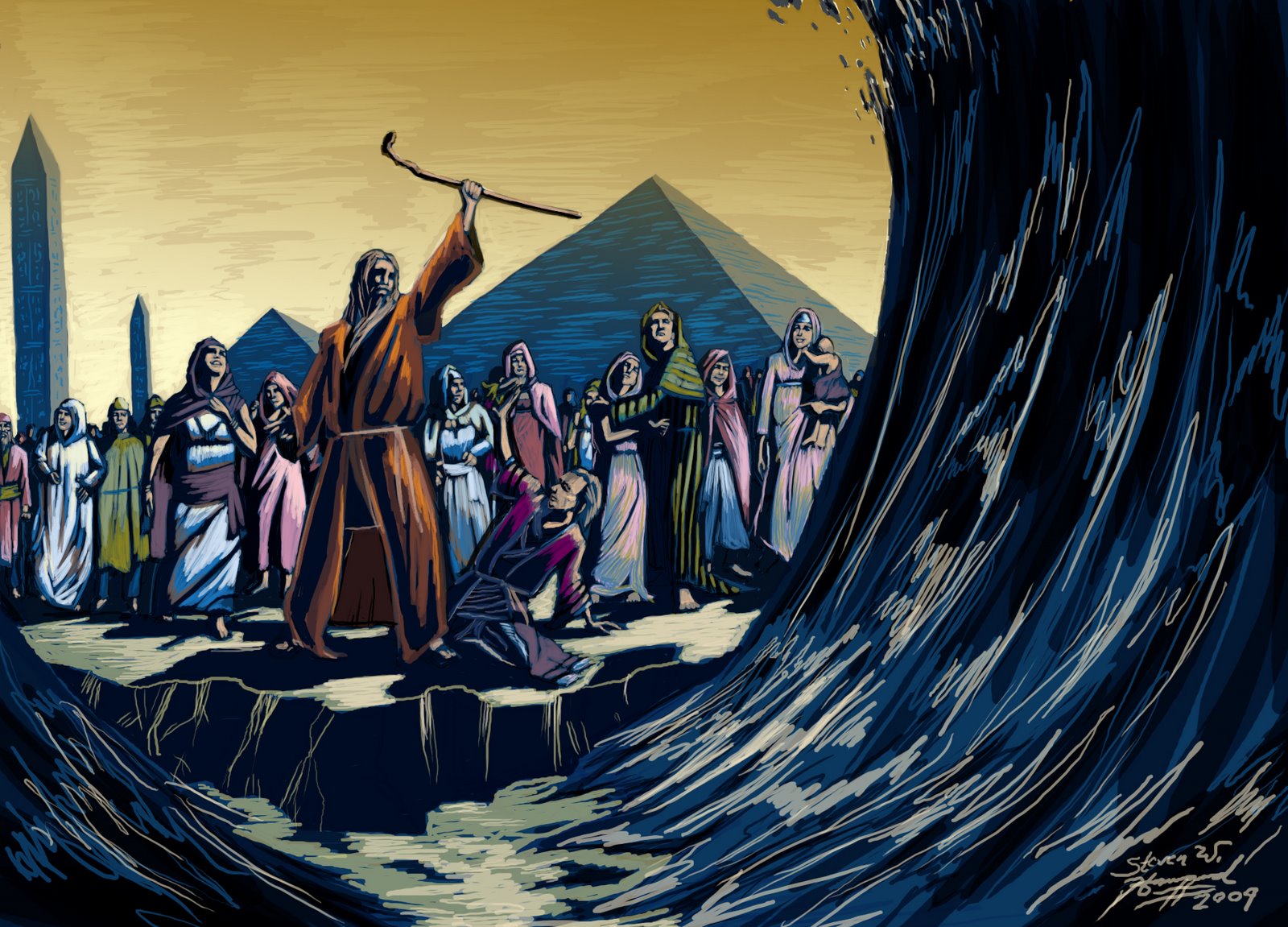
“Moses Leads the Jews out of Egypt”, by Stephen Howard

Moshe “Moses” ben Amram (c. 1393-1273 BCE) The Pharaoh’s astrologers told him that the “Saviour of the Hebrews” will be born in the month of Adar. Pharaoh decreed all male newborns be drowned in the Nile river. Yocheved was able to hide little Tuviah for 3 months until placing him in a basket on the river. The Pharaoh’s daughter found the floating baby and named him Moshe – meaning “draw” for she drew him from the river. He would later “draw” the Jews out of Egypt. Ironically, the baby that Pharaoh was trying to kill was raised in his own palace! More ironic still, just as Pharaoh drowned the children, his men were ultimately drowned in the Red Sea. Moses was the greatest prophet that ever lived, as well as the humblest man to walk the Earth. He wrote the Torah, as dictated by God, and brought down the 613 commandments of Judaism. It is thus no surprise that the numerical value of “Moshe Rabbeinu” (משה רבינו) in gematria is 613. This coming Monday night begins the 3323rd Passover since Moses led us out of Egypt.

Words of the Week

In the Haggadah we read, “The Torah speaks of four sons: One is wise, one is wicked, one is simple and one does not know how to ask.” In our generation, however, we also have a “fifth son” – the Jewish child who isn’t even at the seder! Our task is to go seek out these sons and daughters and bring them to the Passover table.
The Lubavitcher Rebbe, in a public letter issued shortly before Passover of 1957
Jew of the Week: Queen Esther

Heroine of Purim

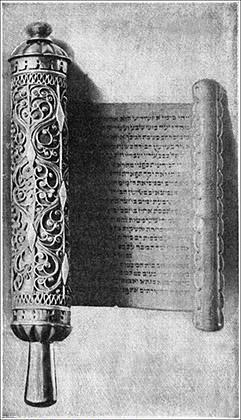
Scroll of Esther

Queen Esther (c. 4th Century B.C.E), the daughter of Avichayil, she was originally named Hadassah (meaning “myrtle”), and was given the Persian name Esther (which has multiple meanings, including “morning star”, “moon”, “goddess” and “hidden”). The first official Miss Universe, she was selected for her beauty from thousands of candidates across the whole known world. King Ahashverosh was enchanted by her instantly, and promptly made her his queen. A humble orphan girl raised by her cousin (or uncle) Mordechai, she used her wits to overturn the genocidal decree of Haman. Taking both a religious and militaristic approach, Esther organized three days of fasting and repentance, while mobilizing the Jews to defeat Haman’s evil forces. Ultimately, she saved the Jewish nation from total extinction. She is one of the 7 known prophetesses of Israel.

Chag Purim Sameach! 

Words of the Week

The king loved Esther more than all the women, and she won more of his grace and favour than all the other girls, so that he set the royal crown upon her head and made her Queen…
Scroll of Esther 2:17

Jew of the Week: Rabbi Abraham ben David

The Ravad

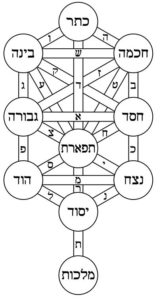
Tree of Life, depicting the Kabbalistic Sefirot

Avraham ben David (1125-1198) also known as the “RaAVaD” (a title derived from the initials of his name, as is common with many Jewish sages) was one of the greatest scholars in history. Born in Provence, France to a Sephardic family, the Raavad was the chief rabbi of Montpellier and Nimes (where Denim fabric, “De Nimes” was invented). During his tenure as the head of the yeshiva, Nimes gained a reputation as one of the greatest places of Jewish learning in the world. Rabbi Avraham spent most of his life in Posquieres. He was incredibly wealthy, financing the construction of schools with his own funds, and supporting the poor. Because of this, he was once imprisoned by the lord of Posquieres, before a count who knew of the Raavad’s greatness freed him and banished the lord. The Raavad wrote hundreds of different works, including a penetrating commentary on the entire Talmud. More importantly, he is often regarded as the “father of Kabbalah”, revealing ancient Jewish mystical teachings and clearly elucidating them. The famous diagram of the mystical Sefirot arranged in a “Tree of Life” is attributed to him. The Raavad was also a noted astronomer, philologist, and philosopher. Spanish government records reveal that his descendants were important advisers to the Spanish monarchy. Meticulous in his analysis, highly critical, and opposed to dogma, he was a man that cared only for Truth. His impact on the depository of Jewish wisdom, and on the Jewish people, is unparalleled.

Words of the Week

Because each life form, even fruit, is entrusted to a specific angel. By saying a blessing over a fruit, we empower that angel to reproduce more of that fruit. One who refrains from partaking of a fruit deprives the world of the spiritual influence that the blessing would have provided.
– Chemdat Yamim