Category Archives: Religious Leaders

Spiritual and Religious Greats of the Jewish People

Jew of the Week: Judith

Heroine of Chanukah

Judith displaying the head of Holofernes

Judith displaying the head of Holofernes

Yehudit bat Merari (c. 2nd century BCE) was a Jewish woman who lived in the town of Bethulia in Israel. Her husband, Menashe, fought and died with the Maccabees during the Chanukah wars against the Syrian-Greeks. When a massive Greek legion led by General Holofernes invaded her village, the local men were too frightened to fight back. Taking matters into her own hands, the young widow (together with her maid) crossed enemy lines and pretended to be a Greek spy. Slowly, she got closer to the Greek authorities and eventually made it to the tent of Holofernes. One night, Judith plied him with wine and fed him cheese until he was asleep. She then decapitated him with his own sword. Judith brought the head back to the fearful Israelites and roused them to attack the Greeks. Her inspirational words and wise military counsel led to a monumental Jewish victory. Jewish texts credit this event as the turning point of the war, leading to the recapture and re-dedication of the Holy Temple, the preservation of Judaism, and the ultimate collapse of the Syrian-Greek empire. Judith is often listed as one of the genuine prophetesses of Israel, and a great heroine like Esther, Deborah, Yael, and many others before her. (She was even canonized as a saint in Catholicism!) In honour of her feat, it is customary to eat dairy products during the 8-day festival of Chanukah, and for women to abstain from any work while the Chanukah lights are burning. Judith continued to lead the nation until her passing at the age of 105.

Chanukah Begins Saturday Night! Chag Sameach!

Words of the Week

The darkest time of the night is just before dawn.
Midrash Tehillim, Chapter 22

Jews of the Week: Isaac Leeser and Warder Cresson

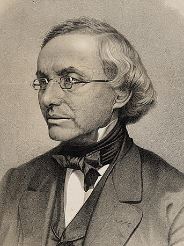
Isaac Leeser

Isaac Leeser

Isaac Leeser (1806-1868) was born in the Germanic kingdom of Westphalia. Growing up, he received both a religious Jewish education, as well as a secular German one, and was fluent in Latin, German, and Hebrew. He immigrated to the United States at the young age of 17 and lived with his wealthy uncle. While working in his uncle’s business, Leeser started to teach Judaism in his local synagogue, and vocally defended his religion when it was under attack in the public sphere. By age 22, he was quite well known, and was invited to take over Philadelphia’s Congregation Mikveh Israel, one of America’s oldest Sephardic synagogues. Leeser introduced American Jewry to the German custom of delivering a sermon between prayers (something now common in all synagogues). He wrote a book about Judaism in 1829 but found no publisher willing to print it. So, he started his own press, establishing the Jewish Publication Society. In 1845, he published his English translation of the Torah – the first by a Jew. Eight years later, he published a complete English Tanakh. This translation was the authoritative Jewish version for decades, and is still widely used today. Leeser helped found some of America’s first Jewish schools, seminaries, and magazines. He was also a civil rights activist and worked hard on behalf of all minorities. He is regarded as one of America’s most important Jewish pioneers.

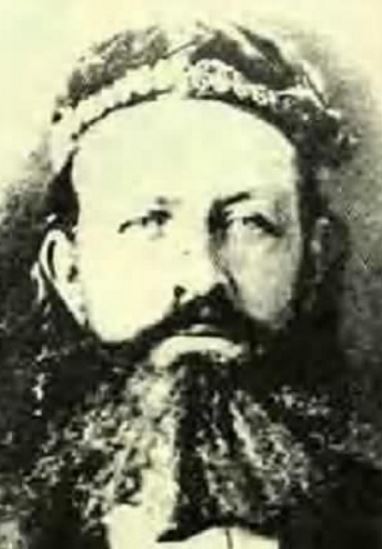
Michael Boaz Israel, aka. Warder Cresson

Michael Boaz Israel, aka. Warder Cresson

In 1840, Leeser met a wealthy farmer named Warder Cresson (1798-1860). Cresson was a very religious Quaker, a preacher and writer. After some discussions with Leeser, Cresson took a deep interest in Judaism. In 1844, he was appointed America’s first consul in Jerusalem. This brought him face-to-face with Judaism and he grew close to Jerusalem’s ancient Sephardic community. He started writing for Leeser’s magazine, The Occident, and even began doing counter-missionary work to stop Christian proselytizing of Jews. In 1848, Cresson converted to Judaism, was circumcised, and took on the Hebrew name Michael Boaz Israel ben Avraham. Upon his return to Philadelphia, his wife divorced him, sued him, and sought to have him declared insane. The case made headlines across the US. Cresson ultimately won the suit, proving his absolute sanity and wisdom. He returned to Jerusalem, married a Sephardic woman and had three kids. In 1852, he established a Jewish agricultural colony – predating the Zionist movement by several decades, and in fact, helping to inspire it. He continued writing on Jewish topics, and died as a respected and prominent leader in Israel’s Sephardic community. His original tomb and burial place on the Mount of Olives was recently rediscovered.

Words of the Week

Just as the olive yields oil for light only when it is pounded, so are man’s greatest potentials realized only under the pressure of adversity.
– The Talmud

Jew of the Week: Rebbetzin Esther Jungreis

JungreisEsther Jungreis (1936-2016) was born in Hungary, the daughter of a rabbi. During the Holocaust, the family was sent to Bergen-Belsen, and later loaded up on a train headed for Auschwitz. On route, they managed to escape to Switzerland with the help of Rudolph Kastner’s Aid and Rescue Committee. The quota for migrants to Israel was filled, so the family was given papers to go to the States. Jungreis went on to marry a rabbi and settled in North Woodmere, New York, where the couple founded the town’s Jewish Center and Congregation Ohr Torah. Seeing the rampant assimilation in the United States, Jungreis made it her life’s work to prevent what she saw as a “spiritual holocaust”. In 1973, she started an organization called Hineni, aimed at inspiring Jewish youth to return to their roots. Under her dedicated leadership and moving speeches, Hineni grew to become an international organization, no longer focused solely on youth but rousing countless young and old alike. Jungreis organized events and gave lectures around the world – visiting fifteen or more countries a year was normal for her. Her weekly class drew as many as 1500 people at a time. Meanwhile, Jungreis wrote a regular column for The Jewish Press (the world’s largest English-language Jewish paper) for some 45 years, making it the longest running column in the publication’s history. She also wrote four best-selling books, and had a television programme. In 2004, the Rebbetzin spoke at the Republican National Convention, and in 2008 was selected by President Bush to join him on his delegation to Jerusalem for Israel’s 60th anniversary. Today, she is recognized as one of the central pioneers of the modern kiruv (Jewish outreach) movement. Sadly, the Rebbetzin passed away yesterday. She worked tirelessly until the very end, and in her last article – published just last week – finished with these words: “When will we wake up? When will we don our priestly garments and fulfill our G-d-given destiny and be ‘a light unto all mankind’?”

Words of the Week

A long life is not good enough, but a good life is long enough.
– Rabbi Theodore Meshulem Jungreis