Category Archives: Law, Politics & Military

Jews in the World of Law and Politics

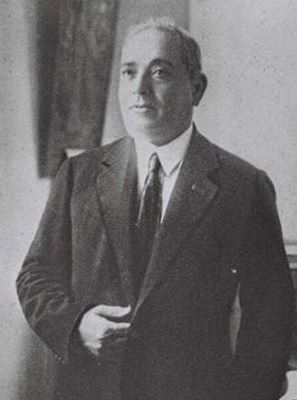
Jew of the Week: Meir Dizengoff

Founder of Tel-Aviv

Meir Dizengoff

Meir Dizengoff

Meir Yankelevich Dizengoff (1861-1936) was born in Bessarabia, a region overlapping parts of modern-day Moldova and Ukraine. After completing his education, he enlisted in the Russian Army, where he served for two years. Dizengoff then settled in Odessa and soon joined a revolutionary group called Narodnaya Volya (“People’s Will”), which sought to overthrow the Tsar and assist the plight of the many impoverished people across the Russian Empire. At the same time, he met several Zionist leaders and joined Hovevei Zion, an organization formed in response to the tragic pogroms of 1881. In 1885, Dizengoff was arrested for his involvement with Narodnaya Volya’s insurgent activities. Upon his release, he moved back to Bessarabia to found a new branch of Hovevei Zion. A couple of years later, Dizengoff enrolled at the University of Paris to study chemical engineering. It was there that he met Edmond James de Rothschild, a member of the French Rothschilds who was an ardent Zionist. Rothschild sent Dizengoff to Israel to set up a bottle-making factory for his family’s wineries. Unfortunately, the factory didn’t do well, and Dizengoff returned to Europe. It wasn’t long before Dizengoff returned once more to the Holy Land, setting up his home in Jaffa in 1905, and starting a development and import company called Geulah. Several years later, Dizengoff joined together with Ahuzat Bayit to purchase a plot of land outside of Jaffa to create a new Jewish community. In 1909, this plot of land was divided among 66 Jewish families, establishing the town of Tel-Aviv. Two years later, Dizengoff became its head of planning, and was instrumental in its quick expansion and development. During World War I, the Ottomans expelled the town’s population, and it may have ceased to exist entirely were it not for the efforts of Dizengoff. In 1922, Tel-Aviv was recognized as a city, and not surprisingly, Dizengoff was elected its first mayor, a post he held until his death. In 1923, Tel-Aviv became the first city in Israel to have electricity. By 1925, its population had swelled to 34,000. Upon the passing of his beloved wife in 1930, Dizengoff donated their family home to the city, requesting that it be turned into a museum. It was there, on the 14th of May in 1948, that the State of Israel declared its independence. Unfortunately, Dizengoff himself didn’t live to see this day. However, he played a critical role both in the founding of Tel-Aviv, and Israel as a whole, and transformed Tel-Aviv from an empty parcel of land to a beautiful city of 150,000 at the time of his passing. To this day, Tel-Aviv’s most important artery is Dizengoff Street, often described as “Israel’s Champs-Élysées”.

Words of the Week

“Thus said God: ‘Behold, I will save My people from the countries of the East, and from the countries of the West; And I will bring them, and they shall dwell in the midst of Jerusalem; and they shall be My people, and I will be their God, in truth and in righteousness.'”
– Zechariah 8:7-8

Jew of the Week: Meir Dagan

Meir Dagan (Credit: Kobi Gideon/Flash 90)

Meir Dagan (Credit: Kobi Gideon/Flash 90)

Meir Huberman (1945-2016) was born on a train while his parents, Polish-Jewish Holocaust survivors, were fleeing to the Soviet Union. Five years later, they made aliyah to Israel and ultimately settled in Bat Yam, where Meir’s parents opened up a laundromat, and changed the family name to Dagan. Meir went on to study art at Tel Aviv University, and when conscripted to the IDF, joined the elite Paratroopers Brigade (which accepts just 1 in 5 applicants). A year following the completion of his mandatory service, he was called up to serve in the Six-Day War. As an officer, he commanded a paratrooper unit in the Sinai. Following the war, he stayed in the military and was soon tasked with leading a commando unit, Sayeret Rimon, operating undercover in the Palestinian territories. During one daring mission, Dagan tackled and disarmed a terrorist holding a live grenade, a feat that earned him a Medal of Courage. He was called to command a unit once more during the Yom Kippur War, successfully pushing across the Suez Canal. In 1982, the armored unit under his command was among the first to reach Beirut during the Lebanon War. Dagan retired from the military in 1995 with the top rank of Major General. Prime Minister Ariel Sharon appointed him as National Security Adviser, and then Director-General of the Mossad. Unlike former Mossad heads who were weary of doing so, Dagan was praised for his aggressive tactics in assassinating terrorist leaders (most famously Imad Mughniyeh, the terror chief of Hezbollah and Islamic Jihad). Dagan essentially tripled Mossad’s activities, and a Knesset member has said that under his watch, the Mossad “has undergone a revolution in terms of organization, intelligence, and operations”. Dagan continued to head Mossad until the end of 2010, when he crossed paths with Netanyahu over plans to strike Iran, which Dagan opposed, saying “Israel should not hasten to attack Iran, doing so only when the sword is upon its neck.” (Instead, Dagan had sent countless cyberattacks to cripple Iran’s nuclear program, together with car bombs to assassinate its engineers.) After stepping down, Dagan became director of Israel’s Port Authority, as well as chairman of Gulliver Energy, an Israeli mining company. Unfortunately, he was diagnosed with liver cancer. After chemotherapy failed, he received a liver transplant, but this, too, didn’t remove the cancer completely. Sadly, Dagan passed away last week. He was eulogized by President Rivlin as “one of the greatest of the brave, creative and devout warriors that the Jewish people ever had. His devotion to the State of Israel was absolute.”

Words of the Week

The issue of Iran armed with a nuclear capability is not an Israeli problem; it’s an international problem.
– Meir Dagan

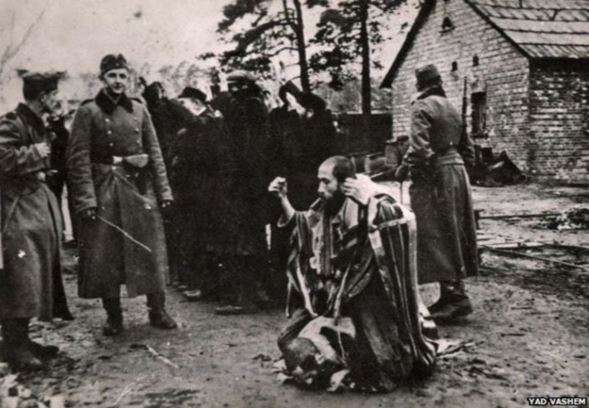
This is a photograph of Meir Dagan’s grandfather right before being murdered by Nazis. The photo hung in Dagan’s office as a constant reminder of his important work.

Jew of the Week: Mazor Bahaina

Rabbi and Member of Knesset

Mazor Bahaina (Credit: Knesset.gov.il)

Mazor Bahaina (Credit: Knesset.gov.il)

Mazor Mahoy Bahaina (b. 1973) was born in the Ethiopian village of Welkite. As a child, he fled the country with his family on foot, heading for Israel. It took a year and a half, most of which was spent in Sudanese refugee camps, to finally reach the Promised Land. Bahaina enrolled in religious yeshivas for study, eventually making it to the prestigious Porat Yosef Yeshiva in Jerusalem. After earning his rabbinic ordination, he moved to Be’er Sheva to support the influx of Ethiopian Jewish immigrants, ultimately becoming the chief rabbi of the city’s 10,000 Ethiopian Jews. He also sat on the city’s council, which brought him into the political sphere. Bahaina eventually got on the list of Shas (“Shomrei Sefarad”, Israel’s religious Sephardic political party). He worked for the Ministry of Religious Affairs, and as an advisor to Israel’s Minister of Finance. In April 2008, Bahaina was given a seat in the Knesset, and served as a member of parliament until the following year. He was a member of the Labor, Welfare, and Health Committee, as well as the committee for children’s rights, among others. Though no longer in government, Bahaina continues to diligently serve Israel’s public, particularly the Ethiopian community, and is working to assist the remaining Jews of Ethiopia to make aliyah.

Words of the Week

Six million of us were murdered in the Holocaust. But instead of disappearing, we decided that after 2,000 years of exile, it would be better to go home and rebuild our own country. And so we did. What took other nations hundreds and hundreds of years to build, we did in only a few. What was possible we did very quickly, and what was impossible took us just a bit longer.
– Rabbi Dr. Nathan Lopes Cardozo