
The Queen of Seventh Street
 Donna Ivy Faske (b. 1948) was born in Forest Hills, New York and grew up in the “Jewish Greenwich” of Five Towns, Long Island. She was raised by a single mother who worked as a fashion model. Karan began her fashion career drawing sketches for Liz Claiborne. Although she dropped out of designer school, her talent propelled her onward, working first with fellow Jew Anne Klein, and eventually starting her own company with husband Stephen Weiss. In 1985, the Donna Karan Co. line premiered for the first time – with the motto “modern clothes for modern people” – and was an instant hit. Along with her popular Essentials and Signature lines, in 1988, Karan launched a new line for youth that has since gained even greater fame: abridging ‘Donna Karan New York’ to DKNY. The brand became huge worldwide (and currently operates 70 stores around the globe), and is often seen as a symbol of New York City itself, likely due to the famous ad poster, which has been called a ‘New York landmark’. A winner of multiple awards, Karan has been nicknamed ‘The Queen of Seventh Street’.
Words of the Week
In material matters, one should always look at he whose situation is lower than one’s own, and thank the good God for His kindness to him. In spiritual matters, one should always look at he who is higher than oneself, and plead with God to grant him the intelligence to learn from the other, and the ability and strength to rise higher.
– Rabbi Menachem Mendel Schneerson, the Lubavitcher Rebbe (Hayom Yom, Cheshvan 24)
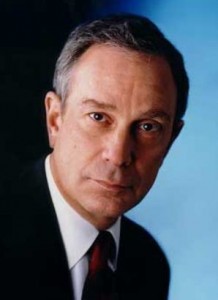 The 10th richest person in the U.S., Michael Rubens Bloomberg was born in Massachusetts, the grandson of immigrants from Europe and Russia. In the 1970s he worked for a Wall Street firm where he learned that information is the key to success, and people are willing to pay for it. So, when the company he worked for was bought out, he used his severance money to start a company called Market Systems, which built terminals that gave their users on-the-fly and up-to-date financial information, presented in various graphs and charts to make it simple to understand. The company started selling its terminals in 1982 and they were an instant hit. By 1990, over 8000 ‘Bloomberg’ terminals were in use around the world. Today, that number has risen to 310,000, and Bloomberg LP also includes a news channel, radio stations, magazines (such as BusinessWeek) and software. Michael Bloomberg himself left the helm of the company to become popular mayor of New York City. His mayoral salary is a symbolic $1. A mayor of the people, Bloomberg often rides the NYC subways to work. More impressively, The Chronicle of Philanthropy lists him as the leading individual donor in the U.S. for two years in a row. Bloomberg has donated hundreds of millions of dollars to hospitals, schools, environmental causes, and scientific research, as well as the arts. Many of his contributions are anonymous. He recently pledged another $500 million together with Bill Gates. Some have stated Bloomberg is the greatest contributor to higher education institutions in history, donating over $800 million to Johns Hopkins alone. All of these factors may be why Bloomberg has been elected to a third term as mayor, despite the two-term limit. And some say he will be president in the near future. If so, it would make him the first Jewish Commander-in-Chief.
