Category Archives: Arts & Entertainment

Jews in the World of Art & Entertainment

Jews of the Week: Margaret and H.A. Rey

Curious George

Margaret and H.A. Rey

Margaret and H.A. Rey

Margarete Elisabethe Waldstein (1906-1996) was born in Hamburg, Germany, the daughter of a Jewish politician. She studied art and worked in advertising until 1935, when she fled Nazi Germany for Brazil. In Rio de Janeiro, she reconnected with an old family friend who had also moved to Brazil. Hans Augusto Reyersbach (1898-1977) was born in Hamburg, too, and now working as a salesman in Rio. The two got married that same year, and resettled in Paris. Reyersbach started drawing a series of animal cartoons and was soon commissioned to write a children’s book by a French publisher. Cecily G. and the Nine Monkeys, a story about a giraffe and her monkey friends, was published in 1939 under the pen name H.A. Rey. The story became popular very quickly. Particularly beloved was one of the monkey characters in the book, originally named Fifi, and commonly translated to other languages as George. The following year, Rey started working on a new manuscript featuring the curious monkey. By this point, World War II had started, and the Nazis were approaching Paris. Hans and Margaret fled the city on a pair of bicycles. The manuscript was one of the few things they took with them. The couple arrived in Spain, then Portugal, then headed back to Brazil, and finally settled in New York. Curious George was published in 1941, and like its predecessor, was very popular. Hans and Margaret went on to produce seven Curious George books together. Hans wrote and illustrated many more children’s books before passing away in 1977. Two years later, Margaret became a professor of creative writing at Brandeis University. Meanwhile, she worked on a second series of Curious George books, as well as a number of short TV films based on the stories. In 1989, she established the Curious George Foundation with two goals: to promote creative writing among children, and to prevent cruelty to animals. When she passed away in 1996, Margaret left major donations for the Boston Public Library, the Beth Israel Deaconess Medical Center, and donated the family’s entire literary estate. Curious George continues to be among the most popular children’s books all over the world. A third series of Curious George stories have been produced in recent years, as well as a TV series which airs on PBS. In 2006, an animated film starring Will Ferrell and Drew Barrymore was released. Two sequels and a video game have been produced since then. Today, there is an official children’s bookstore in Cambridge, Massachusetts called The World’s Only Curious George Store. There is also a Curious George Live national tour, and a popular Curious George-themed water park at Universal Studios in Florida.

Words of the Week

One should always see to it that tomorrow should be much better than today.
– Rabbi Yosef Yitzchak of Lubavitch

Jew of the Week: Gene Wilder

Gene Wilder

Gene Wilder

Jerome Silberman (1933-2016) was born in Milwaukee, the son of Russian-Jewish parents. When he was eight years old, his mother fell ill and the doctor told him to try to make her laugh. This is when his passion for acting began. At 13, he started taking professional acting lessons, and his mother soon sent him to a school in Hollywood. As the only Jewish kid, he was often bullied and abused, and had to leave the school shortly after. Back in Milwaukee, he performed in his first official play (Romeo & Juliet) at 15. Silberman went on study theatre at the University of Iowa, where he became a lifelong member of the Jewish fraternity AEPi. After college, he went to acting school in England. There, he also studied fencing and became a fencing champion. Upon returning to the US, Silberman was drafted to the army and served as a medic. After this, he went back to acting school (in New York) and supported himself by working as a limo driver and fencing instructor. After three more years of study, he started getting professional acting jobs. During this time, he adopted the stage name Gene Wilder. It wasn’t long before Wilder appeared in a number of hit Broadway plays. In 1967, he got a leading role in The Producers. The movie became a comedy classic, and Wilder was nominated for an Oscar. After some more successes, Wilder was cast as Willy Wonka in the adaptation of Charlie and the Chocolate Factory, perhaps his most famous role. Wilder went on to star in many more popular films, including multiple collaborations with fellow comedy legends Richard Pryor and Mel Brooks. All together, he appeared in 23 films, 9 television shows, and 5 Broadway plays. He inspired a generation of comedians, actors, and pastry chefs. Wilder also wrote 6 books. Sadly, the beloved actor passed away earlier this week. His film Blazing Saddles – which some consider the funniest movie of all time – will be playing in many theaters this weekend as a tribute.

Words of the Week

Most tragedy is misunderstood comedy. God is a great humorist working with a rather glum audience.
– Garrison Keillor

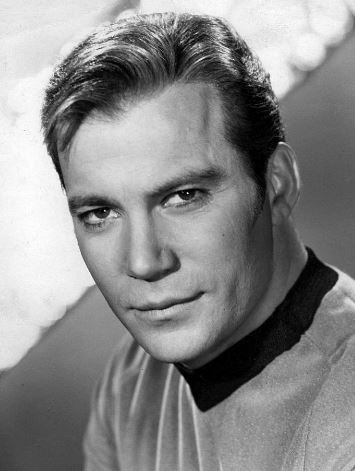
Jew of the Week: William Shatner

William Shatner as Captain Kirk (1966-1969)

William Shatner as Captain Kirk (1966-1969)

William Shatner (b. 1931) was born in Montreal to a Jewish family with Eastern European ancestry. Despite studying economics at McGill University, Shatner was drawn to acting from a young age and was a member of the Montreal Children’s Theatre. After graduating, he became the manager of a theatre company and soon started acting himself in Ottawa’s Canadian National Repertory Theatre and Stratford’s Shakespeare Festival. Meanwhile, he had a few small roles in Canadian films before starring in The Brothers Karamazov in 1958 – his first significant Hollywood role. Over the following few years, Shatner struggled to find more success, and picked up whatever roles he could, appearing on Broadway, in a number of television shows, and various films. In 1966, Shatner was cast as Captain Kirk on the new show Star Trek. In one historic 1968 episode, Kirk kissed Lt. Uhura – the first kiss between a white man and a black woman on American television. Unfortunately, Star Trek was not yet very popular, and the show was cancelled after just three seasons. Shatner had a tough time finding work afterwards, and ended up broke and living from his truck. He took on many small roles through the 70s, appearing in multiple shows and doing all sorts of commercials, from General Motors to Canada’s Loblaws grocery store. By the end of the 1970s, Star Trek had made a comeback and developed a massive cult following. Paramount decided to make a film and cast the original actors in the 1979 Star Trek: The Motion Picture. Shatner went on to play Kirk in six more Star Trek films. He soon expanded to directing films, producing music, writing screenplays, and co-writing a series of very popular sci-fi novels. Between 1994 and 2010, Shatner was the CEO of a special effects studio, while also publishing a number of non-fiction books and continuing to play small roles in film and television. All in all, Shatner has appeared in at least 20 films, 30 television shows, and wrote or co-wrote over 40 books. He has won an Emmy and a Golden Globe, and has a star on both Hollywood’s and Canada’s Walk of Fame. He has played for charitable causes on the World Poker Tour, and is an organizer of the Hollywood Charity Horse Show which raises funds for children’s charities. In 2006, he sold his kidney stone for $25,000 and raised an additional $20,000 to build a house with Habitat for Humanity. Interestingly, Shatner does not like seeing himself on video, and says he has never watched any of his films or Star Trek episodes!

Words of the Week

God is a circle whose center is everywhere, and whose circumference is nowhere.
– Empedocles