
Hava Nagila
 Abraham Tzvi Idelsohn (1882-1938) was born in Latvia to a religious Jewish family. He studied to be a synagogue cantor. At 27, he made aliyah to Israel and worked as a musician and composer. In 1919, he opened a Jewish music school. A few years later, he left for Ohio where he served as professor of Jewish music at Hebrew Union College, the major seminary of Reform Judaism. Between 1914 and 1932 he published his ten-volume magnum opus, Thesaurus of Hebrew Oriental Melodies. Many consider him “the father of Jewish musicology”. His most famous melody is undoubtedly ‘Hava Nagila’. In December of 1917, British army general Edmund Allenby defeated the Ottomans and conquered the Holy Land for Great Britain. The Jews of Israel were elated, and celebrated the general’s arrival in Jerusalem. They asked Idelsohn to compose a song for the special occasion. Idelsohn remembered an old happy tune he had adapted from a Hasidic niggun. The song was a hit. A few years later, he asked his music class to write words for the song.
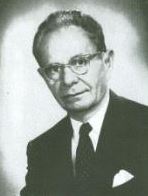 A young Moshe Nathanson (1899-1981) was in that class, and wrote a couple of simple lines based on Scriptural verses from Psalm 118. The rest is history. Nathanson was born in Jerusalem, the son of a rabbi. In 1922 he moved to Canada and double-majored in law and music at McGill University. He ended up studying at what is now the prestigious Julliard School of Music in New York. From there, he was hired to be the cantor of the first Reconstructionist Synagogue, and served in that role for the next 48 years. He wrote an important four-volume tome of liturgical songs. Nathanson also spent 10 years broadcasting Jewish music on American airwaves (“Voice of Jerusalem”) and dedicated much of his life to promoting Jewish folk music. Today, Nathanson’s and Idelsohn’s ‘Hava Nagila’ is the most recognizable Jewish/Hebrew song in the world, and a staple of every bar mitzvah and wedding. There is even a full-length documentary about it, called Hava Nagila (The Movie). This past year marked the song’s centennial anniversary.
Words of the Week
One who cannot survive bad times cannot see good times.
– Hasidic proverb
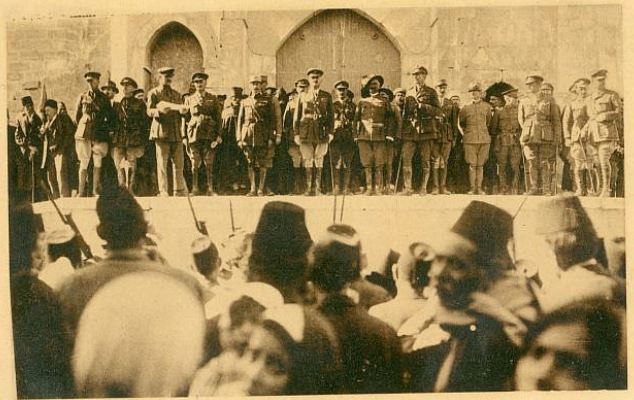
General Allenby’s December 1917 proclamation to the people of Jerusalem.
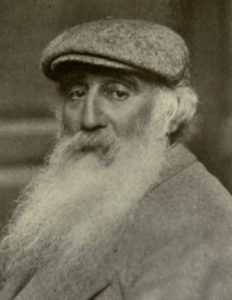 Jacob Abraham Camille Pissarro (1830-1903) was born on the Caribbean island of St. Thomas to a Sephardic Jewish family of Portuguese and French ancestry. Pissarro’s father sent him to a Paris boarding school when he was 12, and it was there that he was first exposed to art, learning to paint and draw. Pissarro returned to St. Thomas at 17 to work in his father’s business, and would spend every spare moment painting. At 21, he became a professional artist and moved to Venezuela, then settled in Paris four years later. There, he apprentice under some of the great painters of the time, including Melbye and Corot. Unlike them, Pissarro wished to paint realistic scenes, and focused on capturing natural landscapes and village life. During this time he met fellow young realists like Monet and Cézanne. Soon, Pissarro was the most famous of them all, with one critic of the day describing him as being able to paint “the smell of the earth”, and another ranking him among the “three or four true painters” of the time. During the Franco-Prussian War, Pissarro lived in a village near London and experimented with a new style that would later be called Impressionism. Upon returning to France years later, Pissarro found that only 40 of his paintings survived the war out of a total 1,500 – twenty years worth of art. Frustrated by the Paris Salon that set standards in art and alone determined whose work could be exhibited, Pissarro decided to start a new art society. He recruited fifteen fellow painters to do so. The others would see him as a father figure, especially because of his long, grey beard (despite being as young as they were). He was described as having the “look of an ancestor who remained a young man”. In 1874, the new society held their first exhibit to display their new form of Impressionist art. For several years afterwards, Impressionism was a very controversial style, with critics either absolutely loving it or hating it. Pissarro would later be credited as “the first Impressionist”. Meanwhile, he became a hero for all young painters for taking a stand against the Salon. Pissarro left the Impressionist fold shorty after, and began to study under painters of the pointillist style. He would go on to fuse the two styles into Neo-Impressionism. By this point, Pissarro was seen as perhaps the most versatile painter in the world, with an “extraordinary capacity to change his art”. In 1884, he took a young Vincent van Gogh as an apprentice. Pissarro continued to paint until the last days of his life, despite a chronic eye infection that weakened his vision, and the persistent financial struggles he faced his entire life. Pissarro was known for his youthful energy, his warmth, humility, wisdom, and gracefulness. Cézanne considered him like a father, and said of Pissarro that he was “a little like the good Lord.” While his works didn’t sell so well in his own lifetime, they are among the most coveted in the world today. One of his paintings was auctioned off for a whopping £19.9 million in 2014. Four of Pissarro’s seven children became noted painters of their own, as are a number of his great-great-grandchildren today.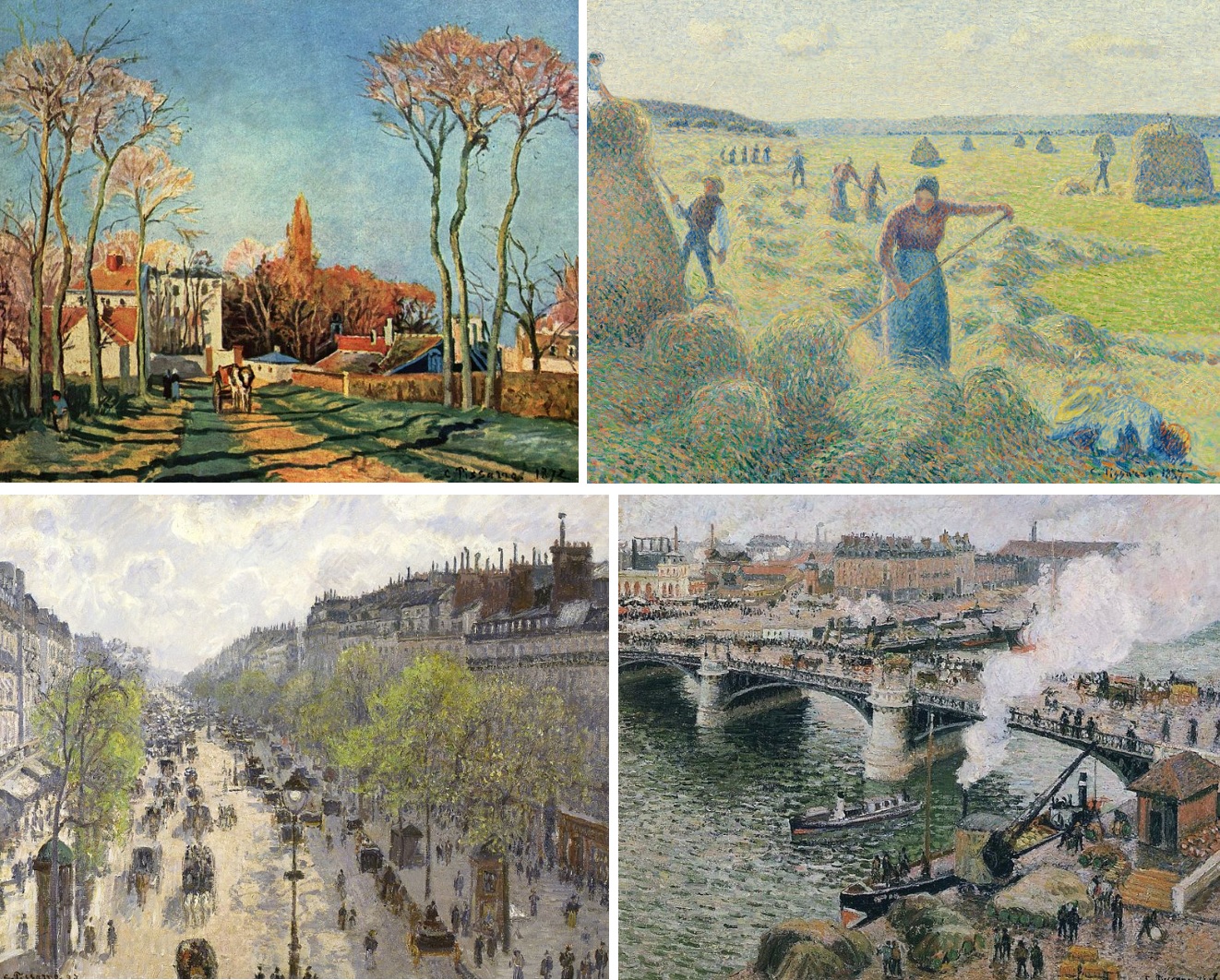
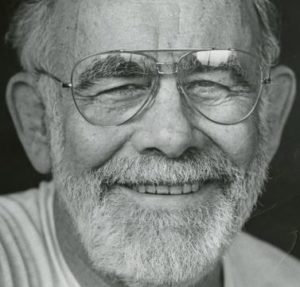 Gerald Wexler (1917-2008) was born in The Bronx to an immigrant family of German-Jewish and Polish-Jewish background. He graduated from high school by age 15, but there was little to do in the difficult days of the Great Depression. Wexler spent much of his time with a small circle of friends listening to music and discussing literature. It was only after returning from World War II military service that he finally pursued a career in journalism and music. He got a job as a reporter for Billboard Magazine, and soon became its editor. At the time, the magazine had a separate music chart for “black music”, called “Race Records”. Wexler took a stand against racism and came up with a new title, renaming the chart “Rhythm & Blues”. He thus coined the now popular term “R&B”. In 1953, the president of the start-up Atlantic Records (a fellow Jew named Herb Abramson) was drafted to the US Army. Wexler was offered to take his place. Under Wexler’s leadership, Atlantic Records became one of the world’s most successful music labels, and produced some of the biggest names in music, including Ray Charles and Aretha Franklin. For bringing the latter to the world, Wexler was named Record Executive of the Year in 1967. (Franklin had struggled to find success in music until Wexler convinced her to join him at Atlantic, and produced her breakout hit song, “Respect”.) The following year, he signed a young group called Led Zeppelin. Wexler would go on to work with other big stars, including Bob Dylan, the Bee Gees, Richard Pryor, Carlos Santana, and George Michael. He was inducted into the Rock and Roll Hall of Fame in 1987. Wexler played a central role in ending the era of “race music” (and stopping the practice of white musicians covering songs of black musicians and raking in all the fame and fortune for themselves). He opened the door for more “black music” to enter the once all-white Billboard charts, and has been credited with bringing “black music to the masses”. Not surprisingly, Wexler has been called “a prophet of roots and rhythm” and “the Jewish king of black music”.