Tag Archives: Spanish Jews

Jew of the Week: Don Fernando de Aguilar

Shana Tova v’Metuka!
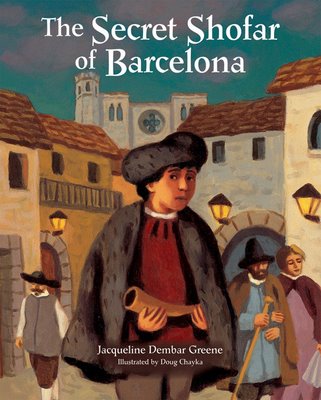
Don Fernando de Aguilar on the cover of a children’s book

Don Fernando de Aguilar (c. 1500) When Spain expelled its Jews in 1492, some chose to stay behind and convert superficially to Christianity, practicing their Judaism in secret. One of these Conversos (or Marranos) was Don Fernando de Aguilar, who also happened to be the conductor of the Royal Orchestra in Barcelona. Despite the fact that Judaism was outlawed in Spain (until 1967, in fact) de Aguilar organized secret prayer services in the basement of Don Manuel’s leather shop. But there was one mitzvah they could never keep: hearing the shofar. After many years of longing for the sounds of the shofar, Don Fernando came up with a clever idea. He wrote a concert featuring the “melodies of the world”, set to play in Barcelona over the High Holiday season. Fernando expertly weaved the shofar into his opus, with packed crowds of hidden Jews listening in, along with the fooled Inquisitors. Rabbi Eliyahu Kitov writes: “It was said that no one had ever been more successful in confusing Satan on Rosh HaShanah than was Don Aguilar.”

Words of the Week

Three books are opened on Rosh Hashanah: The righteous are inscribed in the book of life; the wicked are inscribed in the book of death, and the judgment of the intermediates hangs in balance until Yom Kippur…
– Talmud, Rosh HaShana 16b
Jews of the Week: Carasso & Metchnikoff

Isaac Carasso

Elie Metchnikoff

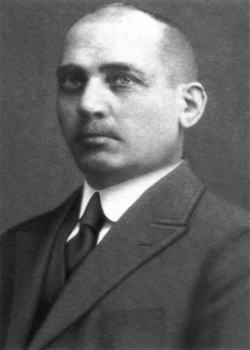
Isaac Carasso (1874-1939) A Spanish doctor, he noticed many of his patients suffered from digestive and intestinal problems. He imported bacterial cultures from Bulgaria and mixed them with sour cream, perfected by Nobel Prize-winning scientist and Russian Jew Elie Metchnikoff (1845-1916). Thus was born modern yogurt, which was initially sold only at pharmacies as a medicine! In 1919, Carasso founded Danone, named after his son Daniel. Today, Danone is the world’s largest provider of dairy foods and bottled water (Evian and Naya are among their brands). Meanwhile, Metchnikoff discovered the white blood cells known as phagocytes, and is considered one of the fathers of immunology.

Words of the Week

It’s better to have a Jewish State that is hated by the whole world, than an Auschwitz that’s loved by it.
– Rabbi Meir Kahane

Jew of the Week: Rabbi Abraham ben David

The Ravad

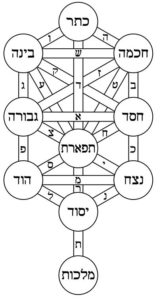
Tree of Life, depicting the Kabbalistic Sefirot

Avraham ben David (1125-1198) also known as the “RaAVaD” (a title derived from the initials of his name, as is common with many Jewish sages) was one of the greatest scholars in history. Born in Provence, France to a Sephardic family, the Raavad was the chief rabbi of Montpellier and Nimes (where Denim fabric, “De Nimes” was invented). During his tenure as the head of the yeshiva, Nimes gained a reputation as one of the greatest places of Jewish learning in the world. Rabbi Avraham spent most of his life in Posquieres. He was incredibly wealthy, financing the construction of schools with his own funds, and supporting the poor. Because of this, he was once imprisoned by the lord of Posquieres, before a count who knew of the Raavad’s greatness freed him and banished the lord. The Raavad wrote hundreds of different works, including a penetrating commentary on the entire Talmud. More importantly, he is often regarded as the “father of Kabbalah”, revealing ancient Jewish mystical teachings and clearly elucidating them. The famous diagram of the mystical Sefirot arranged in a “Tree of Life” is attributed to him. The Raavad was also a noted astronomer, philologist, and philosopher. Spanish government records reveal that his descendants were important advisers to the Spanish monarchy. Meticulous in his analysis, highly critical, and opposed to dogma, he was a man that cared only for Truth. His impact on the depository of Jewish wisdom, and on the Jewish people, is unparalleled.

Words of the Week

Because each life form, even fruit, is entrusted to a specific angel. By saying a blessing over a fruit, we empower that angel to reproduce more of that fruit. One who refrains from partaking of a fruit deprives the world of the spiritual influence that the blessing would have provided.
– Chemdat Yamim