Tag Archives: Philanthropists

Jews of the Week: Sam & Charles Bronfman

Sam Bronfman

Samuel Bronfman

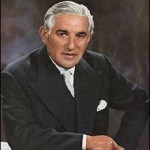
Samuel Bronfman (1889-1971) immigrated to Canada from Bessarabia, Moldova, fleeing the pogroms of the Russian Empire. From tobacco farming to selling firewood, working in a sawmill, and building railways, Bronfman bounced around to make a living. The family eventually bought a small hotel and Sam soon realized that most of the profit was coming from alcohol. In 1924 he opened a distillery in Montreal which went on to make huge profits, much of which came from bootlegging to the U.S., taking advantage of America’s prohibition era. In 1928, Bronfman purchased Ontario’s Seagram Company and adopted its name. It would become the world’s largest producer of alcoholic beverages (with over 250 different brands), a title it held until the company was bought out by several corporations, including Coca-Cola. Sam Bronfman was also a noted philanthropist and served as president of Canada’s Jewish Congress for over 20 years. One of McGill University’s main patrons, he was awarded the Order of Canada.

Charles Rosner Bronfman

Charles Rosner Bronfman

The same honour was awarded to Samuel’s son Charles Bronfman (b. 1931). Aside from business, Charles is famous for bringing a major league baseball team to Montreal, the ill-fated Expos. More significantly, along with Michael Steinhardt, he founded (and funds) Taglit Birthright, which has now brought over 220,000 young Jews around the world on free trips to Israel. Bronfman has signed the Giving Pledge, vowing to leave more than half of his wealth to charity. Part of that is creating the $100,000 Charles Bronfman Prize, honouring individuals who have contributed to humanitarian causes. A quirky fact: Charles is co-founding chairman of Historica, the company that brought you all those fun ‘Heritage Minutes’ on Canadian TV. He said, “If television can use 30 seconds or 60 seconds to persuade people that Cadillacs or cornflakes are interesting, couldn’t we also use that short piece of time to persuade Canadians that their history is interesting? You tell me how to do it, and I’ll fund it.”

Words of the Week

If you wait until you find the meaning of life, will there be enough life left to live meaningfully?
Rabbi Menachem Mendel Schneerson, The Lubavitcher Rebbe
Jews of the Week: Nathan & Jeffrey Swartz

Jeffrey Swartz

Jeffrey Swartz

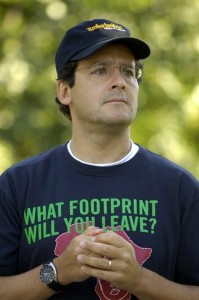
Hailing from a town near Chernobyl, Nathan Swartz was one of many Russian immigrants to the US in the early 20th century. In 1918 he started working as a shoemaker in Boston. After more than 30 years of hard work, Swartz saved enough to invest in a small shoe company (initially purchasing just half a share!) By 1955 he bought the company outright, and turned it into a family business with his sons. In 1960, the Swartz family released a new shoe made with their patented injection-molding technology that bound leather without using stitches, creating a perfectly waterproof and durable shoe. One shoe model was called Timberland, and became so incredibly popular worldwide, that the company changed its name to the Timberland Shoe Company. Timberland soon became a household name and expanded to clothing, backpacks, and other products. Today, it is a multi-billion dollar company which was run, until recently, by Jeffrey Swartz, grandson of founder Nathan Swartz. Jeffrey has become renowned for pushing corporate responsibility, green initiatives and worker’s rights. His employees receive 40 hours of pay every year to do charity work, and $3000 stipends to buy hybrid cars. Timberland has planted over one million trees worldwide, is carbon-neutral, and recycles rubber from tires. It has been listed on CNN’s “100 best companies to work for”. Meanwhile, Swartz has become a noted philanthropist and ‘social investor’. He is also a proud Orthodox Jew, waking up at 4 am each morning to study Torah. Timberland continues to be a shoe adored by construction workers and rappers alike. It has even lent its name to hit music producer Timbaland, who was nicknamed after the iconic shoe.

Words of the Week

…A shy person cannot learn, a short-tempered person cannot teach; nor does anyone who does much business grow wise.
– Hillel (Avot 2:5)

Jews of the Week: Zev Wolfson and Sir Isaac Wolfson

Zev Wolfson

Zev Wolfson (1928-2012) was born in Lithuania, deported to Siberia during World War II and finally made his way to New York. With no money he began working as a light-bulb salesman, but soon found his way into real estate where he quickly earned a large sum of wealth. Inspired by the sight of an Israeli flag, Wolfson began working tirelessly for Israel, lobbying the U.S. government to help the nascent state. He secured arms for Israel during the critical period of the Yom Kippur War, and built countless institutions across the country. Yitzchak Rabin said he didn’t know “one other Jew in the world who, as an individual, had done more for the State of Israel”. In spiritual matters, too, Wolfson was a giant, financing yeshivas worldwide, and paying for such programs as RAJE, Aish Fellowships, and Argentina’s Morasha, which bring thousands of young Jews to Israel every year at virtually no cost. Possibly every Jew in the world has somehow been touched by Wolfson’s outreach – he even established a Torah-learning program in Iran during the times of the Shah! Humble and dedicated to Torah, he made sure to donate more than 50% of his earnings, and was known to fly economy class despite his wealth. His family continues to contribute hundreds of millions of dollars to Jewish causes every year.

Sir Isaac Wolfson

Zev Wolfson is not to be confused with Sir Isaac Wolfson (1897-1991) of Scotland, another great Jewish philanthropist. Born to poor Polish immigrants, Isaac Wolfson couldn’t afford school so he became a salesperson. He worked his way up to become director of Great Universal Stores, once among the largest retailers in the UK, with over 50,000 employees. A devout Orthodox Jew, Sir Wolfson donated virtually all of his wealth, much of it to build the young State of Israel, saying “No man should have more than £100,000. The rest should go to charity.”

Words of the Week

People are accustomed to look at the heavens and wonder what happens there. It would be better if they would look within themselves to see what happens there.
– Menachem Mendel of Kotzk, “The Kotzker Rebbe”