The “Exilarch” and the First “Miss Iraq”

Sir Naim Dangoor in 2015
Naim Eliahou Dangoor (1914-2015) was born in Baghdad to a wealthy and religious family, at a time when a full third of the city’s population was Jewish. His grandfather was the Chief Rabbi of Baghdad, while his father operated the largest Arabic printing press in the world. At 17, Dangoor journeyed to England to study engineering at the University of London. Upon his return to Iraq, he hoped to work as a railway engineer but was barred from the position because he was Jewish. Instead, Dangoor was conscripted into the army. There, he met Ahmed Safwat, and the two decided to start a business together. The first major contract secured by their company (Eastern Industries Ltd.) was to replace the windows of Iraq’s government buildings. They soon diverged into property development and manufacturing. They made matches, furniture, and opened Iraq’s very first Coca-Cola bottling plant.

Renée Dangoor
Meanwhile, Naim married his cousin, Renée Dangoor(1925-2008). She was born in Shanghai, where her family temporarily lived for business. The family moved back to Baghdad when she was still a child. In 1947, she participated in the country’s first beauty pageant, and was crowned the first ever “Miss Iraq”. She married Naim the following year. Unfortunately, things got really bad for Iraq’s Jews after the founding of the State of Israel. By 1959, the Dangoors had no choice but to flee. Naim continued to operate his businesses for a few more years until the government stripped him of his citizenship and took over his company. The family settled in England and started from scratch, opening a new property development business, and establishing a community centre for Iraqi Jewish immigrants. To preserve their culture, Naim founded The Scribe – Journal of Babylonian Jewry, which would go on to publish magazine issues for 35 years, distributed in 25 countries. By 1980, Dangoor had rebuilt his wealth. He wanted to give back to his new home, and established the Exilarch Foundation to provide charitable funds to organizations across the UK. Among other things, the Foundation has provided full scholarships to over 5000 needy students. The Dangoors made the largest ever private donation to both the Royal Society of Medicine and the Francis Crick Institute (Europe’s largest biomedical research facility). After Renée succumbed to cancer, Naim became one of the biggest contributors to Cancer Research UK. He also donated a massive sum to the University of Nanjing in China, in honour of his wife who was born nearby. Among the many other beneficiaries of the Dangoors is Bar-Ilan University, which now runs the Dangoor Centre for Personalised Medicine. Shortly before his passing, at age 100, Dangoor was knighted by the Queen, making him the second-oldest person ever to receive the honour.
50 Things a Jew Should Always Do
Words of the Week
The idea is that you’re supposed to be a light to the nations. If you only have your light on at home, nobody else sees it.
– Rabbi David Wolpe
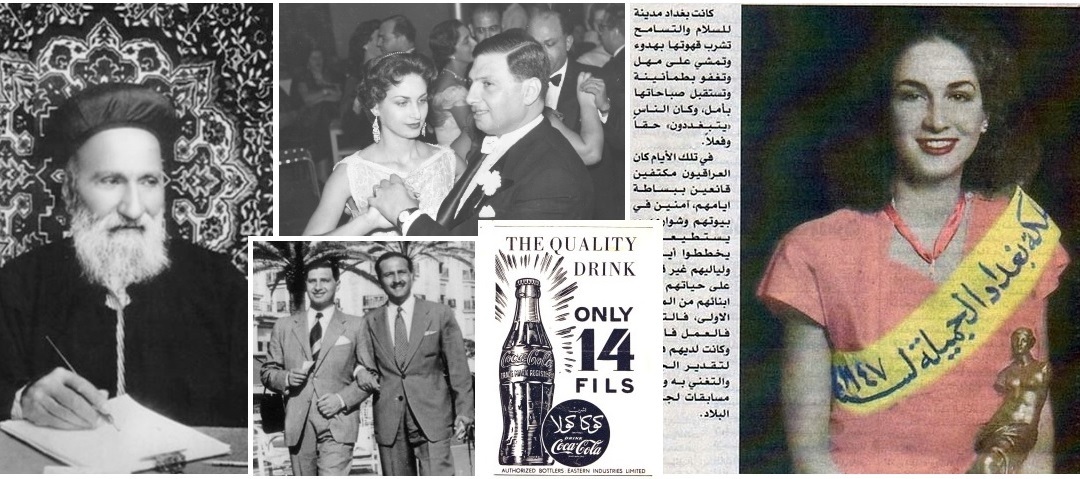
Clockwise from left: Hakham Ezra Reuben Dangoor, Chief Rabbi of Baghdad from 1923-1926; Naim and Renée at a Baghdad party; an Arabic newspaper announces “Miss Iraq” in 1947; the first Coca-Cola ad in Iraq, circa 1950; Naim with his business partner Ahmed Safwat.
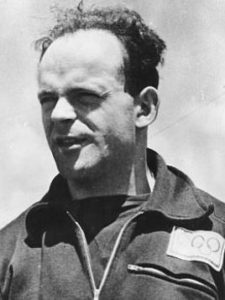


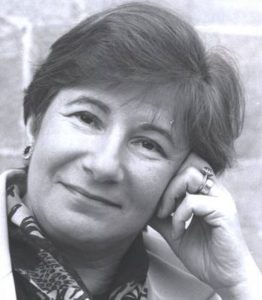 Ruth Lynn Fraenkel (b. 1943) was born in London to Jewish-Polish refugees who fled the Nazis. She studied law at Oxford University’s prestigious St. Anne’s College, and there met her future husband John Deech. After getting her MA, she briefly taught law at Windsor University in Canada, then returned to St. Anne’s and taught there for two decades before being elected its principal in 1991. As a specialist in family law and bioethics, she also headed Oxford’s Health Authority, and eventually became the governor of the UK Department of Health’s Human Fertilisation and Embryology Authority (HFEA). The HFEA regulates fertility treatments, in-vitro fertilization, and embryological research across the UK. As its governor, Deech made some difficult and controversial decisions, including one case where a woman was forbidden from having a baby with her dead husband’s frozen sperm. She also fought against the decision to allow birth certificates not to name a father, stating “I regret the downgrading of the father as a person of importance – the legislative dismissal of the contribution of half the population to the upbringing of the next generation” and that “Tolerance of both types of parenting has to be ensured.” In 2002, Deech was knighted as a Dame Commander of the Order of the British Empire. That same year she was appointed governor of the BBC. Following this role, she was made a life peer of the House of Lords, and given the title Baroness Deech of Cumnor. At the same time, she served as the chairman of the Bar Standards Board, which regulates lawyers across England and Wales, and sat on the Jewish Leadership Council. Deech remains one of the world’s most renowned academics and ethicists. Oxford University recently named one of its buildings after her, and she was once ranked on “The God List” of the fifty most influential “people of faith” in Britain. She also regularly stands up for the Jewish community, and for Israel – at